

KAMPALA, Uganda – Uganda and Tanzania now stand close to a defining energy milestone as the East African Crude Oil Pipeline, known as EACOP, moves into its final construction stretch after years of delays, financing battles, climate pressure, and political debate.
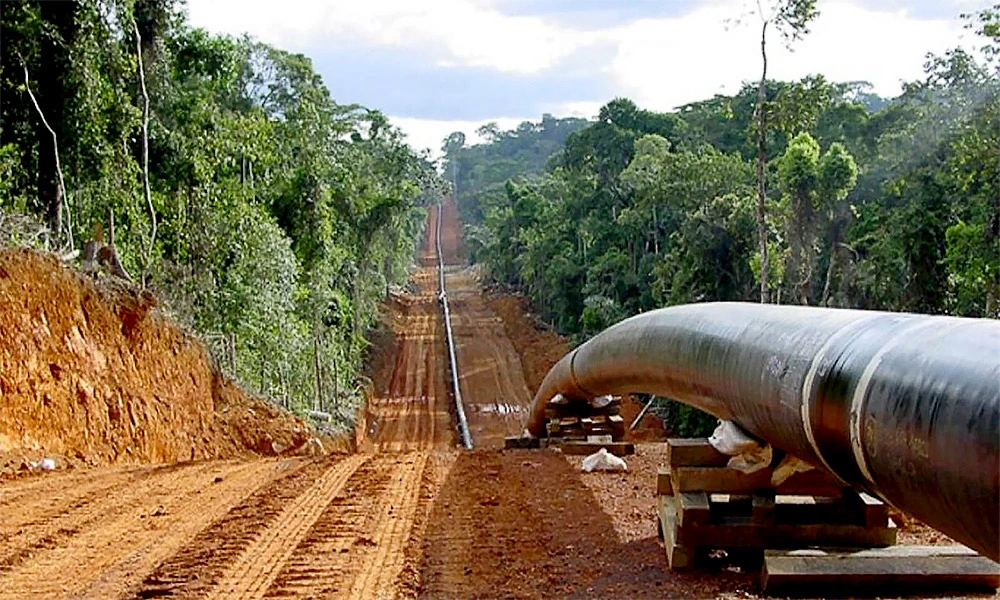
The $5 billion project will carry crude oil from Uganda’s Lake Albert fields to Tanzania’s Indian Ocean port near Tanga through a 1,443-kilometre heated pipeline. Reuters reported in March 2026 that the pipeline had reached 80 percent completion, while other industry updates this year placed progress near the low to mid-80 percent range. Uganda expects commercial oil production in the second half of 2026.
This places East Africa near a moment many Ugandans have awaited since commercial oil discoveries in the Albertine Graben in 2006. The first exports are expected around October 2026, after production begins from the Lake Albert development. Enerdata, citing Uganda’s energy minister, reported that crude production is scheduled to start at the end of July 2026, with first exports planned by the end of October.
EACOP gives Uganda the export route its geography denied. Uganda has oil, but no coastline. Tanzania gives the crude a path to global markets through Tanga. The pipeline starts at Kabaale in Hoima, crosses into Tanzania, and ends at the Chongoleani Peninsula near Tanga port. EACOP says the line has a peak capacity of 246,000 barrels per day.
The project links three major names. TotalEnergies operates Tilenga, CNOOC operates Kingfisher, and Uganda’s national oil company holds a stake in the wider development. TotalEnergies says Tilenga will include six fields, about 400 wells, and a central processing plant at Kasenyi. The company also says oil from the Lake Albert region will move through EACOP to Tanzania for sale on world markets.
For Uganda, first oil will carry political and economic weight. President Yoweri Museveni has presented oil as a tool for industrial growth, infrastructure, jobs, and national transformation. The government expects oil exports to strengthen public revenue, support debt management, and fund development priorities. Reuters reported that Uganda forecasts oil export earnings of about 2.2 trillion Ugandan shillings, roughly $587 million, in the 2026/2027 financial year.
For Tanzania, EACOP confirms its position as an energy corridor for the region. The port of Tanga gains strategic value. Pipeline works, storage facilities, marine export systems, roads, security services, logistics, and local contracting give Tanzania a direct stake in Uganda’s oil future. This project turns a bilateral infrastructure plan into a regional energy test.
Ernest Rubondo, chief executive of Uganda’s Petroleum Authority, called EACOP “the backbone of Uganda’s crude oil exports and a key driver for economic transformation,” according to Pipeline Journal. That quote captures Kampala’s central argument. Without EACOP, Uganda’s crude stays locked inland. With EACOP, Uganda joins Africa’s oil exporting states.
The milestone also raises a hard question for East Africa. Will oil build wider prosperity, or will it enrich a narrow political and contracting class? Africa already has painful examples. Nigeria, Angola, Equatorial Guinea, and South Sudan show how crude revenue rewards discipline and punishes weak institutions. Oil money arrives fast, but it exposes procurement abuse, weak audits, inflated contracts, patronage, and poor planning.
Uganda therefore needs more than a completed pipeline. It needs clean revenue reporting, public contract scrutiny, independent audits, strong parliamentary oversight, and clear district-level benefit plans. Citizens need to know how much oil flows, how much money arrives, who receives contracts, and which communities gain jobs, roads, clinics, water systems, schools, and power links.
Local content must also mean real work for Ugandans and Tanzanians. The project should create space for engineers, welders, drivers, safety officers, mechanics, surveyors, accountants, caterers, transport firms, security providers, and small suppliers. If local content becomes only a slogan for politically connected companies, the public will remember the pipeline as a missed chance.
The environmental and human rights battle will not disappear when exports begin. EACOP has faced years of criticism from climate groups, banks, lawyers, and community activists. Critics argue that the pipeline threatens ecosystems, displaces families, and locks the region into fossil fuel risk. The Guardian reported in 2025 that about 13,000 people had been displaced by the project, while rights groups accused it of inadequate compensation and weak transparency. TotalEnergies and EACOP have defended their procedures and said they follow required standards.
The project also sits near sensitive landscapes. Yale Environment 360 reported in June 2026 that Lake Albert and nearby areas contain major biodiversity, while the pipeline is set to become the world’s longest heated oil pipeline. Supporters argue Uganda has a sovereign right to develop its resources. Opponents argue the climate cost and community impact remain too high.
Uganda should not answer criticism with anger alone. It should answer with proof. Fair compensation, open grievance systems, protected activists, environmental monitoring, published audits, and transparent oil accounts would do more for public trust than speeches. A family removed from land will not eat export figures. A young graduate will not survive on production targets. The oil economy must touch daily life.
The final stretch now demands discipline. A pipeline at 80 percent or more completion still needs testing, commissioning, safety checks, export coordination, upstream readiness, financing discipline, and political calm. The last phase often exposes hidden weaknesses. Uganda and Tanzania must avoid rushed operations that place speed above safety.
If EACOP succeeds, East Africa will gain a new export corridor and Uganda will enter the global crude market after two decades of waiting. If governance fails, the region will inherit another resource story where citizens watched wealth move through pipes while poverty stayed at home.
The pipe is nearly complete. The larger test has only begun.