

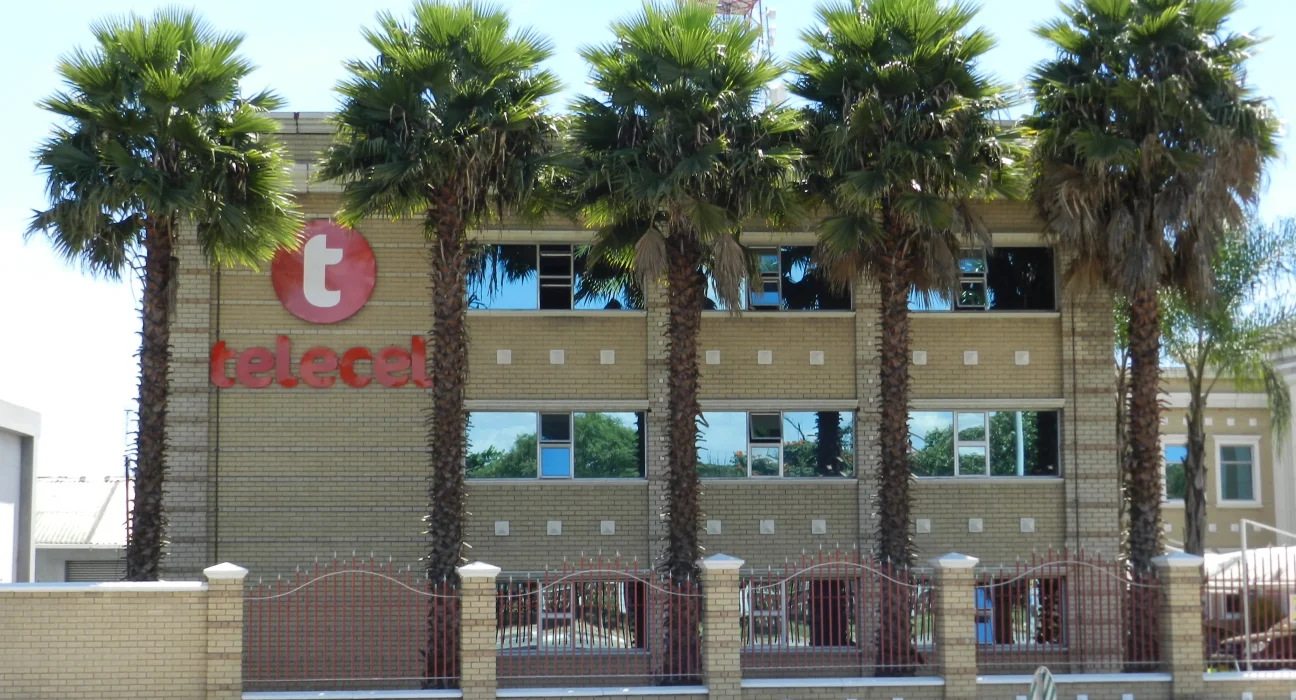
HARARE, Zimbabwe – Telecel Zimbabwe once stood as one of the boldest names in Zimbabwe’s mobile phone revolution. Today, the company faces corporate rescue, creditor pressure, network decay, subscriber flight, and a debt pile reported above US$240 million.
The fall tells a bigger national story. It shows how policy confusion, ownership fights, weak capital support, state control, delayed investment, and fast-moving technology buried a brand which once gave Zimbabweans cheaper calls, aggressive promotions, and a real alternative to Econet and NetOne.
Telecel’s story began in the mid-1990s, when mobile phones still looked like a luxury in Zimbabwe. The company was established in 1996 in Harare by Miko Rwayitare, with Telecel International linked to Orascom Telecom and the Empowerment Corporation holding local interests. Its operating licence followed in 1998 after a bruising telecoms contest and legal battles involving rival bidders. From birth, Telecel carried promise and controversy in equal measure.
The promise was real. Telecel brought competition into a sector where access, pricing, and service choice mattered. In its stronger years, the operator became a serious national player. By 2015, Telecel had 1.92 million active customers and a 15.1 percent market share, behind Econet and NetOne, according to POTRAZ figures reported by Total Telecom.
Then came the ownership wars. Zimbabwe’s indigenisation rules forced pressure over foreign control. Telecel’s licence and shareholding structure faced repeated scrutiny. The company suffered uncertainty over compliance, control, and investment. In 2016, the government bought VimpelCom’s 60 percent stake through ZARNet for US$40 million. Then ICT minister Supa Mandiwanzira said, “Telecel is now going to be a Zimbabwean entity.”
That statement sounded patriotic. In business terms, it demanded proof. A telecom operator does not survive on ownership slogans. It survives on towers, fibre, spectrum, power backup, billing systems, data capacity, customer care, and constant network upgrades. After state-linked entry, Telecel needed heavy capital. Instead, the market moved faster than the rescue money.
The company missed the data age. Econet pushed deeper into 4G, mobile money, enterprise services, and later 5G. NetOne expanded state-backed coverage and products. Telecel remained trapped with ageing network assets, falling service quality, weak public confidence, and shrinking relevance. POTRAZ’s 2025 third-quarter report showed active Telecel subscriptions had fallen to 305,042 from 319,548 in the previous quarter. The regulator also recorded only 17 LTE base stations and no 5G infrastructure.
POTRAZ put the crisis plainly. “Telecel is facing sustained challenges, marking a period of significant stagnation across all technologies,” the regulator said in its 2025 third-quarter sector report. That line captures the disease. Telecel did not suffer one wound. It suffered a long institutional failure.
By 2026, the company had moved from decline to survival mode. Grant Thornton Zimbabwe took charge of the corporate rescue process after the company entered corporate rescue in October 2025. The rescue practitioner reported creditor exposure of about US$240 million. Kundai Tibugare of Grant Thornton said prospective investors had to show financial commitment toward creditor settlement and fresh capital for revival.
Tibugare also identified the operational wound. “Limited capital injections over time have constrained infrastructure renewal, leading to obsolescence in key network components,” he said. He estimated at least US$50 million as a baseline capital injection to modernise the network, improve service quality, and restore competitiveness.
The latest stage now places creditors at the centre. Telecel has scheduled a meeting of members and creditors for July 24, 2026, to consider a proposed corporate rescue plan under Zimbabwe’s Insolvency Act. The result will shape whether the company restructures, finds a new investor, or moves closer to liquidation.
Telecel’s rescue starts with honesty. The company has little room for cosmetic reform. A buyer would not be purchasing subscriber numbers. A buyer would be purchasing a scarce national telecoms licence, existing towers, spectrum rights, brand memory, and a possible route into a market dominated by Econet and NetOne.
That licence remains valuable. Zimbabwe has only three full mobile network operators. A credible investor with patience, telecom skill, and hard currency would gain entry into a market with more than 16 million active subscriptions. The Zimbabwe Independent argued the right investor needs more than US$50 million, tolerance for Zimbabwe’s regulatory and currency environment, and the discipline to invest in infrastructure before chasing subscribers.
The first rescue option is a clean strategic sale. Government must stop treating Telecel as a sentimental state-linked asset. A regional telecoms group, infrastructure fund, or consortium with real operational ability should take control through a transparent process. Debt holders should accept a realistic haircut, because full recovery looks unlikely if the business dies.
The second option is network sharing. Telecel should not try to rebuild every tower alone. It should negotiate passive and active infrastructure sharing with existing operators, tower companies, fibre providers, and power specialists. Shared towers, shared backhaul, and roaming-style coverage agreements would cut capital pressure and restore service faster.
The third option is a focused comeback, not a national fantasy. Telecel should rebuild first in Harare, Bulawayo, Mutare, Gweru, Masvingo, and selected border corridors. It should focus on reliable LTE, affordable data, fixed wireless broadband, small business packages, diaspora-linked products, and a repaired Telecash proposition. Zimbabweans use dual SIM cards. A revived Telecel does not need to beat Econet immediately. It needs to become useful again.
The final rescue requirement is governance. No serious investor will pour money into a company where politics controls appointments, procurement, and strategy. Telecel needs a professional board, published turnaround targets, clear POTRAZ settlement terms, audited debt numbers, and management with telecoms experience.
Telecel’s collapse would hurt consumers. Zimbabwe would drift toward a tighter two-player mobile market, with less pricing pressure and fewer service alternatives. Rural users, small businesses, and data-hungry young people would lose a possible competitor.
Telecel Zimbabwe was born from ambition. It fell through politics, underinvestment, and delay. Its rescue now demands capital, courage, and commercial discipline. Without those three, Zimbabwe will not lose a brand only. It will lose proof that competition still matters in the country’s digital future.