
PRETORIA, South Africa – South Africa will move ahead with a new nuclear build programme, placing atomic energy at the centre of its long-term plan for electricity security, industrial development, and lower carbon emissions.
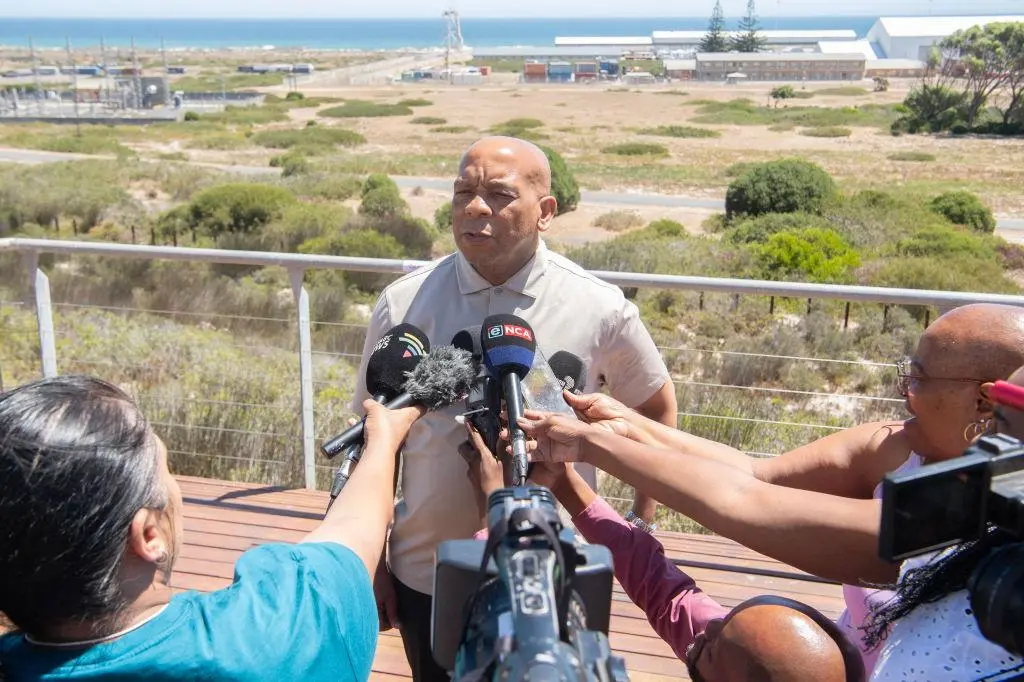
Electricity and Energy Minister Kgosientsho Ramokgopa has repeated the government’s commitment to 5,200 megawatts of new nuclear capacity by 2039. The Integrated Resource Plan 2025 links the target to a wider expansion involving wind, solar, gas, storage, and transmission infrastructure. No new nuclear generation appears before 2030 under the plan. The first test therefore concerns preparation, funding, procurement, and public confidence rather than immediate electricity supply.
Ramokgopa told an energy gathering in March, “Nuclear therefore remains core to South Africa’s future energy mix.” Government messaging later became firmer. A state report quoted him saying, “We’re building 5 200 megawatts of new nuclear capacity in this country.”
The proposed programme includes about 4,800 megawatts from conventional pressurised water reactors and 400 megawatts from small modular reactors. Eskom has started early discussions with the World Bank and other possible funders. Officials are studying public-private partnerships, vendor finance, and other structures because Eskom lacks the balance sheet for another vast state-funded project.
South Africans should separate a policy commitment from a construction project. No final reactor vendor, contract price, financing package, construction schedule, or electricity tariff has reached public approval. No completed procurement has selected a builder. Ramokgopa’s statement confirms political direction. The statement does not place concrete in the ground.
Nuclear supporters hold a serious argument. Koeberg supplies firm electricity day and night. Its two units provide about 1,860 megawatts, close to 5 percent of national electricity. Koeberg Unit 2 completed 365 consecutive days of operation in March 2026 with an average energy availability factor of 99.4 percent. The unit delivered about 946 megawatts to the grid. Such performance gives government evidence for reliable low-carbon generation.
South Africa also faces the retirement of ageing coal stations. Wind and solar projects need transmission lines, storage, flexible generation, and stronger grid management. Nuclear offers firm output with low operational carbon emissions. A balanced system needs dependable supply during periods of weak wind, cloud cover, plant failures, or high demand.
Yet nuclear power carries unforgiving financial and governance risks. Large reactors require enormous upfront capital. Construction often runs for many years. Delays increase interest charges before one unit sells electricity. Cost overruns then move toward taxpayers, consumers, or future budgets. South Africa already carries painful experience from Medupi and Kusile, where delays, design problems, corruption allegations, and rising costs damaged trust in megaproject delivery.
The country also remembers the proposed 9,600-megawatt nuclear agreement linked to Russia during Jacob Zuma’s presidency. A court stopped the process in 2017 after finding government steps unlawful. Public suspicion did not emerge from hostility toward science. Secrecy, weak consultation, affordability fears, and political relationships produced such suspicion.
Ramokgopa inherited another procedural warning in 2024. Government withdrew a determination for 2,500 megawatts of new nuclear power after legal challenges and criticism over inadequate public participation. The minister accepted the need for wider consultation and said procurement must survive legal scrutiny. The new 5,200-megawatt plan must not repeat the same failure under a larger number.
Every major step needs publication. Government should release demand forecasts, technology comparisons, full lifecycle costs, financing assumptions, decommissioning provisions, waste costs, water requirements, localisation targets, ownership models, and expected tariffs. Parliament should examine contracts before signature. Independent experts should test assumptions. Communities near proposed sites should receive meaningful hearings long before final approval.
Recent events at Koeberg add urgency to public scrutiny. The National Nuclear Regulator reported three airborne contamination events inside the plant on June 30, July 2, and July 7. A loss of power to ventilation units serving temporary maintenance areas caused elevated contamination inside controlled sections. Officials found no release outside the plant, no public danger, and worker exposure below levels linked to a dental X-ray. The regulator did not classify the events as nuclear emergencies.
Those findings should prevent panic. They should not end the examination. A nuclear safety culture depends on reporting small failures, tracing root causes, correcting procedures, and publishing lessons. Government weakens trust when officials treat every question as anti-nuclear activism. Opponents weaken debate when they describe contained events as public disasters without evidence.
Koeberg’s reactors received twenty-year life extensions, taking Unit 1 toward 2044 and Unit 2 toward 2045. Life extension gives South Africa time, skills, and operating experience. The extension also raises the burden on Eskom and the regulator to maintain ageing systems, trained staff, emergency readiness, waste control, and independent oversight.
The small modular reactor plan presents another opportunity and another risk. South Africa spent more than R10 billion on the Pebble Bed Modular Reactor programme before placing the project under care and maintenance in 2010. Ramokgopa wants to revive local expertise and seek partners from countries including China, South Korea, the United States, and Russia. A revival should begin with a public audit of past spending, retained intellectual property, technical readiness, export prospects, and fresh funding exposure.
Local industrial benefits must sit inside every contract. South African engineers, welders, technicians, universities, manufacturers, and uranium-sector firms should gain lasting work. A foreign-financed plant with imported equipment, imported specialists, offshore profits, and sovereign debt would produce electricity without building enough national capability.
The strongest nuclear programme would also avoid false competition with renewables. South Africa needs generation, grid expansion, storage, maintenance, and market reform at the same time. Nuclear should win a place through transparent cost and reliability tests, not political preference. Wind and solar should face the same discipline around grid costs, land, storage, and system balancing.
Ramokgopa is right to plan beyond the next election. Energy infrastructure requires decades of preparation. He is also asking citizens to trust the government with one of the largest, longest, and most sensitive procurement programmes in national history.
Trust needs documents, numbers, hearings, independent regulation, and visible consequences for dishonesty. South Africa has nuclear knowledge and decades of operating experience. The country also carries a record of procurement scandals and costly megaproject failures.
Proceeding with nuclear power is a policy choice. Proceeding without full transparency would become a national gamble.