
JOHANNESBURG, South Africa – Anti-migrant campaigners wanted foreign workers gone. Now delivery services lack riders, domestic-work bookings suffer record cancellations, textile factories lose staff, farms fear shortages, and employers search for replacements inside an economy already starved of growth.
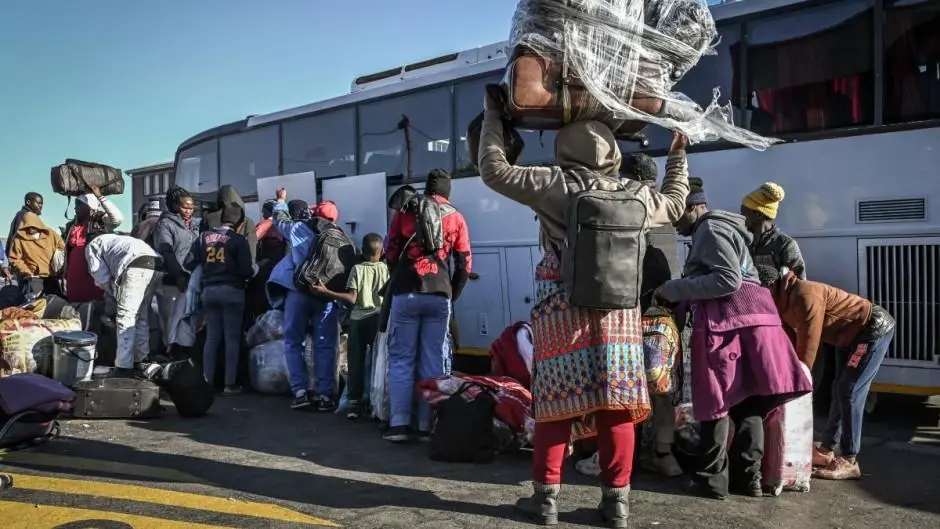
Anti-migrant protests, deportations, voluntary repatriations, intimidation, and fear have pushed tens of thousands of African migrants out of South Africa since 28/05/2026. Authorities reported processing about 67,000 people for deportation or assisted return in recent weeks. Zimbabwe reported nearly 100,000 citizens returning during the same broad period. Earlier official figures placed deportations and repatriations above 53,000 within one month, with Malawians forming more than 80 percent of the recorded total.
South Africans have every right to demand secure borders, lawful migration, fair wages, functioning public services, and priority for citizens within national development. No state should ignore undocumented entry or employers who exploit vulnerable workers. Yet slogans promised an easy economic reward. The first evidence points toward disruption instead.
“Migrants typically find work in sectors where vacancies are difficult to fill, including farming, construction, hospitality, retail, transport and the informal sector,” North-West University economist Mpho Lenoke said.
SweepSouth, a platform linking households with domestic workers, recorded its highest lost-booking rate since the COVID period during the week of June 30. Chief executive Lourandi Kriel said lost bookings on June 30 alone exceeded a normal monthly total. Transport disruption and safety fears drove many cancellations.
Delivery and transport services also felt the shock. Migrants account for about 70 percent of Shoprite’s Sixty60 delivery workforce, spread across a fleet approaching 10,000 riders. Fewer riders mean slower deliveries, higher pressure on remaining workers, and weaker service for households. At least half of e-hailing drivers are migrant workers, according to the National E-Hailing Federation of South Africa. Driver shortages have already pushed some trip prices upward.
The textile town of Newcastle offers another warning. A clothing workers’ union estimates around 15 percent of the local workforce has left. Hundreds of foreign workers reportedly returned home. Factories already face cheap imports, weak demand, electricity costs, and narrow margins. Sudden labour losses threaten production schedules and existing South African jobs linked to each factory.
Agriculture faces similar danger. Seasonal fruit, vegetable, wine, berry, and citrus production requires large groups of workers during short harvest windows. Crops do not wait for political arguments. Missed picking days destroy value. Failed packing schedules break export contracts. Farmers then cut future planting, reduce hiring, or raise prices.
Domestic worker Nadia Nyamayaro left her job near Cape Town after safety fears grew. She worked as a cleaner and child minder from morning until late afternoon on weekdays, plus selected Saturdays, for about R8,500 monthly. Her departure removed income from her household and labour from her employer. Thousands of individual decisions now form a national production shock.
South Africa’s unemployment crisis makes these shortages appear absurd. Nearly one third of the labour force lacks work, with 8.1 million people unemployed during the first quarter of 2026. Why should any vacancy stay empty?
The answer exposes deep failures. Unemployment does not automatically place workers near available jobs. Skills do not always match. Transport costs swallow wages. Employers demand long hours for poor pay. Seasonal jobs offer little security. Some businesses prefer undocumented migrants because exploitation becomes easier. President Cyril Ramaphosa acknowledged employers often pay undocumented workers below minimum wage and impose longer hours without proper compensation.
This exploitation deserves prosecution. Businesses built on illegal wages should not receive sympathy when workers leave. Government must inspect farms, factories, restaurants, construction sites, delivery contractors, and households. Employers should register workers, pay lawful wages, provide safe conditions, and contribute required benefits.
Yet replacing every migrant overnight with a South African worker will not repair structural unemployment. Training, transport, childcare, housing, work discipline, recruitment systems, wage enforcement, and regional labour planning need attention. A queue outside one factory does not prove workers will remain after learning the hours, pay, distance, and conditions.
Foreign workers also create businesses. Migrant-owned spaza shops buy from wholesalers, rent premises, employ residents, and provide food near homes. Wits University researchers estimate foreign nationals hold less than 4 percent of formal jobs, while foreign-born workers represent around 20 percent of informal-sector participants. Those figures challenge claims blaming migrants for national unemployment.
United Nations data placed South Africa’s migrant population near 2.6 million during 2024, around 5 percent of the population. Older OECD and International Labour Organization modelling estimated migrant workers contributed around 9 percent of national output. Such estimates require cautious use because economic conditions have changed. Still, the figures show migrants represent producers, consumers, tenants, taxpayers, traders, and employers, not only competitors.
South Africa’s economy lacks room for another self-inflicted shock. The World Bank cut its 2026 growth forecast from 1.4 percent to 1 percent. Per-person income has barely advanced across the past decade. Electricity failures, rail weakness, port delays, corruption, municipal decline, crime, and poor investment have damaged production far more than migrant labour.
Removing workers does not repair Eskom. Deportations do not rebuild Transnet. Closing foreign-owned shops does not fix schools. Driving delivery riders away does not arrest tender corruption. Blaming migrants gives failed leaders an escape route from accountability.
Regional damage also spreads fast. Remittances from South Africa exceeded R19 billion during 2024, more than triple the level recorded in 2016. Nearly 90 percent of transfers into southern Africa went to Lesotho, Malawi, Mozambique, and Zimbabwe. Zimbabwe received more than 60 percent of the regional total. Lost remittances weaken households, reduce school payments, and cut spending across neighbouring economies.
Government still needs firm immigration enforcement. Ramaphosa said, “We expect foreign nationals to respect our laws. We therefore need to respect them ourselves.” Authorities should deport people through lawful procedures, punish document fraud, secure borders, and prosecute employers who hire undocumented workers.
Vigilante searches, ethnic targeting, threats, looting, and collective punishment belong nowhere in a constitutional state. Such actions chase away documented workers alongside undocumented residents. Police reported hundreds of arrests linked to violence, intimidation, and unauthorised immigration checks.
Such hostility also frightens investors and advertises South Africa as unsafe for African talent and capital. An emerging-markets portfolio manager told Reuters the protests had turned a long-standing social problem into an investment risk with visible economic consequences.
Your country does not become richer after removing productive people without a labour replacement plan. Your economy does not heal through anger. South Africa needs a legal migration system tied to verified shortages, strong wage enforcement, worker registration, employer penalties, and training routes for citizens.
The migrant exodus has exposed an uncomfortable truth. South Africa depended on workers whom public anger treated as disposable. Their absence now tests farms, homes, shops, factories, delivery platforms, and transport networks.
A moribund economy needs more production, stronger institutions, and lawful work. South Africa chose expulsion before preparation. Citizens now face the bill.