
LUSAKA, Zambia – Zambia is entering its August election with a crowded presidential ballot, a restless electorate, and a question bigger than party slogans: did the promise of a new dawn reach the lives of ordinary people?
The Electoral Commission of Zambia closed presidential nominations in May with 14 candidates cleared for the 2026 general election, set for August 13. President Hakainde Hichilema of the United Party for National Development is seeking a second term. His rivals include Fred M’membe of the Socialist Party, Harry Kalaba of Citizens First, Kelvin Fube Bwalya of Zambia Must Prosper, Brian Mundubile of the National Reconciliation Party for Unity and Prosperity, and several smaller-party and independent candidates.
On paper, this looks like a strong democratic contest. More candidates mean more voices. More rallies mean more promises. More manifestos mean more claims about jobs, food prices, youth opportunity, corruption, public services, mining, debt, and national unity.
Yet the danger for Zambia is clear. A crowded ballot does not always give voters a real choice. It often exposes a deeper crisis. Many citizens want delivery, not speeches. They want cheaper mealie-meal, stable power, jobs for young people, fair policing, lower transport costs, and a government that listens after elections, not only before them.
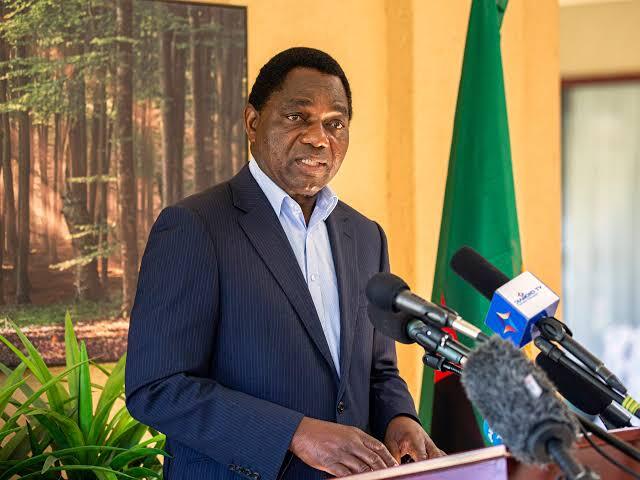
Hichilema entered the State House in 2021 with huge public expectation. He defeated Edgar Lungu after years of anger over debt, political violence, and economic strain. Many Zambians believed his business background would bring discipline, investment, and jobs. The promise was simple. Zambia would turn the page.
Some gains are visible. The government points to free education, restored investor confidence, debt restructuring, anti-corruption work, and improved macroeconomic management. A June 2026 commentary in the Mail & Guardian noted free education from primary to secondary school as one of the strongest achievements claimed by the UPND administration, with more than 2.5 million children said to have returned to school.
The economy also shows signs of relief. Reuters reported in February that Zambia’s central bank cut its policy rate after inflation slowed to 9.4 percent in January from 11.2 percent in December. The Bank of Zambia expected inflation to fall within its 6 percent to 8 percent target range in the second quarter of 2026, supported by a stronger kwacha and better agricultural conditions.
But elections are not won in spreadsheets alone. Voters measure progress in kitchens, buses, classrooms, farms, clinics, and trading places. A lower inflation figure matters. A mother still asks why food feels expensive. A stronger kwacha matters. A jobless graduate still asks why a degree has not changed his life. Debt restructuring matters. A small business owner still asks why credit is tight and electricity interruptions keep hurting production.
This is where Zambia’s 2026 election becomes difficult for the ruling party. Hichilema has a record to defend. The opposition has anger to harvest. The people have memories.
The opposition field is broad, but it is also fragmented. Fourteen candidates suggest energy. They also suggest division. If opposition parties fail to speak with one voice, Hichilema benefits from their split. If they turn the election into personal ambition rather than a national argument, voters will see old politics wearing new colours.
Still, the ruling party should not mistake a divided opposition for public satisfaction. The mood in many African elections has changed. Citizens now punish arrogance faster. They compare promises with receipts. They ask who gained from reform. They ask whether sacrifice was shared. They ask why leaders preach patience while ordinary households absorb the pain first.
Zambia’s campaign is also unfolding after major electoral changes. In April, the Electoral Commission announced 70 new constituencies ahead of the August election. The ECZ said the changes followed the Constitution of Zambia Amendment Act No. 13 of 2025, which increased constituency-based seats from 156 to 226.
The changes have already become part of the political argument. Reuters reported in December 2025 that Hichilema signed constitutional amendments expanding parliament from 167 members to about 280, creating more constituencies, reserving 40 seats for women, youth and people with disabilities, and increasing presidential appointees from eight to 11. Critics, including the Catholic Church, said the reforms were rushed and might favour the ruling party. Hichilema defended them as necessary for service delivery.
This matters because trust is now an election issue. Zambia has long sold itself as one of Africa’s more peaceful democratic examples. That reputation is valuable. But it is not permanent. The Institute for Security Studies warned in June that Zambia’s democratic record and the ECZ’s technical capacity will face a serious test in the 2026 polls. It also warned that voters might see the election as shaped by legal manoeuvring rather than the ballot if political tensions deepen.
The Peace Research Institute Oslo raised similar concerns, pointing to strategic electoral violence, politicised use of the judiciary to overturn opposition victories, under-representation of women and lower-income citizens, and heavy presidential powers as risks to democratic accountability.
For Hichilema, the election is no longer about replacing the old order. He is now the order. The anger once aimed at Lungu’s Patriotic Front now partly returns to State House. Every unfulfilled promise has an address. Every hardship has a political target. Every delayed reform becomes campaign material for opponents.
The memory of Lungu still hangs over the race. Reuters reported that the former president died in South Africa in 2025, after the Constitutional Court had already blocked his attempted political comeback. A later Reuters report said his body remained in South Africa as his family and the Zambian government fought over burial arrangements, exposing the bitterness that still divides Zambia’s political class.
That bitterness should worry every voter. Zambia needs competition, not revenge. It needs accountability, not tribal mobilisation. It needs opposition parties that challenge policy, not only personalities. It needs a ruling party humble enough to accept that winning in 2021 was not a permanent contract.
The IMF has also placed the election inside a wider economic test. Reuters reported in May that talks over a new IMF support programme had advanced, with negotiations expected to continue after the August vote. The Fund said maintaining recent economic gains remained a key challenge because of election pressures and global uncertainty. It also said Zambia’s projected primary surplus had weakened compared with the final review of the previous programme.
That means the next government will inherit hard choices. Campaign promises will meet budget limits. Free education will need better classrooms and more teachers. Debt relief will need disciplined spending. Mining growth will need fair local benefit. Youth jobs will need more than rally applause.
Zambia’s 2026 election is therefore more than a contest among 14 names. It is a public audit. Voters will ask whether the new dawn brightened their homes or stayed in government speeches. They will ask whether more candidates mean more democracy or more confusion. They will ask whether promises still carry value in Zambian politics.
On August 13, the ballot will not only measure Hichilema against his opponents. It will measure hope against patience. It will measure reform against daily pain. It will measure Zambia’s democracy against the one thing voters never forget: the distance between what leaders promised and what citizens lived.