
KINSHASA, Democratic Republic of Congo – The Ebola outbreak in the Democratic Republic of Congo has moved beyond hospitals, laboratories, and emergency response tents. It has entered a more dangerous space: the space between frightened communities and health workers asking for trust.
The latest outbreak, confirmed in May 2026, involves the Bundibugyo species of Ebola. The World Health Organization says the outbreak is unfolding in a difficult setting marked by insecurity, displacement, remote communities, dense population movement, and cross-border trade. There is no approved vaccine or specific treatment for this species, although trials and candidate options are under review.
By June 30, Congolese authorities were investigating possible Ebola exposure in Tshopo and Haut-Uele provinces after cases linked to the current outbreak raised fears of wider spread. Reuters reported 1,307 infections and 377 deaths in the eastern provinces of Ituri, North Kivu, and South Kivu. The same report said contact tracing had expanded after the body of a pregnant Ebola victim was transported from Ituri’s Niania health zone to Kisangani before testing positive.
Those figures show a health emergency. The behaviour around the outbreak shows something deeper. In parts of eastern Congo, people are not only battling a virus. They are battling fear, suspicion, fatigue, hunger, displacement, armed conflict, and years of failed promises from institutions which often arrive during death, then leave during recovery.
Trust has become a frontline medical tool.
Health workers need people to report symptoms early. They need families to accept safe burials. They need contacts to remain reachable. They need patients to enter treatment centres before the virus spreads further. Each of those actions requires belief. Without belief, contact tracing breaks down. Testing slows. Patients hide. Families move bodies in secret. Rumours fill the space left by poor communication.
That danger is already visible. The Guardian reported on June 26 that nearly 300 Ebola-positive people were unaccounted for in DR Congo, while more than one million displaced people were living in camps that health teams struggle to access. Africa CDC chief Dr Jean Kaseya described the situation as deeply concerning. Treatment centres were reported near capacity, and only 13 percent of pledged international donor funding had been delivered.
The missing patients are not only a statistic. Each missing case creates new chains of infection. Each unknown movement creates new uncertainty. Each delay forces health officials to chase the disease from behind.
In displacement camps, the problem becomes sharper. Reuters reported in mid-June that distrust was frustrating contact tracing efforts, with some residents in conflict-affected areas believing Ebola was a hoax. The same report warned of rapid spread risk because camps face overcrowding, poor sanitation, and fragile access to health services.
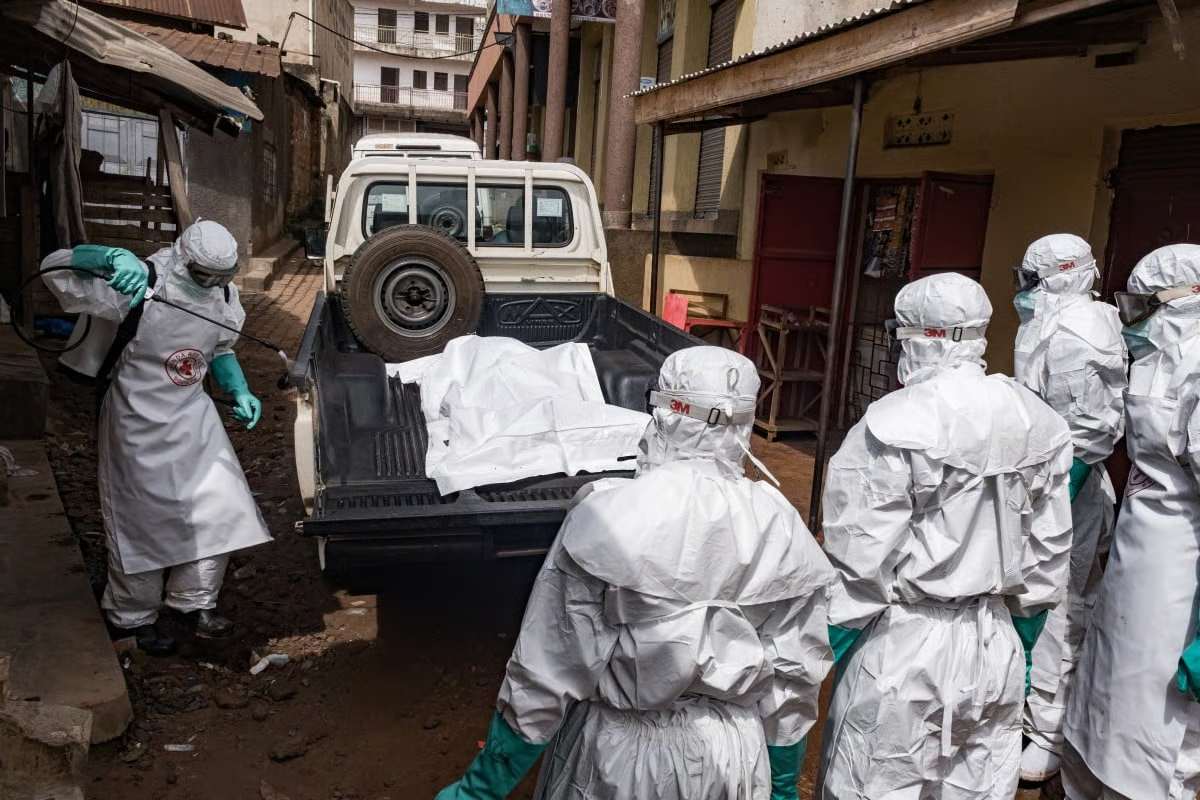
This is the central weakness in many emergency responses across Africa. Authorities often treat public communication as a side activity. In reality, communication decides whether medical science reaches the patient. A test kit does not help if people reject testing. A treatment centre does not save lives if families fear it. A burial team does not reduce transmission if mourners believe it has come to steal bodies.
WHO has already acknowledged the trust problem. On June 12, the agency said community trust is critical to health emergency response in DR Congo. It reported that 71 national and local risk communication and community engagement practitioners had been mobilised across Bulape Health Zone and two nearby health zones. WHO also said it supported the deployment of national and provincial specialists to strengthen government-led engagement work.
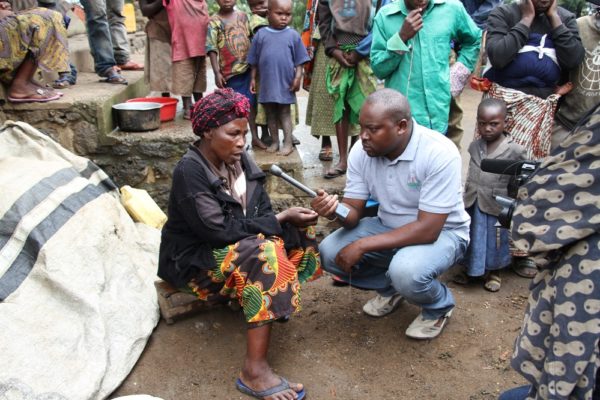
That approach matters because local voices carry weight. In many communities, people listen first to neighbours, pastors, market leaders, youth leaders, traditional chiefs, teachers, motorcycle taxi riders, and burial society members. A public health officer from the capital might bring facts. A trusted local person gives those facts a chance to survive.
Ebola control depends on human behaviour as much as medicine. A family must recognise danger early. A sick person must agree to isolation. Contacts must tell the truth about where they went and who they met. Communities must allow safe burials. Survivors must return without stigma. Health workers must enter villages without being attacked, rejected, or accused of profiting from death.
Congo has seen this pattern before. Previous Ebola outbreaks showed that fear of treatment centres, anger at outside responders, political mistrust, and insecurity weaken the response. The lesson has not changed. People do not cooperate with systems they believe have ignored them for years.
The state also faces a credibility test. For many Congolese citizens, health emergencies arrive in places already wounded by armed groups, poverty, poor roads, weak clinics, and displacement. When officials ask for sacrifice, communities ask what the state has done for them before the outbreak. That question is not political theatre. It is practical. A family that has survived war, hunger, and neglect will not easily surrender control over a sick relative to strangers wearing protective suits.
International partners face the same test. Donor pledges mean little if money arrives late. Emergency vehicles mean little if villages lack clean water. Press briefings mean little if people in camps lack soap, toilets, space, food, and safe shelter. The Guardian’s report that only a small share of pledged funds had arrived should worry every agency involved in the response.
The next phase of Congo’s Ebola fight needs two equal tracks.
The first is medical: surveillance, testing, treatment, safe burial, laboratory support, protection for health workers, and cross-border coordination with Uganda, South Sudan, and the Central African Republic.
The second is social: listening before instructing, hiring local responders, explaining every step, correcting rumours fast, protecting families from stigma, and making sure communities see health teams as partners rather than intruders.
The virus spreads through bodies. Fear spreads through silence. Congo needs to stop both.
If trust fails, the outbreak will move faster than ambulances, faster than lab results, and faster than official statements. If trust grows, even a frightened village becomes part of the response.
That is the lesson from Congo’s latest Ebola crisis. The country is fighting a deadly virus. It is also fighting the memory of institutions that arrived too late, spoke too little, and expected obedience where trust had never been built.