

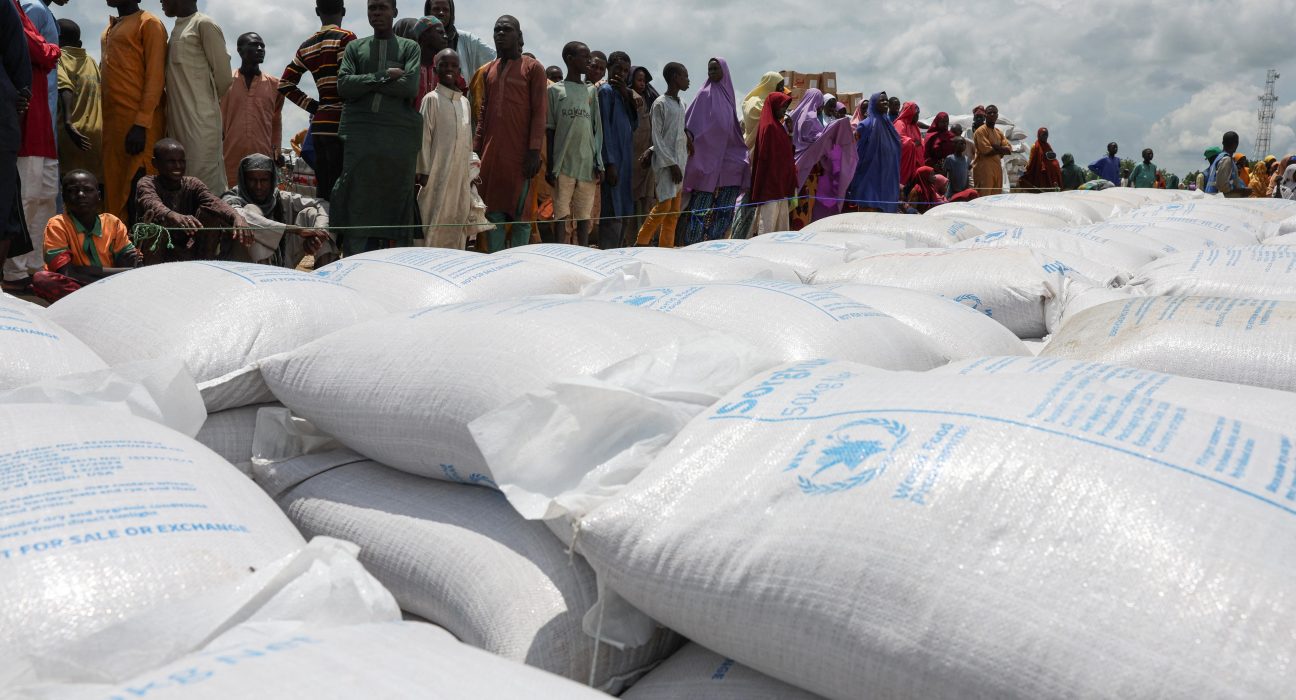
ABUJA, Nigeria – Northern Nigeria is sliding into one of its worst hunger emergencies in nearly a decade, and the warning signs now stretch beyond empty plates.
The United Nations World Food Programme says more than 17 million people across nine conflict-hit northern states face crisis, emergency, or catastrophic levels of hunger. The latest Cadre Harmonisé analysis shows an increase of almost two million people since earlier projections. This is no longer a seasonal food problem. It is a national security emergency with regional consequences.
The hardest blow has landed in Borno, Adamawa, and Yobe, the three northeastern states long scarred by insurgency, displacement, kidnappings, and broken rural economies. WFP says food insecurity in those three states has risen to 6.2 million people, while funding cuts mean the agency now reaches only 740,000 of them. Last year, it supported 1.3 million people at the peak of the lean season.
Borno remains the centre of the crisis. Reuters reports more than three million people in the state are acutely food insecure, including about 750,000 in severe hunger. Farms have been abandoned. Markets have been disrupted. Roads are unsafe. Families who fled violence now face a second threat, the slow violence of hunger.
The food crisis also exposes a wider African problem. In many conflict zones, hunger is no longer only caused by drought or bad harvests. It is produced by insecurity, poor governance, weak rural protection, shrinking aid, inflation, and the collapse of local livelihoods. Armed groups attack farming communities, raid villages, block trade routes, and force people into camps. Once families leave their land, each harvest season lost pushes them deeper into dependence.
The numbers are grim across Nigeria. ReliefWeb, citing WFP’s June 2026 situation report, says 36.3 million people are food insecure nationally, with 2.1 million in the most severe IPC 4 and 5 phases. OCHA warned in May Nigeria faced an unprecedented lean season, with almost 35 million people expected to face acute food insecurity in 2026.
Children carry the heaviest cost. A December IPC acute malnutrition report projected nearly 6.4 million children under five across northeast, northwest, and north central Nigeria would suffer acute malnutrition through September 2026. That includes two million severe acute malnutrition cases. These are children whose bodies and brains are being damaged by a crisis they did not create.
WFP says it needs 89 million dollars over the next six months to continue food and nutrition assistance, plus logistics support, in northern Nigeria. Without that money, the agency warns hunger will deepen, displacement will rise, and instability will spread.
At household level, the crisis is already changing daily choices. Families are cutting meals, reducing portions, borrowing grain, selling livestock, and sending children to work instead of school. In camps and host communities, mothers face impossible choices between food, medicine, transport, and rent. Malnutrition clinics are seeing children arrive too late, after weeks of hunger and infection have weakened them. Market traders also feel the pressure because insecurity raises transport costs and limits supply. When roads close or convoys delay, prices climb faster than wages, and poor families lose access to even basic staples.
Abuja should also confront the political economy of hunger. Food aid disappears quickly when armed groups control rural roads and criminal networks profit from scarcity. A serious response needs security forces to protect planting seasons, market days, storage sites, and humanitarian routes. It also needs local officials to publish clear food distribution lists and punish diversion. Northern Nigeria does not only need bags of grain. It needs trust, access, and safety. Without those three, every shipment becomes temporary relief in a crisis rebuilt by violence.
This is the dangerous part. Hunger does not stay in one village. It moves with people. It moves through markets. It weakens schools, health centres, policing, and local government. It creates recruitment space for armed groups. A young man with no food, no work, and no protection becomes easier to exploit. A mother who cannot feed her children takes risks she would never have considered before.
Nigeria has faced Boko Haram, Islamic State-linked violence, banditry, and mass kidnappings for years. But hunger now threatens to turn security pressure into social breakdown. When aid agencies reduce coverage, hungry communities do not simply wait. They move, borrow, sell assets, pull children from school, and accept dangerous offers from whoever controls access to food, roads, or cash.
The crisis also raises hard questions for Abuja. Nigeria is Africa’s largest economy by population, a major oil producer, and a country with deep agricultural capacity. Yet millions in its north now depend on external food support. Humanitarian aid is needed, but aid alone will not fix this. Protection of farmers, safe rural roads, grain storage, nutrition treatment, local procurement, and serious accountability over security spending must sit at the centre of the response.
The African Union and ECOWAS should treat northern Nigeria’s hunger crisis as a regional warning. Food insecurity in Nigeria affects West Africa through migration, trade disruption, border pressure, and extremist networks. A collapse in parts of northern Nigeria would not remain a Nigerian problem.
The lesson is direct. When food systems fail in conflict zones, the state loses more than harvests. It loses trust. It loses control. It loses the next generation.
Northern Nigeria needs urgent food funding now. It also needs a security and farming recovery plan with clear targets, protected corridors, transparent spending, and local leadership. The immediate task is to stop children from starving. The deeper task is to make sure hunger never becomes a weapon stronger than the state.