
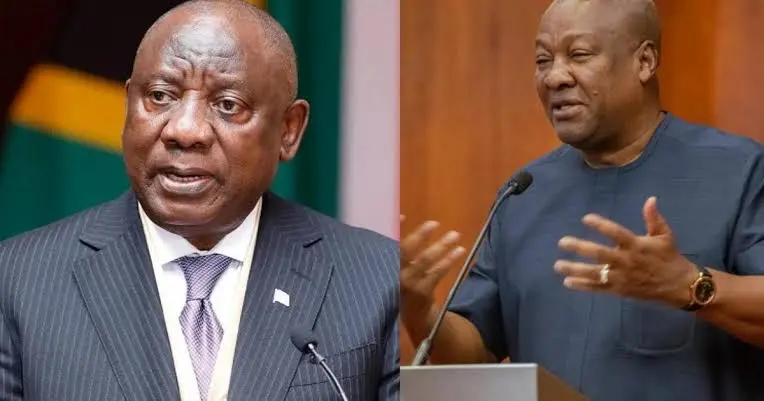
ACCRA, Ghana – Ghana has sent South Africa a rare diplomatic rebuke. President Cyril Ramaphosa’s planned state visit has been rejected as anger grows over attacks on African migrants in South Africa.
The decision hits Pretoria where pride hurts most. Ghana has long carried moral weight in Africa’s liberation story. South African freedom fighters once found refuge, study, and political support in Ghana. Now Accra has told Pretoria, in diplomatic language, to fix the safety of African citizens before asking for red-carpet treatment.
Daily Graphic reported on July 7, 2026, that Ghana declined Ramaphosa’s request for a state visit because of recent xenophobic attacks affecting Ghanaian nationals. The report cited diplomatic sources in Accra and Pretoria. Ghana Business News also reported that the planned visit, scheduled for August 2 to 4, had been rejected. Both outlets linked the decision to Ghana’s concern over attacks on its citizens and other African migrants in South Africa.
This is not a small protocol matter. A state visit carries trust, honour, and political warmth. Ghana has withheld all three.
The immediate dispute surrounds the death of Ghanaian national Bashiru Isak in Cape Town. Ghanaian authorities say he was killed amid anti-immigrant demonstrations and rising attacks on African migrants. South Africa rejects that account. Justice Minister Mmamoloko Kubayi said the killing took place on June 29, one day before the June 30 demonstrations, and police suspect an extortion-related criminal attack at a barbershop in Nyanga.
This disagreement matters, but one disputed file cannot erase the wider crisis. South Africa now faces a continental confidence problem. Ghana, Nigeria, Malawi, and other African states have watched their nationals flee, seek repatriation, close businesses, or live under threat during anti-migrant mobilisation.
Reuters reported that South Africa deployed 3,405 soldiers to support police during anti-migrant protests, with the deployment running from June 28 to July 31 at an estimated cost of 54.6 million rand. More than 900 people were arrested during protests and related incidents, with offences ranging from immigration violations to public violence, robbery, and harbouring undocumented migrants.
That is the real embarrassment. A government which once claimed moral authority after apartheid now needs soldiers to control citizens threatening fellow Africans.
Ghana had already warned its citizens. On June 1, its Foreign Ministry advised Ghanaians to avoid non-essential travel to South Africa, citing attacks by anti-immigrant vigilante groups, injuries, looting, business closures, and property destruction. The ministry urged Ghanaians in South Africa to remain in contact with Ghana’s High Commission in Pretoria.
The University of Ghana followed with its own travel advisory on July 6, warning staff and students to avoid South Africa until further notice. The university said demonstrations targeting foreign nationals had raised safety concerns and told responsible officers to suspend travel approvals. Ghana Business News reported that Ghana had repatriated about 926 citizens in May and June, while 900 more had been screened and awaited repatriation.
This is how diplomacy breaks. First comes fear in the street. Then travel advisories. Then evacuations. Then protests through embassies. Then state visits die before arrival.
Pretoria should not hide behind technical arguments over one death. South Africa deserves fair treatment on facts, and Ghana also owes accuracy. If Bashiru Isak died in an extortion attack unrelated to protests, Ghana must correct the record. But South Africa must also face a broader truth. African governments no longer trust Pretoria to protect their citizens when mobs turn migration into a street war.
Nigeria has now added its own anger. AP reported that Nigeria said two of its nationals were killed in South Africa in June amid violent anti-immigrant protests, one allegedly by police officers and one by unidentified attackers. Nigeria’s foreign ministry said the killings raised questions about the targeting of Nigerians in South Africa.
South Africa’s leaders must understand the signal from Accra. Ghana is not only protecting Ghanaians. Ghana is drawing a continental line. African nationals must not become soft targets every time unemployment, crime, weak policing, and failed migration systems fuel anger in South African townships.
South Africans have legitimate concerns. Borders need order. Work permits need control. Home Affairs needs discipline. Crime syndicates need arrests. Employers who exploit undocumented labour need punishment. Foreigners who commit crimes need prosecution and lawful deportation.
But none of those concerns gives citizens power to raid homes, close shops, hunt accents, threaten tenants, or demand papers in the street. Immigration enforcement belongs to the state. Once mobs inherit state power, law dies.
Ghana’s move should also shame other African governments. Many leaders export citizens through bad policy, corruption, weak currencies, poor hospitals, unemployment, and dead industries. Then they complain when their people suffer abroad. Accra’s rebuke of Pretoria has force because Ghana took visible steps for its citizens. More African governments should do the same. But they must also ask why their citizens keep leaving home.
South Africa also needs humility. The country remains Africa’s largest magnet for migrants because its economy, courts, banks, hospitals, universities, shops, and wage systems still look stronger than much of the continent. That advantage brings responsibility. A regional power cannot enjoy African labour, African trade, African markets, and African diplomacy while failing to protect African bodies.
Ramaphosa’s cancelled visit now becomes a warning. South Africa cannot lead Africa in speeches while African citizens fear South African streets. Ghana has exposed the gap between liberation language and present reality.
Pretoria should move fast. It must protect migrants, prosecute attackers, publish clear data on protest violence, repair diplomatic trust with Ghana, Nigeria, Malawi, Mozambique, and Zimbabwe, and separate lawful immigration enforcement from Afrophobic politics.
A state visit can wait. African lives cannot.