

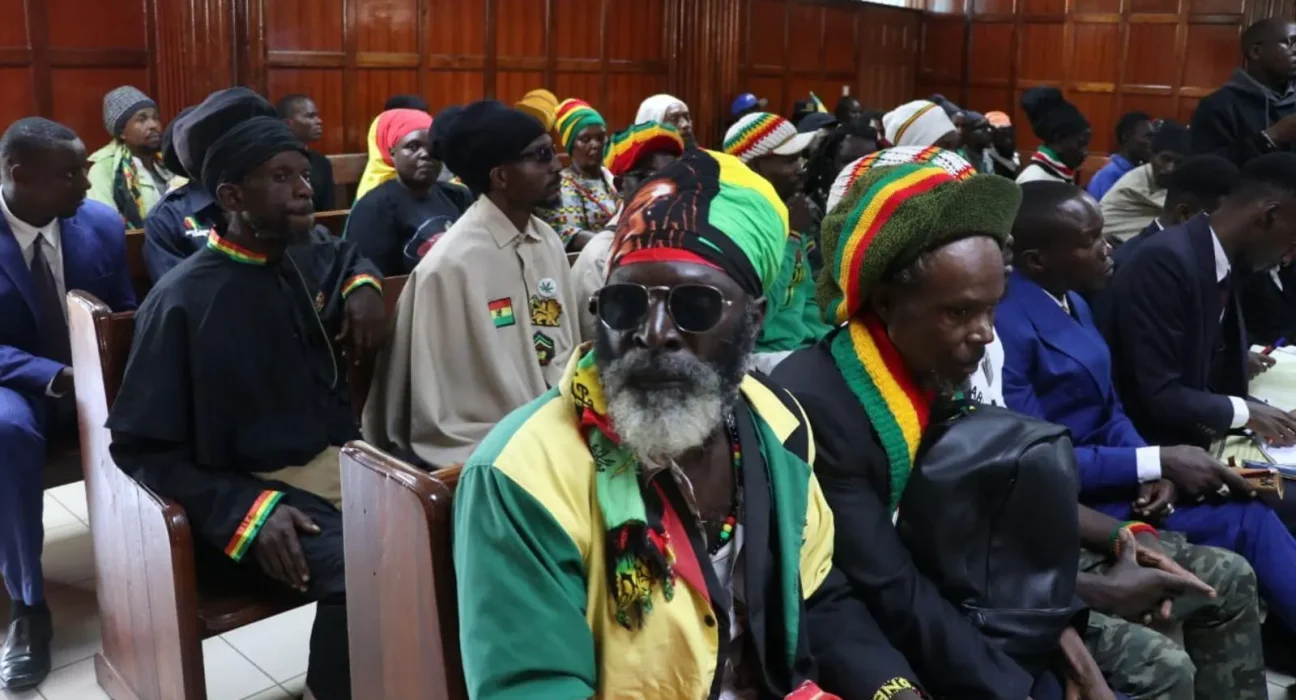
NAIROBI, Kenya – Kenya’s Rastafari community has lost its High Court bid for legal protection to smoke cannabis during worship, but the five-year legal fight now moves toward the Court of Appeal.
Justice Bahati Mwamuye dismissed the constitutional petition on July 15. He ruled existing narcotics laws do not violate Rastafarians’ freedom of religion. The judge found weak evidence for cannabis as an indispensable religious requirement and rejected a special exemption from criminal law. The petitioners’ lawyer, Shadrack Wambui, announced an appeal after the judgment.
The ruling ended months of expectation among believers who gathered in tabernacles, prayed beneath portraits of Emperor Haile Selassie I, and argued for legal space to use ganja as a sacrament. Their case did not seek full recreational legalisation for every Kenyan. The Rastafari Society of Kenya sought narrow protection for adult believers using cannabis privately or inside designated places of worship.
Court testimony described cannabis as a holy herb linked to prayer, meditation, reasoning sessions, and spiritual guidance. Petitioners said members use the herb during communal worship or private devotion. They also proposed restrictions excluding children and recreational users. Their lawyers argued criminalisation forced believers to choose between faith and obedience to state law.
Mwamuye rejected the central religious argument. The judge said witnesses admitted some Rastafarians do not consume cannabis. He concluded use represented a preferred method of worship rather than a compulsory tenet. “The use of cannabis is not mandatory,” he ruled.
The judgment also found no practical enforcement plan able to protect sacramental use without creating access for wider illegal supply. A religious exemption would require rules covering cultivation, quantities, storage, distribution, worship sites, adult membership, police verification, and diversion into commercial markets. The court found the petitioners had not supplied an enforceable system meeting those concerns.
Kenya’s Constitution protects freedom of conscience, religion, belief, worship, teaching, practice, and observance. Those rights still operate within a wider constitutional order where courts weigh individual liberty against public safety, health, criminal law, and the rights of others. Mwamuye ruled the petition failed to establish grounds strong enough for judicial removal of Rastafari believers from the narcotics law.
Kenya’s Narcotic Drugs and Psychotropic Substances Control Act prohibits unauthorised cultivation, possession, use, transport, sale, and consumption of cannabis. Smoking or possession for personal consumption exposes offenders to heavy fines, imprisonment reaching ten years, or both. Trafficking attracts harsher punishment.
Rastafarians reacted with anger. Supporters gathered at Freedom Corner in Nairobi, beat drums, chanted, and smoked cannabis after the ruling. Wanjiru Gakiu, a believer for 34 years, called the judgment disappointing. “The country is deaf and doesn’t want us to enjoy our religious rights,” she said.
Kenyan society remains divided. Some citizens view cannabis as a dangerous drug linked to dependency, impaired judgment, school failure, unsafe driving, and mental-health risks among vulnerable users. Others see hypocrisy in criminal penalties for cannabis while alcohol and tobacco remain legal, taxed, advertised, and widely consumed.
The court did not end the policy debate. Mwamuye urged Kenya to hold a national conversation covering society beyond the Rastafari community. His position left Parliament, health experts, religious groups, police, farmers, lawyers, and citizens with a difficult task. Kenya must decide whether criminal prohibition still delivers better results than regulation, medical access, decriminalisation, or tightly controlled religious use.
The case carries weight because Kenyan courts already recognise Rastafari as a protected religion. In 2019, the High Court found a school had violated a pupil’s religious rights by demanding removal of her dreadlocks. The Supreme Court later upheld protection for her faith. Kenya therefore recognises Rastafari identity while refusing a cannabis exemption.
Such separation gives the appeal its central question. Does constitutional protection cover only identity, hair, prayer, clothing, and association, or should protection also reach a disputed sacrament? The Court of Appeal will examine whether Mwamuye applied the proper test for religious freedom and whether proof of universal or mandatory use should decide constitutional protection.
A religion does not lose legal protection because every believer follows different practices. Christians disagree over wine, fasting, baptism, clothing, marriage, and worship. Muslims differ over schools of law and ritual detail. Rastafari also contains distinct branches, including Nyabinghi, Bobo Ashanti, and the Twelve Tribes of Israel. Variation does not automatically erase sincerity.
Yet religious sincerity does not automatically defeat neutral criminal law. Courts must also ask whether an exemption remains narrow, measurable, safe, and enforceable. Police need clear boundaries. Courts need proof. Communities need protection from arbitrary searches. Children need safeguards. Citizens need assurance against disguised trafficking.
The strongest next step lies beyond slogans. Rastafari lawyers should present a detailed regulatory proposal during the appeal or before Parliament. Such a plan should define eligible adults, approved worship sites, possession limits, cultivation licences, secure storage, record keeping, health warnings, transport rules, and punishment for diversion.
Government also owes citizens honest evidence. Arrest totals, conviction rates, prison costs, treatment data, youth consumption, organised crime patterns, and public-health outcomes should guide policy. Fear should not replace research. Religious sympathy should not replace regulation.
Kenya now faces two separate questions. The courts will decide whether Rastafarians deserve constitutional relief under present law. Parliament must decide whether present law still serves Kenya.
For now, cannabis remains illegal. Rastafari believers face arrest when they cultivate, possess, or smoke ganja, even during worship. Their legal hope did not disappear. Their argument now moves to a higher court, where religious freedom, public safety, drug controls, and modern African policy will meet again.