
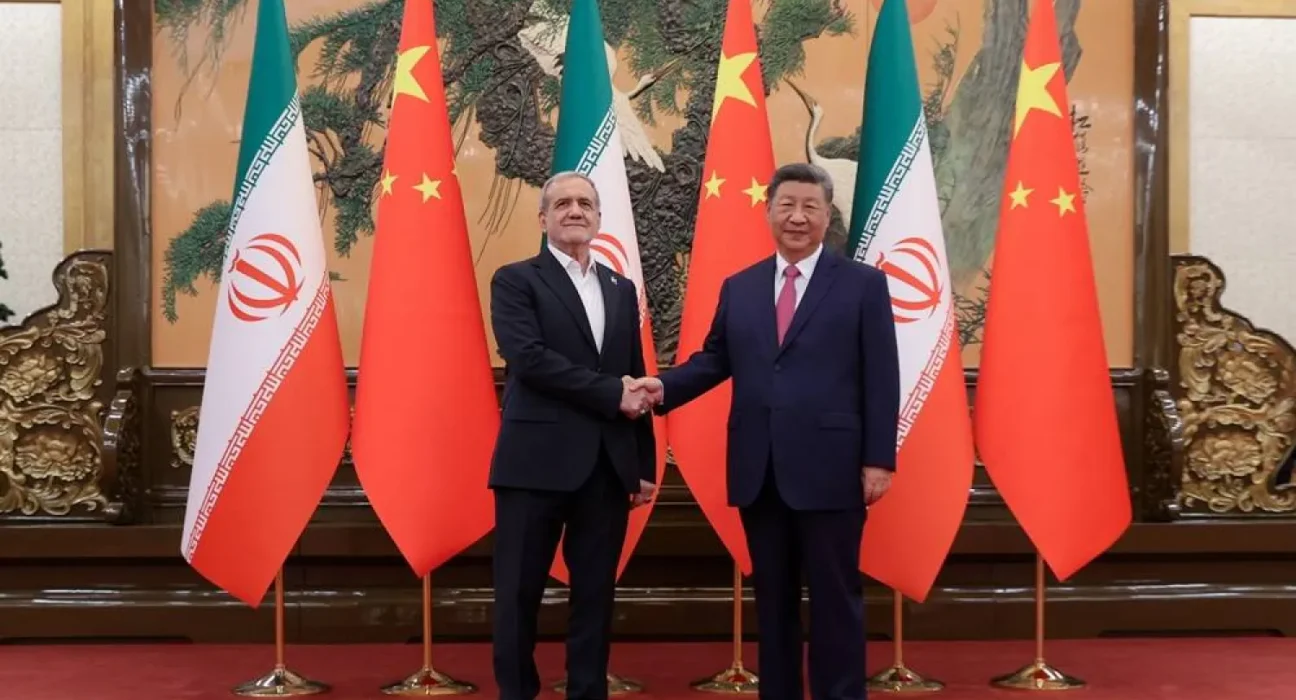
BEIJING, China – China is pressing for renewed negotiations between Iran and the United States as the Iran war disrupts Beijing’s energy supplies, reshapes global tanker routes and sends more buyers toward American crude.
The central claim circulating in American political commentary is partly supported by reporting, but several details need correction. Reuters reported on July 24: Pakistan was exploring a route back to US-Iran negotiations after an initiative from Beijing. Iranian Interior Minister Eskandar Momeni held repeated meetings in Islamabad, while Pakistani officials said Chinese leaders wanted diplomatic movement because war and disruption around the Strait of Hormuz were hurting Chinese interests.
Those developments are significant. China is the world’s largest crude importer and has long bought large volumes of discounted Iranian oil. The conflict has disrupted those flows and forced Beijing to draw heavily from domestic stockpiles while reducing overall imports.
Reuters reported on August 10: China imported 8.41 million barrels per day in July. The figure stood 24.3 percent below July 2025. Average imports across June and July fell to 7.78 million barrels per day, far below the pre-war average of 11.99 million. China has therefore absorbed a large share of Asia’s demand destruction during the conflict.
Beijing has strong reasons to want the war over.
Chinese factories depend on dependable energy flows. Chinese refiners benefit from discounted Iranian crude. Beijing’s commercial strategy relies on stable shipping between Asia, the Gulf, Europe and Africa. Every week of disruption raises freight, insurance and replacement-supply costs.
Yet describing China as “begging” Iran for a deal goes beyond verified reporting. Beijing is exerting pressure and supporting mediation through Pakistan. Reuters sources described Chinese officials as unhappy over attacks and disruption around Hormuz. No credible public evidence reviewed for this article shows President Xi Jinping begging Iranian leaders.
The reported “love letter” from Xi to President Donald Trump also requires caution. Public reporting confirms high-level communication between Washington and Beijing, while Trump has described direct exchanges with Xi. The African Telegraph found no authenticated text establishing a personal letter matching the colourful description used by Fox News host Jesse Watters.
The oil story carries substantial factual weight.
American crude exports surged after Middle Eastern supply disruption sent tankers toward the US Gulf Coast. S&P Global Commodity Insights reported US crude exports reached a record 5.6 million barrels per day during the fifth month of 2026. Gulf Coast terminals handled the overwhelming majority of those shipments.
Earlier EIA data showed April exports averaging 5.593 million barrels per day, with 5.435 million leaving from the Gulf Coast. Those figures place American exporters among the clearest commercial beneficiaries of disrupted Gulf supply.
Corpus Christi became a central outlet. Industry tracking showed dozens of large crude carriers moving toward American ports as Asian and European buyers searched for replacement barrels. The diversion demonstrated how war around Hormuz rapidly changes global energy trade.
Still, one claim needs qualification. More than 100 tankers do not appear to be continuously lined up at American ports based on the strongest available public data. Kpler figures cited earlier in the conflict placed roughly 50 to 60 large tankers heading toward US ports on a typical day, already around double earlier traffic.
Another claim also needs correction. Venezuela is sending far more oil toward the United States than earlier this year, but not more than one million barrels per day.
Reuters reported Venezuela exported about 1.16 million barrels per day worldwide in July. Shipments to the United States reached roughly 786,000 barrels per day, the highest level since early 2019. The volume rose sharply from 284,000 barrels per day in January.
The change gives American refiners another source of heavy crude while Middle Eastern supplies face disruption.
US domestic production also stays near historic highs. EIA data for the week ending July 31 showed production around 13.8 million barrels per day. Commercial crude inventories stood near 407 million barrels.
Those numbers strengthen Washington’s position, but they do not make the United States immune from an energy shock.
American refiners still import selected grades of crude. Reuters reported US imports of Middle Eastern oil were set to rise toward 600,000 barrels per day in August after a temporary reopening around Hormuz allowed cargoes to move again.
America therefore exports huge volumes while also importing grades needed by specific refineries. Energy trade is more complex than a simple story of total independence.
China faces the opposite strategic problem.
Beijing holds vast oil reserves and diversified suppliers, including Russia, Brazil and other producers. Yet reduced access to Gulf crude imposes costs. Reuters estimates cited Chinese crude inventories above 1.2 billion barrels, giving Beijing a substantial cushion. Stockpiles buy time, not a permanent solution.
The pressure explains China’s diplomatic activism.
China and Pakistan called earlier this year for peace talks and restoration of normal navigation through Hormuz. Pakistan later emerged as a mediator between Washington and Tehran. By late July, Reuters reported another China-initiated effort to restart stalled negotiations.
This does not prove Washington has forced Beijing into submission.
American military pressure, Iranian retaliation and closure of a major energy artery have created economic pain across every side.
The United States gains from higher crude exports. American producers gain new buyers. Gulf Coast terminals gain traffic. Yet US consumers also face exposure to global prices, depleted strategic reserves and wartime spending.
China loses access to cheap Iranian barrels and absorbs higher shipping costs. Iran loses export revenue and faces deep military and economic pressure. Gulf producers lose dependable access to one of their most important shipping corridors.
No participant escapes the bill.
Watters is right about one central development. American energy has gained strategic importance during the Iran conflict. Record exports show buyers turning toward the United States when Middle Eastern routes become dangerous.
The stronger conclusion is broader.
Energy now sits at the centre of the war’s diplomatic endgame. China wants normal shipping restored. Washington wants Iranian concessions. Tehran wants sanctions relief, compensation and an end to military pressure.
Pakistan sits between them, trying to reopen negotiations.
If Beijing persuades Tehran back to talks, China will not be rescuing Iran alone. Beijing will be protecting its own refineries, trade routes and economic interests.
This explains why China is pushing so hard for diplomacy.