
JOHANNESBURG, South Africa – South Africa is playing with fire again. This time the flames are not only burning foreign-owned shops, rented rooms, street stalls and poor migrant families. They are burning the moral foundation of a nation once carried by Africa, defended by Africa, sheltered by Africa and celebrated by Africa.
The anger on the streets is real. The danger is also real.
South Africans are justified when they demand schools, hospitals, jobs, housing, water, electricity, policing and public services ahead of people who entered the country illegally. Citizens have every right to ask why clinics are overloaded, why classrooms are full, why police fail to control crime, why borders leak, why Home Affairs moves slowly, and why poor communities carry the full cost of state failure.
No African journalist should insult a poor South African mother who cannot get a clinic bed for her child. No analyst should mock a young South African graduate who cannot find work while employers hire desperate undocumented migrants for cheaper wages. No government should tell citizens to keep quiet while illegal migration puts pressure on services already weakened by corruption, unemployment and weak planning.
But South Africans must also hear another truth.
A valid demand for service delivery becomes a national crime when it turns into mob justice. A call for border control becomes Afrophobia when a crowd burns a Malawian shop, threatens a Zimbabwean family, attacks a Mozambican worker, humiliates a Congolese refugee or chases a Somali trader from a township. A citizen’s right to demand immigration law does not include the right to become Home Affairs with a stone in hand.
This is where South Africa now stands. Between rightful anger and organised hate. Between citizen frustration and political manipulation. Between the local failures of the state and the foreign shadows that history tells Africans never to ignore.
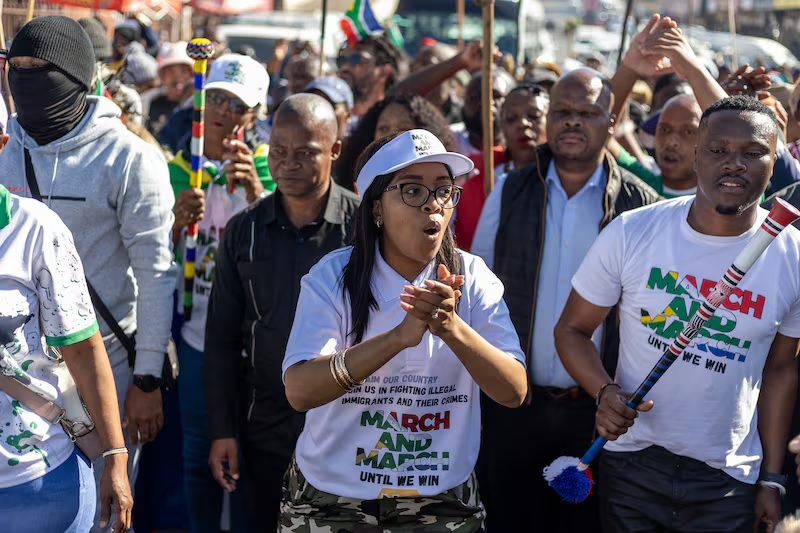
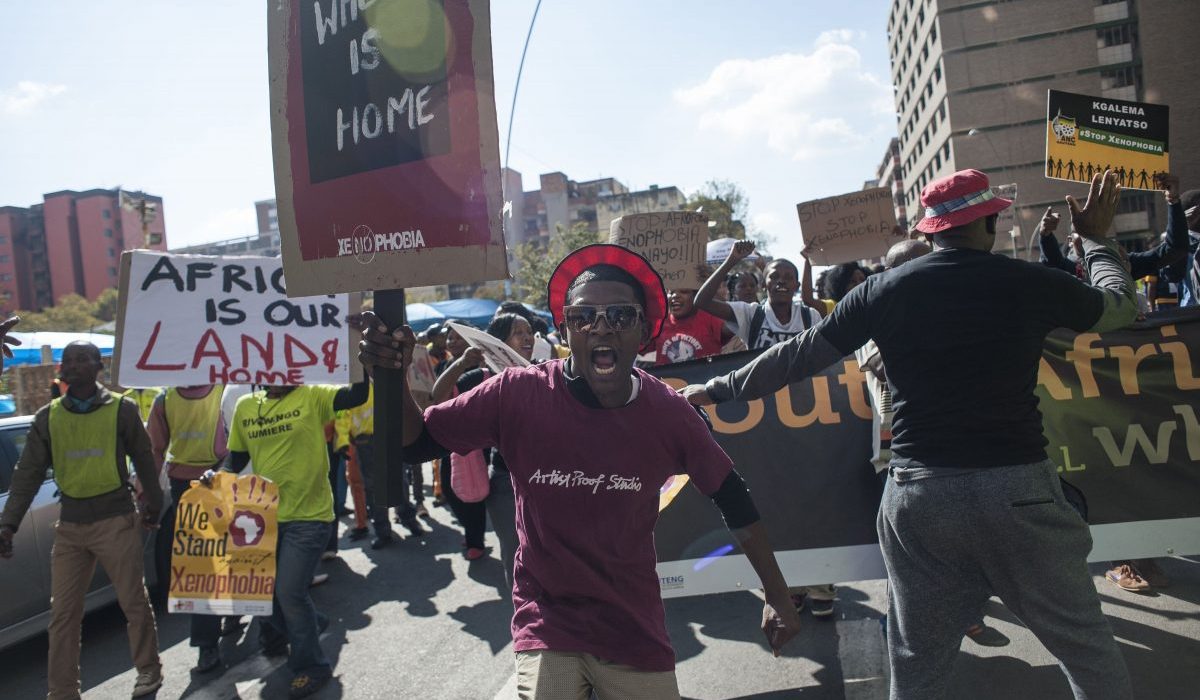
Reuters reported that anti-migrant protests spread across South African cities on June 30, after March and March and allied groups set an unofficial deadline for undocumented migrants to leave the country. Thousands of foreign nationals fled before the marches. At least four people had been killed. Businesses were vandalised. Some foreign tenants were evicted by landlords afraid of attacks. The movement’s leader, Jacinta Ngobese Zuma, said weekly marches would continue for months.
That is not a normal service delivery protest. That is a national security warning.
South Africans must ask a hard question. Who benefits when the poor turn against the poor? Who gains when a township worker blames a migrant instead of the official who stole the housing budget? Who gains when a clinic queue becomes a battlefield between Africans, while corrupt procurement networks remain untouched? Who gains when the children of the liberation struggle now hunt the children of countries that sheltered that struggle?
This is why the headline must speak of foreign shadows and local fires.
The local fire is visible. It is unemployment. It is poverty. It is crime. It is illegal migration. It is state failure. It is Home Affairs dysfunction. It is corruption at border posts. It is political parties that speak loudly during elections and disappear after voting day.
The foreign shadow is more complex. It is history. It is intelligence. It is apartheid-era collaboration. It is destabilisation. It is propaganda. It is the public language of fragmentation. It is the suspicion that external interests are watching, feeding, funding or exploiting unrest inside South Africa.
That suspicion should not be dismissed. It also should not be turned into fact without evidence. A serious country investigates. A foolish country guesses. A captured country refuses to ask.
South Africa knows foreign interference. This is not theory. It is history.
The CIA question has followed Nelson Mandela’s 1962 arrest for decades. Time reported that former CIA officer Donald Rickard said he tipped apartheid police about Mandela’s movements. The CIA has not publicly confirmed its role and key material remains classified, but the allegation has weight because it sits inside the documented Cold War hostility that liberation movements faced.
That history matters today because Mandela’s arrest was not a small event. It changed the liberation struggle. It removed a leader from active struggle for 27 years. It showed that foreign intelligence services were prepared to work within apartheid’s security environment when their interests aligned.
Israel’s apartheid-era record also demands honest treatment. A United States State Department memorandum from 1977 discussed Israeli-South African cooperation, including nuclear-related concerns and strategic exchanges between the two states. The wider record of Israeli relations with apartheid South Africa has long remained a painful subject for Africans who remember how Pretoria survived through quiet partnerships while black South Africans suffered under racial rule.
Mossad also belongs in South Africa’s security conversation. Al Jazeera’s Spy Cables investigation reported that South African intelligence files referenced foreign intelligence activity involving major agencies, including the CIA, MI6 and Mossad. One report described tension between South African intelligence officials and a Mossad Africa official accused of ignoring protocol. Another report said South African intelligence believed more than 140 foreign spies were operating in the country and had gained access to sensitive state structures.
These facts do not prove that CIA or Mossad officers are directing xenophobic attacks in South Africa today. No responsible publication should claim operational proof without documents, bank records, intercepted communications or official findings.
But these facts prove something else.
South Africa has been a site of foreign intelligence activity before. South Africa has been penetrated before. South Africa has been manipulated before. South Africa has enemies and rivals with reasons to weaken its politics, diplomacy, economy and Pan-African role.
That is enough reason for investigation.
The question becomes sharper because South Africa and Israel are now in open diplomatic conflict over Gaza. South Africa dragged Israel before the International Court of Justice in a genocide case. Pretoria has taken one of the strongest positions in the world against Israel’s war conduct. That position has turned South Africa into a diplomatic target. Any unrest that weakens South Africa’s moral authority, distracts its government, splits its black majority or damages its Pan-African image serves interests far beyond Johannesburg.
Then came the article published on The Times of Israel blog platform under the headline “Africa Must Fragment, South Africa First.” The piece argued for the breakup of African states and placed South Africa first in line for fragmentation. It spoke of ethno-cultural homelands and Western Cape secession as political solutions.
A blog post is not official Israeli policy. The Times of Israel blog section carries individual views. But ideas matter. Public arguments matter. Language matters. When a writer publicly argues that South Africa should fragment, and the same country is facing organised anti-African unrest, South Africans must ask why that idea is appearing now, who is circulating it, and who gains from a broken South Africa.
A fractured South Africa would weaken BRICS. It would weaken the African Union. It would weaken Southern Africa. It would weaken Pretoria’s voice at the United Nations. It would weaken the ICJ case against Israel. It would weaken Pan-African confidence. It would turn a continental power into a domestic battlefield.
This is why South Africans must be careful what they support.
A march that says “protect citizens” sounds reasonable. A march that says “fix Home Affairs” sounds lawful. A march that says “deport undocumented migrants through the law” sounds democratic. But when the same climate produces fear, fake notices, looting, intimidation, illegal evictions and deaths, citizens must stop and ask who has taken control of the anger.
The fake June 30 deadline was one of the clearest danger signs. AFP Fact Check reported that a graphic carrying Department of Home Affairs details claimed undocumented foreigners had to leave South Africa by June 30. The South African government said the notice was fake and AI-generated, with the aim of spreading panic.
That was not a small lie. That was psychological pressure. It told migrants to run. It told locals that the state had endorsed a deadline. It gave mobs a date. It created national tension. It weaponised fear.
Who made it? Who spread it? Who paid for the network that moved it? Who wanted panic before the marches?
Those questions matter.
The funding question matters too. National mobilisation requires money. Transport costs money. Posters cost money. branded clothing costs money. Sound systems cost money. Lawyers cost money. Marshals cost money. Communication teams cost money. Provincial coordination costs money. Media operations cost money.
The ANC has questioned the scale and organisation behind the marches. eNCA reported that March and March leaders denied using taxpayers’ money and said the movement relies on donations and private funding. The group also rejected claims that government was funding its existence.
That answer is not enough for a country under strain.
Movements that mobilise national anger must disclose funding. If a movement claims to speak for citizens, citizens must know who pays the bills. If a movement claims to defend sovereignty, it must prove it is not funded by foreign interests. If a movement claims to protect South Africans, it must prove it is not being used to destabilise South Africa.
This is not an attack on lawful protest. This is basic democratic hygiene.
South Africans must demand a formal probe into the money. The Financial Intelligence Centre, police, Parliament, intelligence oversight bodies and tax authorities should follow the money. Not with press statements. With bank records. With donor names. With digital traces. With transport invoices. With advertising records. With social media spend. With foreign-linked transfers. With full accountability.
If there is no foreign money, the movements should welcome disclosure. If there is foreign money, South Africa must know before the country burns further.
The tragedy is that ordinary South Africans have legitimate complaints, but those complaints are being pushed toward dangerous ends.
The migrant population is not large enough to explain South Africa’s collapse. Reuters cited official figures placing immigrants at roughly 4 percent of the population, while experts noted that claims linking migrants to crime and unemployment are not supported in the way anti-migrant groups often present them.
That does not mean illegal migration has no impact. It does. It affects hospitals, schools, housing demand, low-wage jobs and public order in some communities. It also creates space for corrupt officials, illegal employers and criminal networks.
But if migrants are only one part of the pressure, why are they being turned into the main enemy?
The answer is political convenience.
It is easier to chase a foreign hawker than arrest a corrupt official. It is easier to burn a migrant shop than recover stolen municipal funds. It is easier to blame a Zimbabwean gardener than confront a company paying poverty wages. It is easier to shout at a Malawian worker than demand functioning borders from the state. It is easier to beat the poor than defeat the powerful.
That is the old politics of division. Apartheid used it. Colonialism used it. Modern populists use it. Foreign intelligence services study it.
This is why the word “xenophobia” alone is not enough. South Africa is facing Afrophobia. The targets are mostly Africans. The anger is not directed equally at all foreigners. It does not fall with the same force on wealthy Europeans, Americans, Israelis, Chinese investors, Gulf capital or multinational companies. It falls hardest on poor black Africans.
That fact should shame the continent.
Mozambique sheltered South Africans. Zambia sheltered South Africans. Tanzania sheltered South Africans. Zimbabwe sheltered South Africans. Angola paid in blood. Botswana paid. Lesotho paid. Frontline states faced raids, assassinations, sabotage and economic pressure because they supported the struggle against apartheid.
That history does not cancel South Africa’s right to enforce borders. It does not mean South Africans must accept illegal migration in silence. It does not mean citizens must surrender public services.
But it does mean South Africans should not forget who stood with them when apartheid had guns, money, spies and Western friends.
Human Rights Watch has warned of new waves of xenophobic attacks targeting African and Asian foreign nationals, with little or insufficient police response. The group also recalled 2008, when 62 people were killed in xenophobic violence, including South Africans, Mozambicans, Zimbabweans and Somalis.
That history carries a hard lesson. Xenophobic violence does not stay controlled. Once a mob gains power, everyone becomes unsafe. Today the target is a migrant. Tomorrow it is a political rival. Then a journalist. Then a union organiser. Then a citizen from another province. Then a shopkeeper who refused to donate. Then anyone the mob names as an enemy.
Street power never obeys the constitution for long.
The South African state must now act with firmness and honesty.
It must enforce immigration law. It must protect citizens. It must deport those with no legal right to remain, through lawful process. It must speed up asylum decisions. It must clean Home Affairs. It must secure borders. It must prosecute corrupt border officials. It must punish employers who exploit undocumented migrants to undercut South African workers. It must target criminal syndicates, whether local or foreign. It must restore services in poor communities.
But it must also stop vigilantes.
No march should replace police. No civic group should inspect documents on the street. No self-appointed commander should decide who belongs in a township. No political movement should use migration to train citizens in lawlessness.
South Africans should demand services without surrendering their humanity. They should demand borders without becoming tools. They should demand jobs without burning shops. They should demand safety without attacking children. They should demand justice without copying the cruelty of apartheid.
A serious Pan-African position must hold two truths at once.
First, South Africans have a legitimate right to demand a fair share of national services. Illegal migration must be controlled. The state must not abandon citizens.
Second, no service delivery crisis gives any citizen the right to hunt another African. No foreign national should be beaten, looted, evicted or humiliated because of collective anger.
The CIA history, Mossad questions, apartheid-era Israel ties and open calls for South Africa’s fragmentation all demand sober investigation. They are not side issues. They form part of the political weather around South Africa’s crisis. A country with South Africa’s history would be reckless to ignore foreign shadows.
But local hands must also answer for local fires.
Foreign actors do not force a man to loot a shop. Intelligence agencies do not force a crowd to chase a woman from her room. Outside interests do not force citizens to spread fake notices. Politicians do not force communities to forget Ubuntu. Those choices still belong to people.
South Africa must not allow foreign interests to exploit real pain. It must not allow political parties to ride anger into elections. It must not allow civic movements to become private immigration police. It must not allow poor Africans to fight each other while elites remain safe.
This is the honest reckoning now needed across Africa.
South Africa’s service delivery crisis is real. Its illegal migration challenge is real. Its history of foreign interference is real. Its diplomatic enemies are real. Its intelligence vulnerability is real. Its xenophobic violence is real.
A mature nation does not choose one truth and bury the rest. A mature nation faces all of them.
South Africans should ask for every clinic, every job, every border post, every school desk and every police patrol they deserve. But they should also ask who is whispering behind the anger, who is funding the marches, who is writing the fragmentation scripts, who is spreading fake deadlines, who is turning African poverty into African blood.
Because if South Africa burns, the poor will not inherit victory. They will inherit ashes.
The politicians will count votes. The funders will vanish. The propagandists will move to the next crisis. The foreign strategists will mark success. Africa will lose one of its most important voices.
South Africa must not become a weapon against itself.