
HARARE, Zimbabwe – Zimbabwe’s Constitution Amendment Bill No. 3 has opened a fight far bigger than legal clauses and parliamentary numbers. It has forced the country to face the unfinished question left behind by Robert Mugabe’s removal in 2017.
Did Zimbabwe remove one man to restore constitutionalism, or did it remove him to clear the path for another centre of power?
That question now sits at the heart of Zimbabwe’s national debate.
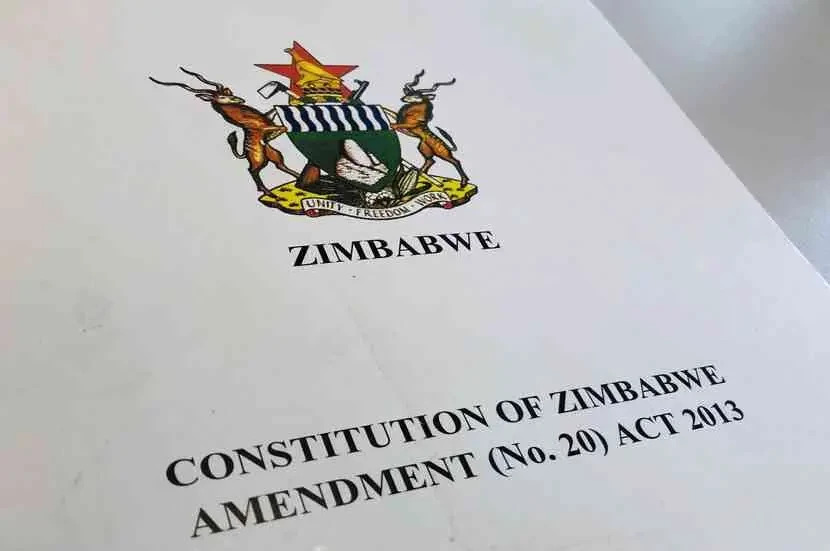
The Bill seeks to extend presidential, parliamentary and local authority terms from five years to seven years. It also proposes replacing direct presidential elections with a system where Parliament elects the President. Reuters reported that Zimbabwe’s upper house approved the Bill on June 24, 2026, after the lower house had passed it with the required two-thirds majority. The change would allow President Emmerson Mnangagwa to remain in office until 2030, two years beyond the current 2028 constitutional limit.
Government presents the Bill as governance reform. Supporters speak of stability, policy continuity and Vision 2030. Critics see something more dangerous. They see a political class rewriting the rules after voters gave a five-year mandate.
A five-year mandate is not a seven-year mandate.
A constitution is not a party diary. It is not a campaign promise. It is not a document office holders adjust when time runs out. It is the highest covenant between citizens and the state. When those in power alter it to extend their own stay, the nation must treat that act as a constitutional emergency, not a routine reform.
Zimbabwe has been here before. It has watched power grow roots. It has watched liberation history turn into entitlement. It has watched state institutions bend toward one man and one party. That is why the 2013 Constitution mattered. It came after decades of contested elections, violence, economic decline and political fatigue. It placed limits around presidential power because the country already knew the cost of endless rule.
Mugabe’s removal in November 2017 was sold as a national correction. The military stepped in. ZANU-PF turned against its own leader. Parliament prepared impeachment. Crowds filled the streets. Many Zimbabweans celebrated because they believed the politics of forever had ended. Reuters described the fall of Mugabe as the result of military pressure, party revolt and parliamentary impeachment moves after 37 years in power.
That moment now looks less like a democratic reset and more like a precedent.
The lesson some leaders appear to have taken was not that power must obey the Constitution. The lesson appears to have been that power survives when institutions are managed, opponents are divided and legal language is used to bless political ambition.
That is the danger of Amendment No. 3.
If Parliament extends its own life today, why should any future Parliament stop at seven years? If lawmakers select the President tomorrow, what remains of the people’s direct authority over the highest office? If a sitting President benefits from a term extension after the election has already taken place, what stops the next leader from doing the same?
This is how constitutions weaken. Not always through tanks. Sometimes through votes in Parliament. Sometimes through polished speeches. Sometimes through clauses written in legal language. Sometimes through public hearings where citizens feel watched, silenced or afraid.
The Bill has faced heavy criticism from lawyers, opposition figures, civil society groups, war veterans and democracy monitors. ConstitutionNet described the proposed changes as a far-reaching disruption that would extend the terms of elected officials, prolong Mnangagwa’s tenure to 2030 and replace direct presidential elections with parliamentary selection.
That is not a minor adjustment. It changes the relationship between the citizen and the presidency.
Under a direct presidential vote, every voter has a straight line to the highest office. The villager, teacher, vendor, nurse, student, pensioner and unemployed graduate all hold the same national instrument. They vote for the President directly. Under a parliamentary model, that direct power moves upward to lawmakers. In a system where party control, patronage, recalls and inducements shape political behaviour, that change carries serious risk.
Zimbabweans have reason to distrust that transfer of power.
Al Jazeera reported that the Bill sparked backlash because it would scrap direct presidential elections and shift the choice of President to Parliament. It also reported allegations of intimidation around public consultations and claims that some lawmakers were offered or received inducements connected to support for the Bill.
Those claims require investigation. But the concern is already clear. If MPs face pressure from party leaders, business interests and political patrons, then Parliament is not a safer place for presidential selection than the national ballot. It is a narrower place. It is easier to influence. It is easier to control. It is easier to reward and punish.
The public hearings around the Bill have also damaged confidence. AP reported that a hearing in Harare erupted in violence and that lawyer Doug Coltart was assaulted during the tense process. The report also cited accounts from other hearings where critics were heckled, silenced or blocked from speaking.
That matters because constitutional change needs legitimacy. It is not enough to say Parliament has numbers. A constitution belongs to the people before it belongs to politicians. If citizens fear speaking freely during consultations, the process loses moral force.
The strongest democratic answer is a referendum.
If Zimbabweans truly support seven-year terms, let them vote. If they want Parliament to choose the President, let them vote. If they want the next election moved from 2028 to 2030, let them vote. If they believe this reform serves the nation rather than one man, let the nation speak directly.
Anything less looks like elite consent dressed as public consent.
The government’s argument about stability also deserves scrutiny. Stability is not the same as extended rule. Development does not require removing direct presidential elections. Vision 2030 does not require weakening voter power. A country does not become richer by making leaders harder to remove.
Zimbabwe’s real problems are not five-year terms. The country needs stable money, credible elections, working hospitals, proper salaries, electricity, clean water, investment confidence, land productivity, lower corruption and functioning public institutions. None of those problems require Parliament to choose the President for the people.
The Bill also arrives in a familiar African pattern. Reuters reported in January 2025 that ZANU-PF wanted to extend Mnangagwa’s term to 2030, despite the constitutional limit requiring him to leave in 2028 after two five-year terms. The same report noted that many African governments have attempted to extend presidential rule beyond existing limits since 1990, with most succeeding.
That continental record should alarm Zimbabweans. Across Africa, leaders often begin with promises of reform. Then they argue that the nation still needs them. Then they argue that development needs continuity. Then they argue that elections interrupt progress. Then they adjust the Constitution. By the time citizens understand the pattern, institutions have already surrendered.
Zimbabwe should know better.
Mugabe’s final years showed the cost of personal rule. Succession became a national crisis. The ruling party became the state. The military became a political referee. Citizens were pushed to the side while elites fought over inheritance.
Mnangagwa’s rise in 2017 did not come through a clean democratic contest. It came after military intervention and party revolt. That alone should have made the Second Republic more careful with constitutional legitimacy. Instead, the country now faces a Bill many citizens view as a route to 2030.
That is why Mugabe’s removal remains a dangerous precedent.
When a leader leaves through military-backed pressure rather than a normal democratic transfer, the system absorbs a lesson. It learns that power changes through elite force, not citizen authority. It learns that constitutional language follows political facts. It learns that the people cheer after decisions have already been made elsewhere.
Amendment No. 3 risks continuing that logic through legal means.
The danger is not only Mnangagwa. The danger is what comes after him. If this Bill becomes law, every future leader will study it. Every future ruling party will know that terms are expandable. Every future Parliament will know that self-extension is possible. Every future political faction will know that the Constitution is negotiable when power is at stake.
That precedent will outlive every name involved today.
Supporters of the Bill argue that the two-term limit remains. Critics answer that the term itself is being changed. That distinction is not technical. It is fundamental. If citizens elected a President for five years, then extending that term to seven years alters the mandate. It gives office holders extra time without a fresh election.
The people did not vote for that.
Democracy is not only about elections. It is about the meaning of the mandate given in those elections. A government cannot ask for five years, receive five years, then convert them into seven through Parliament and call that the people’s will.
Zimbabweans should also reject the idea that questioning the Bill equals opposing development. That argument insults citizens. People who defend constitutional limits are not enemies of progress. They are defending the only shield ordinary citizens have against power without restraint.
The Constitution protects everyone, including those who support the government today. Political fortunes change. Factions change. Presidents change. Parties split. A rule that benefits one side today might crush the same side tomorrow. That is why constitutional safeguards should never be traded for short-term advantage.
Zimbabwe now needs political courage.
Parliament should not rush a change of this scale. Courts must examine whether the incumbent should benefit from amendments affecting term limits and election timing. Civil society must keep documenting consultation abuses. Churches, legal bodies, students, labour groups and business leaders must speak clearly. The media must avoid treating this as ordinary parliamentary drama.
This is a turning point.
If Zimbabwe accepts the Bill without direct public consent, it sends a message that the voter is secondary. It tells citizens that power lives in party caucuses, not polling stations. It tells future leaders that constitutions are flexible when ambition becomes urgent.
That road leads to the same place Zimbabwe claimed to leave in 2017.
The country removed Mugabe because personal rule had become unbearable. It should not now accept a system that makes personal rule easier to renew. It should not celebrate one exit, then tolerate another architecture of extended power. It should not bury the lessons of 37 years under the language of reform.
Zimbabwe deserves a Constitution stronger than any President.
It deserves a Parliament that fears the voter more than the party whip. It deserves judges who defend the supreme law without looking over their shoulders. It deserves public hearings where citizens speak without violence. It deserves leaders who leave when their mandate ends.
If Amendment No. 3 is truly for the people, put it to the people.
Let Zimbabweans decide whether they want seven-year terms. Let them decide whether they want MPs to choose their President. Let them decide whether 2028 should move to 2030.
That is the clean test. That is the democratic test. That is the constitutional test.
Zimbabwe did not remove Mugabe to make the Constitution easier to bend. It removed him, or believed it removed him, to end the politics of entitlement. If the country now allows another ruling elite to stretch power through amendments, then 2017 was not a break from the past. It was only a change of driver.