

LONDON, June 30, 2026
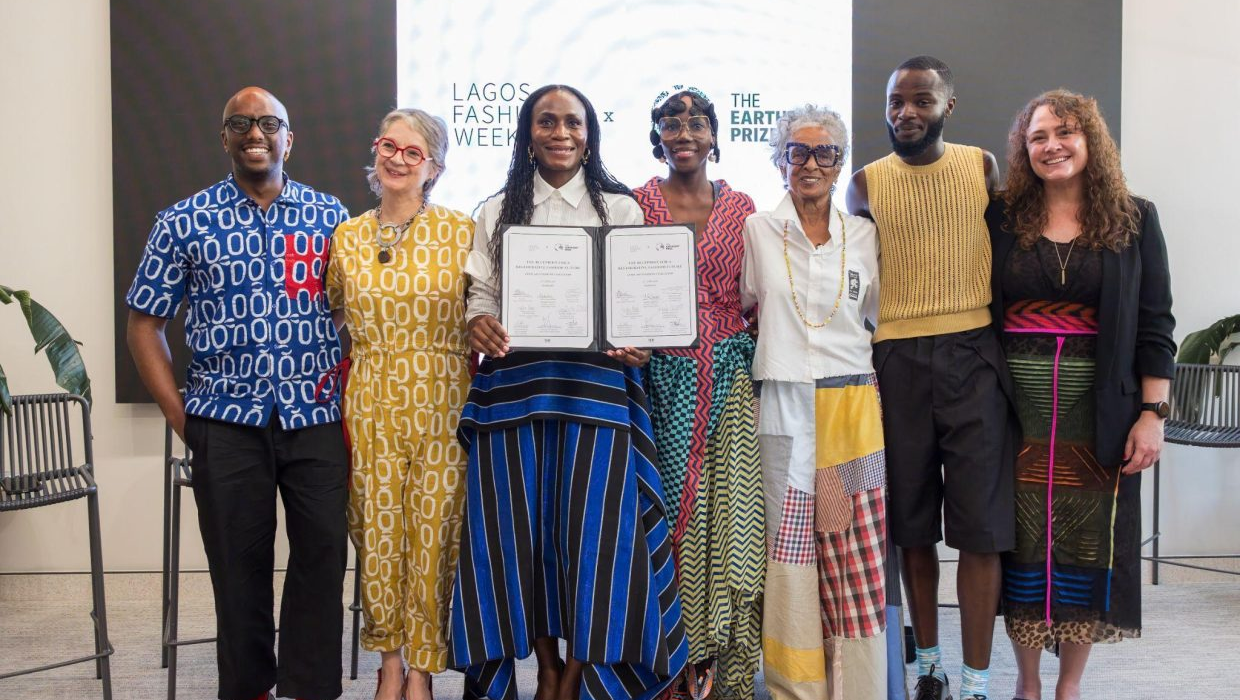
Lagos Fashion Week has presented Africa’s first manifesto for a regenerative fashion industry, placing the continent at the centre of a global debate on waste, ownership, climate pressure, local production, and the future of creative work.
The document, titled The Blueprint for a Regenerative Fashion Future, was launched on June 22 during London Climate Action Week at African Fashion Compact II. Lagos Fashion Week presented the manifesto in partnership with The Earthshot Prize. It is the manifesto of the African Fashion Coalition, a network of designers, researchers, educators, artisans, entrepreneurs, and sustainability advocates working across the continent.
The manifesto argues that Africa should no longer remain only a source of raw materials, talent, inspiration, and craft for the global fashion industry. It calls for African ownership, stronger local manufacturing, fairer value retention, and protection of cultural knowledge. The document says Africa exports about $15 billion worth of raw textiles each year, while importing more than $23 billion worth of finished clothing and footwear.
That trade gap sits at the heart of the message. Africa grows cotton, produces textiles, supplies labour, and shapes global taste. Yet much of the final value often sits outside the continent. The manifesto says this is not a talent problem. It is an ownership problem.
Lagos Fashion Week is using the manifesto to push a different model. The platform wants African fashion to move from extraction to regeneration. That means keeping materials in use for longer, reducing waste, valuing repair, protecting craft, supporting local production, and placing communities at the centre of fashion systems.
The manifesto was developed through convenings, workshops, consultations, and stakeholder engagements led by Lagos Fashion Week and The Earthshot Prize. It also built on a Manifesto Lab held in April 2026. Contributors included Lagos Fashion Week founder Omoyemi Akerele, Simone Smit of The Earthshot Prize, Jackie May of Twyg, Adama Paris founder Adama Ndiaye, Liz Ricketts of The OR Foundation, Renee Neblett of Kokrobitey Institute, and Sunny Dolat of The Nest Collective.
The framework has ten pillars. They cover cultural heritage, circularity, inclusive prosperity, intellectual property protection, waste justice, local manufacturing, regenerative innovation, market access, infrastructure development, and conscious consumption. These pillars give governments, brands, designers, investors, manufacturers, retailers, cultural institutions, and media organisations a common guide for action.
The timing is important. Global fashion faces pressure over waste, overproduction, low wages, pollution, and weak accountability. The Earthshot Prize notes that consumers now buy about 60 percent more clothing than they did 20 years ago, while keeping each item for only half as long. It also says less than one percent of textiles are recycled into new garments.
For Lagos Fashion Week, Africa’s answer does not begin with copying Western sustainability models. It begins with practices already rooted in African life. Repair, reuse, handcraft, local dyeing, weaving, tailoring, intergenerational skills, and resource efficiency have existed in African communities for generations. The manifesto places these practices in a modern industrial frame.
Lagos Fashion Week has spent years building this direction. Its Green Access platform, now in its seventh edition, supports emerging designers committed to sustainable and circular fashion. The 2025 edition focuses on craft-driven material innovation, textile waste, youth skills, accessories, and digital exploration. Designers are encouraged to work with factory offcuts, deadstock, used clothing, discarded textiles, repair, reworking, and reinterpretation.
The platform also runs SwapShop, which promotes swapping, resale, and upcycling to reduce textile waste and challenge fast fashion habits in Nigeria. These programmes show that the manifesto is not only a statement. It is linked to existing work in training, design practice, public education, and market building.
Lagos Fashion Week’s global profile has also grown. The Earthshot Prize named Lagos Fashion Week a 2025 winner in the Build a Waste-free World category, recognising its work in circularity, craft-driven innovation, local supply chains, and community empowerment. The prize described Lagos Fashion Week as a force changing fashion through a distinctly African lens.
The wider economic case is strong. UNESCO has said Africa’s fashion industry is growing fast, but weak investment still limits its full potential. The sector was valued at $15.5 billion in annual exports, with potential to triple over a decade if investment and infrastructure improve. UNESCO also linked African fashion to youth employment, women’s empowerment, culture, e-commerce, and growing local demand.
The manifesto now places responsibility on the full fashion chain. Designers need access to finance, training, and markets. Governments need better policies for manufacturing, waste, trade, and intellectual property. Investors need to back African-owned production and material innovation. Consumers need to value clothing beyond trend cycles.
For African fashion, this is a shift from visibility to control. Runways have helped African designers gain attention. The next battle is ownership of materials, production, branding, knowledge, and profits.