
South Africa is not facing collapse, but its stability is under heavy strain as Afrophobia tensions spread fear among African migrants, close businesses, weaken public trust, and test the state’s ability to keep order.
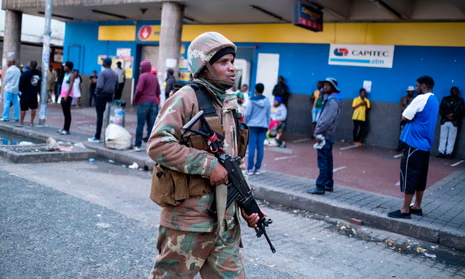
The latest flashpoint came on Tuesday, June 30, when workers stayed home, shops shut their doors, and buses remained idle in several parts of the country ahead of planned anti-immigrant marches. Many African foreign nationals avoided work, and thousands had already fled after protest organisers set an unofficial deadline for undocumented migrants to leave South Africa. Reuters reported police and military deployments in several cities, including Johannesburg and Durban, to prevent violence.
This means South Africa is still functioning, but not fully calm. Its courts, police, government departments, banks, ports, airports, and major companies remain operational. Yet social pressure has reached a dangerous level in poor communities where unemployment, service delivery failures, crime, and anger over immigration meet on the streets.
The tension is not only about immigration. It is also about weak public services, joblessness, crime, inequality, and political opportunism. Anti-foreigner groups accuse migrants of taking jobs, overloading clinics, filling schools, and driving crime. Reuters reported data showing migrants make up about 4.1 percent of South Africa’s population, down from 5.6 percent a decade ago. It also cited prison figures showing foreigners made up about 6 percent of the prison population in 2017, with many detained over immigration offences.
The economic stress behind the anger is real. Statistics South Africa said the national unemployment rate stood at 32.7 percent in the first quarter of 2026. Youth unemployment stood even higher, with the 15 to 24 age group at 60.9 percent and the 25 to 34 age group at 40.6 percent. These figures create anger in townships and informal settlements where many young people see no clear route into work.
President Cyril Ramaphosa has tried to separate legitimate immigration concerns from vigilantism. In a national address on June 7, he said South Africans were raising real concerns over borders, jobs, public services, safety, and the rule of law. He also said poverty and unemployment sit at the centre of the national crisis.
Ramaphosa later warned groups against using public anger to destabilise the country. He said immigration enforcement belongs to the state, not street movements. He also promised action against groups exploiting migration concerns for political, personal, or criminal agendas.
The problem for Pretoria is enforcement. Human Rights Watch said in May 2026 vigilantes had carried out violent xenophobic attacks against African and Asian foreign nationals, with what it described as little or insufficient response from police and authorities. The rights group said March and March protests in Pretoria, Johannesburg, and Durban had produced violent and sometimes fatal results.
The African Commission on Human and Peoples’ Rights also raised concern. In April, the commission condemned attacks and intimidation against nationals of other African countries in South Africa. It linked the current wave to a longer history of violence, including the 2008 attacks which left more than 60 people dead and displaced about 100,000.
The fear is already crossing borders. Ghana, Nigeria, Malawi, Mozambique, Zimbabwe, and other countries have helped citizens leave South Africa. Al Jazeera reported more than 3,000 Malawians, including children, were staying in an open field in Durban after fleeing threats and attacks. Nigeria also repatriated hundreds of citizens, while Mozambique and Malawi carried out similar operations.
This damages South Africa’s Pan-African image. For decades, the country projected itself as a human rights defender and a regional economic anchor. The latest Afrophobia tensions now risk turning South Africa from a magnet for African labour and enterprise into a place of fear for migrants from Malawi, Zimbabwe, Mozambique, Nigeria, Ghana, Congo, Somalia, Ethiopia, Burundi, and other African states.
There is also an economic cost. Reuters reported the rand weakened on June 30 as investors watched the planned anti-immigration demonstrations alongside global risk concerns. The move was small, but the message was clear. Social unrest affects confidence, especially when businesses close, workers stay home, and security forces fill the streets.
Crime adds another layer. Official figures show murders fell by 9.5 percent in the fourth quarter of the 2025/26 financial year, from 5,727 to 5,181 cases. Police Minister acting police minister still warned crime levels remain too high, with South Africa recording an average of 58 murders a day during the quarter.
So, is South Africa stable amid Afrophobia tensions?
At state level, yes. The government still operates. Security agencies have deployed. Courts remain open. The economy still runs. There is no national breakdown.
At community level, the answer is more troubling. Many African migrants no longer feel safe. Some landlords have evicted foreign tenants out of fear of property damage. Workers have stayed home. Families have split as fathers return to home countries while children remain in South Africa. Several African governments are now involved because their citizens are under threat.
South Africa’s stability now depends on three urgent actions. The state needs to stop vigilante enforcement. It needs to process immigration cases through lawful systems. It also needs to confront unemployment, corruption, crime, and weak services without turning African migrants into targets.
Afrophobia will not solve South Africa’s economic pain. It will deepen it. A country built on a constitution of dignity and equality now faces a direct test. The question is no longer whether South Africa has strong institutions. The question is whether those institutions will protect everyone inside its borders before fear turns into wider unrest.