
African leaders, Africa CDC and the World Health Organization are racing to strengthen a continental Ebola response as a fast-moving outbreak in the Democratic Republic of Congo and Uganda raises fears of wider regional spread.
The crisis involves the Bundibugyo strain of Ebola, a rare form of the virus with no licensed vaccine or treatment specifically approved for this strain. WHO and Africa CDC launched a six-month continental preparedness and response plan on 5 June 2026, seeking US$518 million to support affected countries and high-risk neighbours from June to November 2026. The plan focuses on surveillance, testing, clinical care, infection control, logistics, community engagement and protection of essential health services.
The push followed earlier pledges of nearly US$500 million from African governments, multilateral agencies and humanitarian partners. Africa CDC Director-General Jean Kaseya said African countries had started putting domestic resources into the response, a message aimed at showing continental ownership of the crisis. Reuters later reported funding pledges fell from nearly US$500 million to around US$290 million after some donors revised their commitments.
The outbreak has placed eastern DRC at the centre of a major public health emergency. WHO and Africa CDC say the response plan supports DRC and Uganda while helping neighbouring countries prepare for possible imported cases. This includes border screening, laboratory readiness, rapid detection, case isolation and coordination across governments.
By late June, the situation had worsened. Africa CDC raised total funding needs to US$1.4 billion after adding humanitarian support to the health response. The agency said the revised figure followed discussions with Congolese officials and United Nations agencies. Reuters reported more than 1,100 infections in Congo and 20 in Uganda by 25 June, with only 13 percent of US$910 million in pledges released at the time.
The numbers show why African leaders fear regional spillover. The Guardian reported on 26 June 2026, citing Africa CDC and WHO-linked projections, 1,118 confirmed cases and 291 deaths in DRC, plus 20 cases and two deaths in Uganda. The same report said nearly 300 people who had tested positive were unaccounted for, creating a major risk for contact tracing and community spread.
Health officials face hard conditions on the ground. The outbreak epicentre lies in Ituri province, a region marked by conflict, displacement and poor access to health services. More than one million displaced people live in camps where health workers struggle to enter. Africa CDC warned poor access to those camps weakens contact tracing and leaves response teams without a clear picture of transmission.
WHO officials also warned the outbreak was still moving faster than the response. The virus had circulated for months before official detection on 15 May 2026, leaving authorities behind the disease from the start. Health workers have also faced threats and attacks in areas where public mistrust of officials and outsiders runs deep.
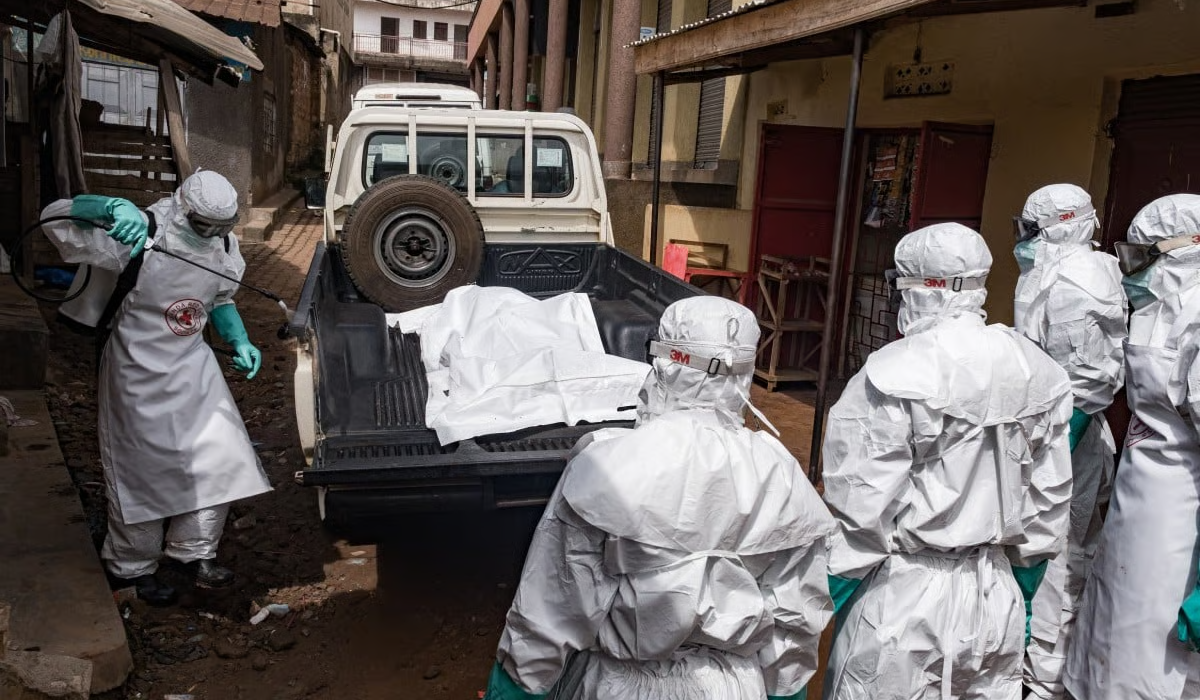
Community trust now stands as one of the most urgent parts of the response. Ebola spreads through direct contact with infected body fluids or contaminated objects. Burial practices pose high risk when families touch bodies of loved ones who died from the disease. In affected areas, some communities have resisted safe burial rules because those rules interfere with local traditions.
Testing has improved, but gaps remain. WHO said Congo raised testing capacity from around 30 tests per day at the start of the outbreak to roughly 2,000 tests per day. Faster and more local testing helps teams isolate cases early, trace contacts and slow spread before infected people travel into new areas.
The lack of a proven Bundibugyo vaccine adds pressure. Reuters reported on 26 June the United States had started work to identify vaccine candidates targeting the strain while sending experimental treatment support and diagnostic tools for DRC and Uganda. UNICEF and Gavi also sought information from developers and manufacturers on possible vaccine plans.
For Africa, this crisis carries a clear lesson. Outbreaks do not respect borders, weak surveillance costs lives, and delayed funding creates larger bills later. African leaders want one response, one budget and one coordinated team, with affected countries leading and partners supporting.