

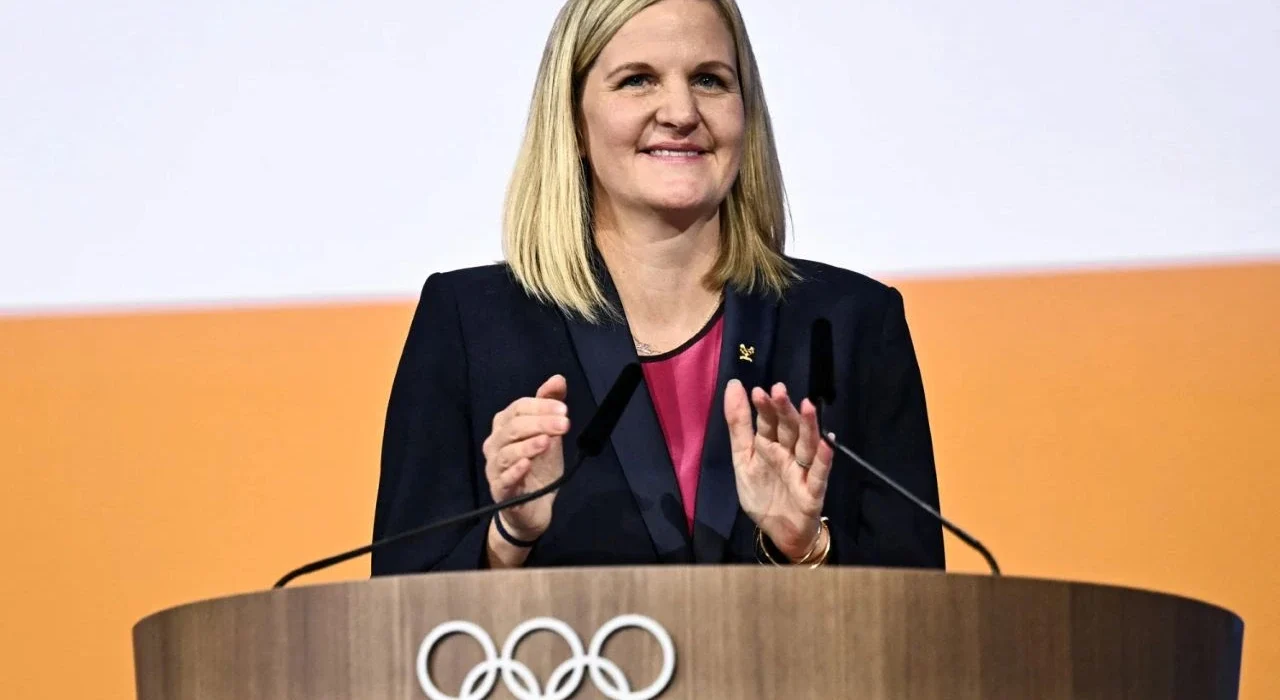
LAUSANNE, Switzerland – Zimbabwean swimming legend Kirsty Coventry has overseen a historic International Olympic Committee decision excluding transgender women from female Olympic events, starting with the Los Angeles Games in 2028.
The policy restricts every female-category event at the Olympics and other IOC-controlled competitions to athletes classified as biologically female. The rule covers individual and team sports.
Female-category entrants will undergo a one-time genetic screening during their careers. Testing will look for the SRY gene, normally located on the Y chromosome. Organisers will collect samples through a cheek swab, saliva test or blood test.
The IOC says the policy protects fairness, safety and competitive integrity in women’s sport. The organisation announced the decision on March 26 after its Executive Board approved the new eligibility framework.
Coventry defended the policy through a direct argument.
“It would not be fair for biological males to compete in the female category,” she said.
Her position marks a major departure from the previous Olympic approach. Under former IOC president Thomas Bach, international sporting federations set their own eligibility rules. Policies differed across swimming, athletics, cycling, boxing and other disciplines.
Some federations restricted athletes who experienced male puberty. Others used testosterone limits. Several organisations allowed participation following hormone treatment. The new IOC policy establishes one rule for every female event under Olympic control.
The change also affects athletes with differences of sex development, known as DSD conditions. The policy excludes some competitors whose genetic or biological characteristics do not meet the IOC definition for entry into female competition.
This part of the decision has generated fierce opposition. Critics argue genetic screening risks excluding women born and raised as female who possess uncommon chromosome patterns. They also warn about privacy, medical confidentiality and the emotional impact of unexpected test results.
The IOC says officials will handle every case privately and provide counselling, education and medical support. The organisation also says the rule will not apply retroactively to medals or results from earlier Olympic Games.
Coventry’s leadership gives the decision deep African significance.
She became the first woman and first African elected IOC president in March 2025. She assumed office three months later, succeeding Bach. IOC members elected her for an eight-year term after she secured a first-round majority against six rivals.
Born in Harare in 1983, Coventry represented Zimbabwe at five Olympic Games. She won seven medals, including two gold medals in the women’s 200-metre backstroke. Her record makes her Africa’s most decorated Olympian.
A woman who spent years competing at the highest level now leads the institution responsible for defining Olympic female eligibility.
Supporters view her decision as protection for women athletes who train for years under sex-based competition structures. They argue male puberty produces lasting differences involving height, skeletal structure, muscle mass, lung capacity, heart size and strength.
They also argue hormone suppression does not remove every physical advantage developed during puberty.
Opponents reject a universal exclusion. They say sports differ widely in physical requirements. Shooting, archery, equestrian competition and other events do not depend on strength or speed in the same way as boxing, weightlifting or sprinting.
They also point to the small number of openly transgender athletes who have reached Olympic competition. Critics accuse the IOC of responding to political pressure rather than a widespread competitive problem.
American middle-distance runner Nikki Hiltz criticised the policy. South African double Olympic champion Caster Semenya also opposed genetic screening and broader eligibility restrictions affecting women with DSD conditions. Critics describe the tests as invasive and discriminatory.
The policy arrives before Los Angeles hosts the 2028 Olympics. United States President Donald Trump signed an executive order directing federal agencies to oppose transgender women’s participation in female sports.
The AP reported alignment between the new Olympic framework and the American policy environment surrounding LA28.
The timing raises questions about political influence. The IOC depends on cooperation with host governments for visas, security, venues and border entry. A dispute with Washington over athlete eligibility would have created operational problems before the Games.
Coventry still presented the rule as an IOC decision based on consultation with medical specialists, athletes, federations and sporting officials.
The policy will force national Olympic committees and international federations to review qualification systems. Athletes seeking female-category entry will need verified screening before Olympic participation.
Federations will also need procedures for appeals, disputed results and medical confidentiality. The IOC must explain who stores genetic information, who receives access and how long officials retain records.
African sports authorities should study the policy carefully.
Several African countries lack advanced sports medicine systems, accredited laboratories and strong privacy protections. Athletes from poorer nations risk delays, errors or unequal treatment during qualification.
The IOC should fund approved testing for athletes whose national committees lack resources. No African woman should lose an Olympic place because her federation lacks laboratory capacity.
National committees also need clear education programmes. Coaches and athletes require accurate information before tests begin. Rumours and public speculation would expose competitors to humiliation.
The rule also demands disciplined journalism. Reporters should never label an athlete transgender or question her sex without verified information. Genetic screening involves private medical records. Public debate must not become permission for abuse.
Coventry has taken one of the hardest decisions available to an Olympic president. Her policy will receive praise from supporters of sex-based female sport and condemnation from advocates of transgender inclusion.
The argument will continue through courts, federations, national governments and athlete organisations.
Her place in history already stood secure through Olympic medals and her election as the first woman to lead the IOC. The new policy now defines the opening phase of her presidency.
Los Angeles 2028 will provide the first full test. The IOC must protect fair competition, medical privacy and human dignity under one enforceable system.
Coventry has chosen a clear position. Female Olympic competition will operate through biological-sex eligibility rather than gender identity.