
KOLWEZI, Democratic Republic of Congo – The cobalt feeding electric vehicles, smartphones and military technology carries a dangerous passenger from Congo’s mineral-rich Copperbelt. Uranium travels inside some cobalt and copper ore, exposing workers to radiation while raising fresh questions about where this strategic material ends up.
A Financial Times and Lighthouse Reports investigation estimates Congolese cobalt exports between 2000 and 2024 contained more than 2,000 tonnes of uranium. The investigation says the quantity would hold enough energy to fuel a one-gigawatt nuclear reactor for about a decade after proper processing. Enrichment to weapons-grade levels would present a far darker risk, although exported ore does not equal usable nuclear fuel or a finished weapon.
Congo supplied an estimated 75 percent of global cobalt output in 2024 and held about 55 percent of known reserves. Global battery, defence and aerospace industries depend heavily on Congolese production. China dominates much of the refining chain after years of investment in Congolese mines and processing facilities.
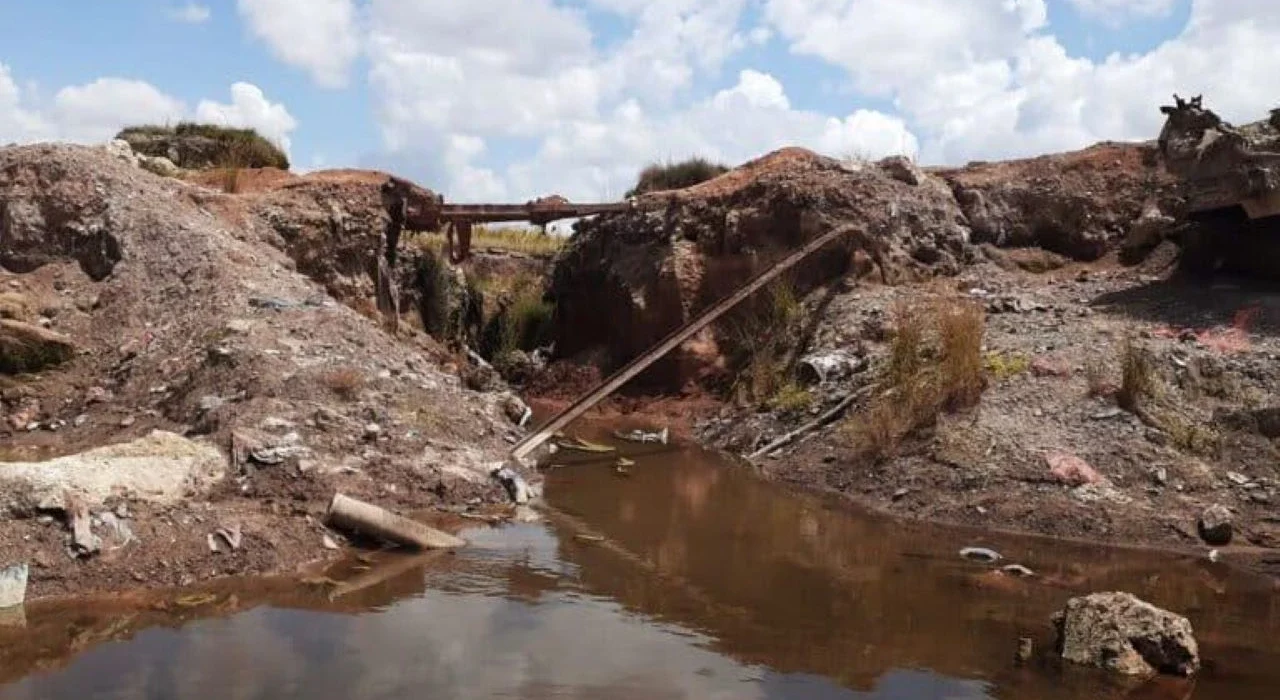
Uranium occurs naturally alongside copper and cobalt deposits across parts of Katanga. Miners do not necessarily seek uranium when extracting cobalt. Crushing, washing and concentrating mixed ore still moves radioactive material through mines, roads, depots, processing plants and export routes.
This unwanted cargo creates an immediate health problem.
Workers face exposure through radioactive dust, contaminated water and direct contact with ore. Families living near mine waste sites also face danger when polluted water enters rivers, farms and household supplies. Pregnant women, children and artisanal miners working without protective clothing carry greater vulnerability.
Industrial operators possess radiation equipment, laboratories and controlled processing systems. Artisanal miners often dig by hand, carry sacks on their backs and wash ore in streams. Traders mix material from several sites before export. Such practices weaken traceability and hide dangerous uranium concentrations.
Congo has laws restricting unauthorised uranium production and export. Weak border controls, limited testing equipment, corruption and informal trading networks undermine enforcement. Some companies remove uranium during processing. Others reportedly lack consistent separation systems.
Uranium serves several purposes. Low-enriched uranium fuels commercial nuclear reactors which generate electricity. Research reactors also use uranium. Nuclear programmes produce isotopes for medicine, industry and scientific work. Highly enriched uranium supports naval propulsion, selected research reactors and nuclear weapons. Enrichment changes natural uranium into material with higher concentrations of uranium-235.
Depleted uranium, a product left after enrichment, serves in radiation shielding and selected military applications because of its high density. The strategic value therefore extends beyond electricity generation.
This history should make Congolese officials cautious.
The Shinkolobwe mine in Katanga supplied two-thirds of the uranium used by the American Manhattan Project. Ore from Congo helped the United States build the first atomic bombs. American wartime officials secured thousands of tonnes through arrangements involving Belgium and Britain. Washington later pursued long-term access and preferential rights over Congolese uranium.
Congo provided the raw material. Foreign states controlled enrichment, science, military production and strategic benefit. Congolese communities received little knowledge, power or lasting industrial gain from one of history’s most consequential mineral transfers.
The same danger now surrounds cobalt and possibly uranium.
The United States has intensified efforts to secure Congolese critical minerals and weaken China’s control over cobalt and copper supply chains. Washington supports new mining investments and the Lobito Corridor, which links the Copperbelt to Angola’s Atlantic coast. A US-Congo strategic minerals partnership signed in 2025 seeks larger American participation in mining and infrastructure.
Does Washington also want Congo’s uranium?
American nuclear power, defence and industrial sectors value secure uranium supply. History proves deep US interest in Congolese uranium. Current public agreements, though, focus mainly on cobalt, copper, lithium, tantalum and related critical minerals. No reliable public evidence presently proves the latest American partnership secretly targets uranium.
Suspicion still deserves investigation rather than dismissal.
A mining company extracting cobalt from uranium-bearing ore needs a plan for the radioactive material left after separation. Regulators need records showing volume, storage location, treatment method and final destination. Foreign investors also need to disclose every valuable by-product recovered from Congolese ore.
Congo should never repeat a system where buyers pay for cobalt while quietly obtaining uranium or other strategic minerals without separate valuation.
Every export shipment from high-risk zones needs automatic radiation screening. Authorities need detectors at mines, processing facilities, border crossings, airports and ports. Results should enter a central digital registry open to regulators, Parliament and approved independent inspectors.
Mining contracts should identify uranium and every associated mineral. Companies should pay royalties on recoverable by-products. The state should require audited mass-balance reports comparing material entering a processing plant with cobalt, copper, uranium and waste leaving the facility.
Workers need personal radiation monitors, medical screening and protective equipment. Communities need regular testing of water, soil, crops and household dust. Mining firms should finance independent health surveillance without controlling findings.
Congo also needs international support without surrendering sovereignty. Radiation-monitoring assistance from the United States, European Union, China, African Union or International Atomic Energy Agency should operate under Congolese law and transparent agreements.
Foreign governments will present mineral partnerships as investment, security and development. Congo must ask harder questions.
Who owns the uranium separated from cobalt ore? Who records its quantity? Where does the material travel? Which company processes it? What price does Congo receive? Which agency guards the waste? Who accepts responsibility when workers develop radiation-linked illnesses?
China’s dominance deserves scrutiny. American entry deserves equal scrutiny. Congo should reject a political contest where Beijing and Washington compete for minerals while Congolese people inherit polluted water, unsafe waste and secret contracts.
The cobalt boom gives Congo immense bargaining power. Uranium contamination creates danger, yet uranium recovery also carries economic and strategic value under strict safeguards.
Congo should stop treating uranium as unwanted waste once foreign processors might view the same material as a valuable resource.
The country needs radiation protection, transparent accounting and local scientific capacity. Congo must know every mineral leaving its soil before another global power writes African uranium into its own history.