

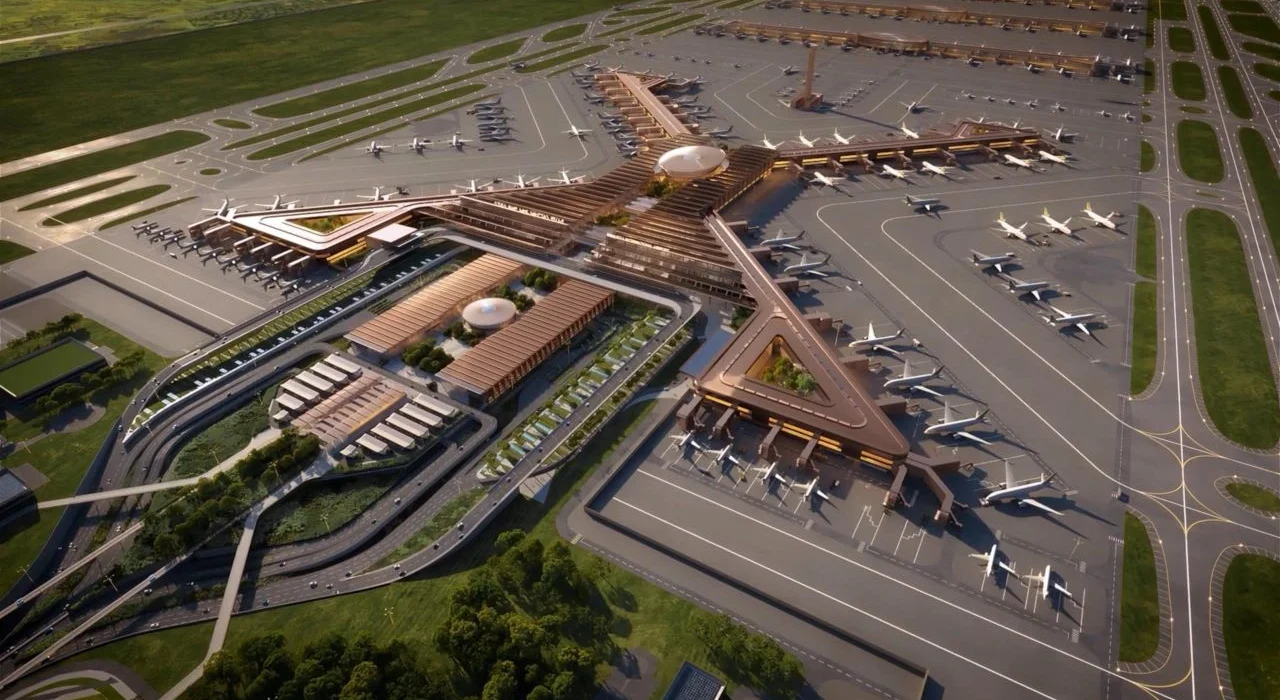
ADDIS ABABA, Ethiopia – The United States wants American companies and financial institutions to secure contracts in Ethiopian Airlines’ $12.5 billion Bishoftu International Airport project, as global powers compete for influence over Africa’s largest planned aviation hub.
Thomas Bruns, the US Commercial Service minister counsellor for sub-Saharan Africa, said Washington viewed the airport as a major commercial opportunity. He identified construction, technology, security, aviation equipment and financing as possible areas for American participation.
“This project presents significant opportunities for US companies,” Bruns said. He added Washington wanted Ethiopia to consider American expertise during procurement and project delivery.
The intervention reflects more than business promotion. Ethiopia sits at the centre of African diplomacy, regional trade and aviation. Addis Ababa hosts the African Union headquarters. Ethiopian Airlines operates the continent’s largest carrier by revenue, fleet strength and international reach.
Control over major airport contracts therefore brings commercial income, technical influence and long-term access to one of Africa’s most important transport systems.
Construction began in January after Prime Minister Abiy Ahmed joined Ethiopian Airlines executives at a groundbreaking ceremony. The project stands near Bishoftu, around 40 kilometres southeast of Addis Ababa.
The first phase targets completion in 2030. Plans include two runways, a terminal covering about 660,000 square metres, cargo facilities, hotels, commercial zones and parking for large aircraft fleets. The first phase will process 60 million passengers each year.
Later expansion will introduce two additional runways and raise annual capacity to 110 million passengers. Ethiopian Airlines says the completed airport will rank among the largest aviation centres worldwide.
Bole International Airport currently handles Ethiopia’s main passenger and cargo traffic. Rising demand now pushes Bole towards its expanded annual limit of roughly 25 million passengers.
Bishoftu will absorb most international operations while Bole continues serving selected routes and supporting the wider Addis Ababa aviation network. Prime Minister Abiy wants the two-airport structure to secure Ethiopia’s position as Africa’s primary connecting hub.
The African Development Bank has committed $500 million and accepted responsibility as the initial lead arranger. The bank will help Ethiopian Airlines mobilise billions from development lenders, export credit agencies and commercial institutions.
Ethiopian Airlines will contribute part of the required capital through internal resources. International creditors, contractors and investors will provide the remaining finance.
American financial institutions have already shown interest. Boeing also holds a strong commercial relationship with Ethiopian Airlines.
The airline ordered six more Boeing 787-9 Dreamliners in April, adding to earlier commitments for 20 aircraft. Deliveries start from 2028, two years before Bishoftu’s first phase enters scheduled operation.
Those aircraft orders give Washington leverage. American officials want airport contracts to accompany Boeing sales, aviation services and wider commercial cooperation.
China presents the strongest competition.
Chinese companies dominate several shortlisted construction groups. Ethiopian Airlines’ procurement list includes China Communications Construction Company, China Road and Bridge Corporation, China Civil Engineering Construction Corporation and Beijing Construction Engineering Group.
European, Turkish, South Korean, Indian, Qatari and Russian-linked companies also appear across the main facilities, airfield and transport connection packages. American-owned Lane Construction joined consortium bids for airfield infrastructure and offsite links.
Washington therefore enters a competitive process rather than an empty market.
China financed and built major Ethiopian infrastructure during the past two decades. Projects include roads, industrial parks, railway systems, telecommunications networks and public buildings. Chinese firms understand local procurement systems and often arrive with state-backed finance.
American companies usually offer advanced technology, transparent operating standards and strong aviation experience. They also face higher costs and slower financing arrangements than several state-supported competitors.
Ethiopia should welcome competition without allowing geopolitical pressure to dictate contract awards.
Every bidder should meet the same rules. Ethiopian Airlines must assess price, technical quality, financing terms, local employment, environmental safeguards, delivery history and long-term maintenance costs.
A cheaper construction offer becomes expensive when poor work demands repeated repairs. An advanced system also loses value when foreign suppliers control updates, spare parts and operational data.
Technology sovereignty deserves close attention.
Modern airports depend on passenger databases, biometric gates, air traffic systems, baggage tracking, cybersecurity platforms, surveillance networks and digital payment infrastructure. The company supplying those systems gains access to sensitive operations.
Ethiopia should retain ownership of passenger information and aviation data. Contracts should require local storage where appropriate, independent cybersecurity audits and clear restrictions on foreign access.
Local employment also needs strict protection.
Bishoftu promises thousands of jobs during construction and more than 26,000 aviation positions after full development. Foreign contractors should train Ethiopian engineers, technicians, project managers and technology specialists.
Government should publish local procurement targets for cement, steel, furniture, food, transport, uniforms and professional services. A $12.5 billion project must build Ethiopian companies, rather than function mainly as an export market for foreign suppliers.
Community protection carries equal weight.
Ethiopian Airlines says authorities completed resettlement and livelihood restoration for affected residents before construction started. Officials should publish compensation totals, land agreements, grievance records and progress reports.
Families displaced by national infrastructure deserve secure homes, farmland, water, schools and sustainable income. Airport growth should never create poverty around the runway.
The project also carries financial risk.
Ethiopian Airlines reported annual revenue of $9.1 billion for the 2025 to 2026 financial year, a 20 percent increase. Strong earnings support confidence, though the airport budget exceeds one year of airline revenue.
Passenger projections therefore require independent testing. Bishoftu’s success depends on Ethiopian Airlines expanding its fleet, routes and transfer market while competing against Emirates, Qatar Airways, Turkish Airlines, Kenya Airways and emerging African carriers.
Debt terms must remain affordable during currency shocks, fuel-price increases or aviation downturns.
The United States sees Bishoftu as a chance to regain ground in African infrastructure. China sees Ethiopia as a strategic transport and commercial partner. Europe, Gulf states and other powers also want contracts.
Ethiopia holds the strongest position when those competitors fight through better offers.
African countries often accept foreign involvement after political promises, then discover hidden debt, imported labour or limited technology transfer. Ethiopian Airlines should avoid the same error through public procurement, strong contracts and independent oversight.
Bishoftu should serve Ethiopia first.
The airport should increase exports, tourism, jobs and African connectivity. Foreign companies deserve contracts only when their participation strengthens those goals.
Washington wants a role. Beijing already holds a strong position. Ethiopia must ensure no external power owns the direction of Africa’s largest aviation project.