

Politics: ANC Brotherhood Is Feeding Africa’s Migration Crisis Into South Africa
JOHANNESBURG, South Africa – South Africa’s migration emergency did not begin at Beitbridge, Musina or Johannesburg’s overcrowded clinics. Much of the crisis began inside African capitals where failed governments destroyed jobs, weakened elections and pushed citizens toward the continent’s strongest economy.
The African National Congress does not carry sole responsibility for migration into South Africa. Wars, poverty, climate shocks, collapsing currencies and corruption drive movement across the continent.
Yet ANC leaders have helped protect political systems producing large migrant flows. Pretoria often defends liberation allies, softens criticism of disputed elections and places ruling-party solidarity above the welfare of ordinary Africans.
South Africa then receives the human consequences.
Zimbabwe offers the clearest case.
Millions of Zimbabweans have relied on South Africa for employment, healthcare, education, trade and family survival during more than two decades of political and economic decline. Researchers link this movement to state violence, disputed elections, lost livelihoods and persistent economic collapse. Estimates often place Zimbabweans in South Africa between 1.5 million and two million.
Pretoria knows this history.
South Africa also knows Zimbabwe’s 2023 election failed important democratic tests. The SADC Electoral Observation Mission found parts of the poll fell short of Zimbabwe’s Constitution, electoral law and regional principles. The Carter Center later concluded the process failed to meet regional and international commitments, citing a restricted political environment, unequal competition and weak electoral transparency.
ANC secretary-general Fikile Mbalula still celebrated Emmerson Mnangagwa’s declared victory.
Mbalula responded “Viva” after the announcement. He later travelled to Harare, praised ZANU-PF’s victory and described opposition forces as puppets serving imperial interests. His language gave partisan approval to an outcome questioned by regional observers.
Such conduct carries consequences beyond diplomatic ceremony.
When South Africa’s governing party endorses a disputed result, Zimbabwe’s ruling elite receives regional legitimacy. Reform pressure falls. Abuses become easier to dismiss as Western interference. Citizens who lose faith in elections seek survival elsewhere.
Many travel south.
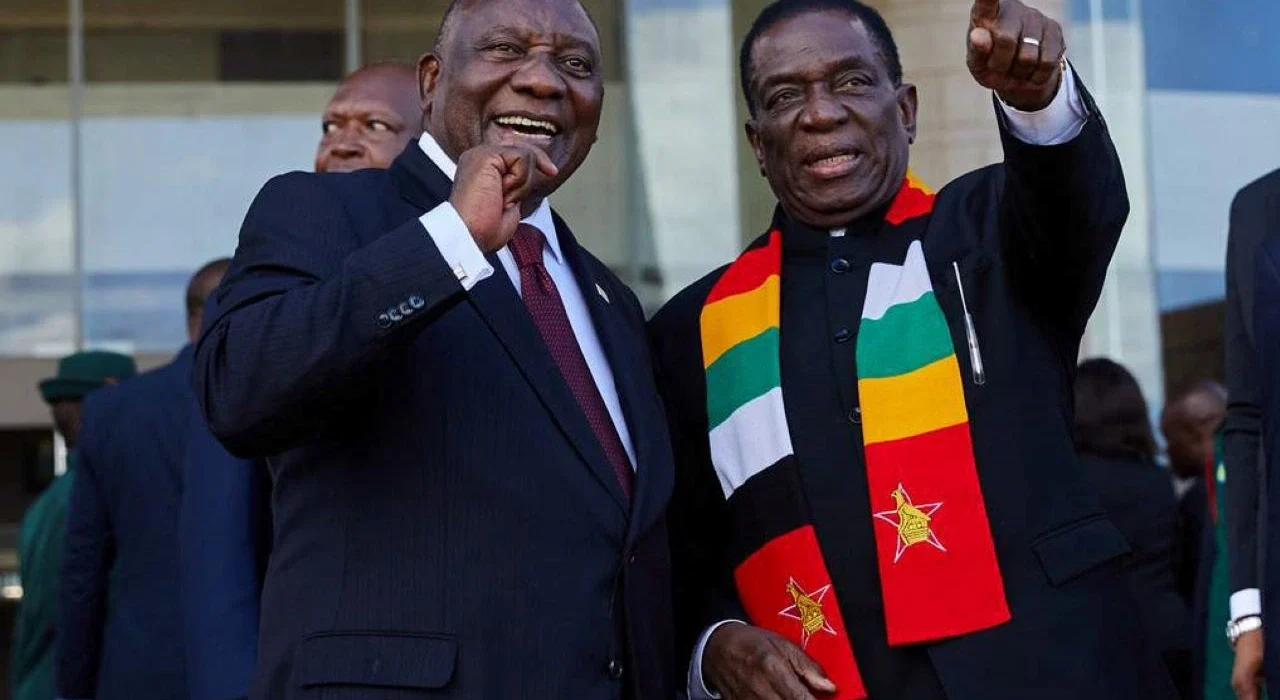
President Cyril Ramaphosa has also maintained warm ties with Mnangagwa while Zimbabwe’s leadership consolidated power. Their public relationship has stressed liberation solidarity, sanctions and bilateral cooperation. Pretoria rarely places electoral reform, political detentions or constitutional restraint at the centre of its engagement.
Brotherhood between presidents should never outweigh responsibility toward millions of citizens.
A government which protects a neighbouring ruler while absorbing his country’s displaced workers creates a circular failure. Pretoria helps shield the political order driving migration. South African communities then carry pressure on housing, schools, clinics and employment.
Later, migrants receive blame.
Tanzania offers another warning.
President Samia Suluhu Hassan secured nearly 98 percent of the vote during the disputed October 2025 election after major opposition candidates faced exclusion and detention. Violence followed. A government-appointed inquiry later recorded at least 518 deaths. Opposition groups claimed thousands died. International reporting documented internet restrictions, security deployments and widespread allegations of shootings.
The ANC failed to lead a firm African demand for accountability.
Silence from liberation movements carries political meaning. CCM, ZANU-PF, FRELIMO, SWAPO and the ANC share long historical relationships. Those ties once supported struggles against colonialism and apartheid. Today, they often protect ruling organisations from democratic scrutiny.
Liberation history has become diplomatic insurance.
This policy corrupts Pan-Africanism.
Pan-Africanism should defend African people. ANC diplomacy often defends African incumbents. Those positions are not equal.
Supporting a government after security forces kill citizens does not defend Africa. Praising a disputed election does not defend sovereignty. Ignoring political prisoners does not honour liberation.
Such conduct protects elites while ordinary people flee.
South Africa remains a natural destination because its economy, infrastructure and public institutions still outperform many neighbouring systems. Despite deep unemployment, crime, inequality and failing municipalities, South Africa offers stronger wages, larger markets, better universities, advanced hospitals and greater commercial opportunity than much of the region.
People move toward functioning systems.
Pretoria therefore faces a choice. South Africa could keep managing migration mainly through borders, raids and permits. Or South Africa could confront the political failures creating regional displacement.
Border enforcement remains necessary. Every state needs lawful migration, reliable documentation and firm action against employers exploiting undocumented workers. Citizens deserve priority where local labour exists.
Yet fences will never solve a migration crisis fed by authoritarian government, stolen public wealth and broken economies.
The ANC should apply democratic standards consistently across Africa. South Africa should refuse automatic approval of disputed elections. Pretoria should demand publication of observer reports, credible voter rolls, independent electoral commissions and protection for opposition parties.
South African diplomacy should also connect regional support with governance reforms. Governments seeking energy, trade, finance or security assistance should face questions about elections, courts, corruption and human rights.
This approach would not represent colonial interference. African treaties already commit member states to democratic principles, constitutional government and human rights.
South Africa also needs honesty at home.
ANC failures in economic growth, policing, municipal government and border administration increased public anger toward migrants. Officials often find foreigners easier to blame than corrupt tenders, failing councils or businesses using vulnerable labour.
The same party then presents itself as defender of Pan-African unity abroad.
This contradiction fuels resentment on both sides.
South Africans see crowded services and weak enforcement. Migrants see hostility after escaping systems Pretoria helped legitimise. Regional dictators receive diplomatic comfort. Working people carry every cost.
The ANC did not create every African migration crisis. Yet its policy of liberation brotherhood helped sustain governments producing despair, exile and economic flight.
Pretoria cannot praise failed rulers in Harare and Dar es Salaam, then act surprised when their citizens arrive in Johannesburg.
South Africa’s long-term stability depends on a region where citizens find jobs, justice and credible elections at home. Regional democracy therefore serves the South African national interest.
The warning is urgent.
South Africa will not remain Africa’s preferred destination forever if unemployment, infrastructure decay and political weakness continue. A country absorbing regional failure while producing its own decline eventually loses the advantage of drawing migrants.
ANC leaders must decide whom Pan-Africanism serves.
African solidarity should protect citizens from failed rulers. When solidarity protects rulers from citizens, migration becomes the final vote cast by people who no longer trust the ballot.