
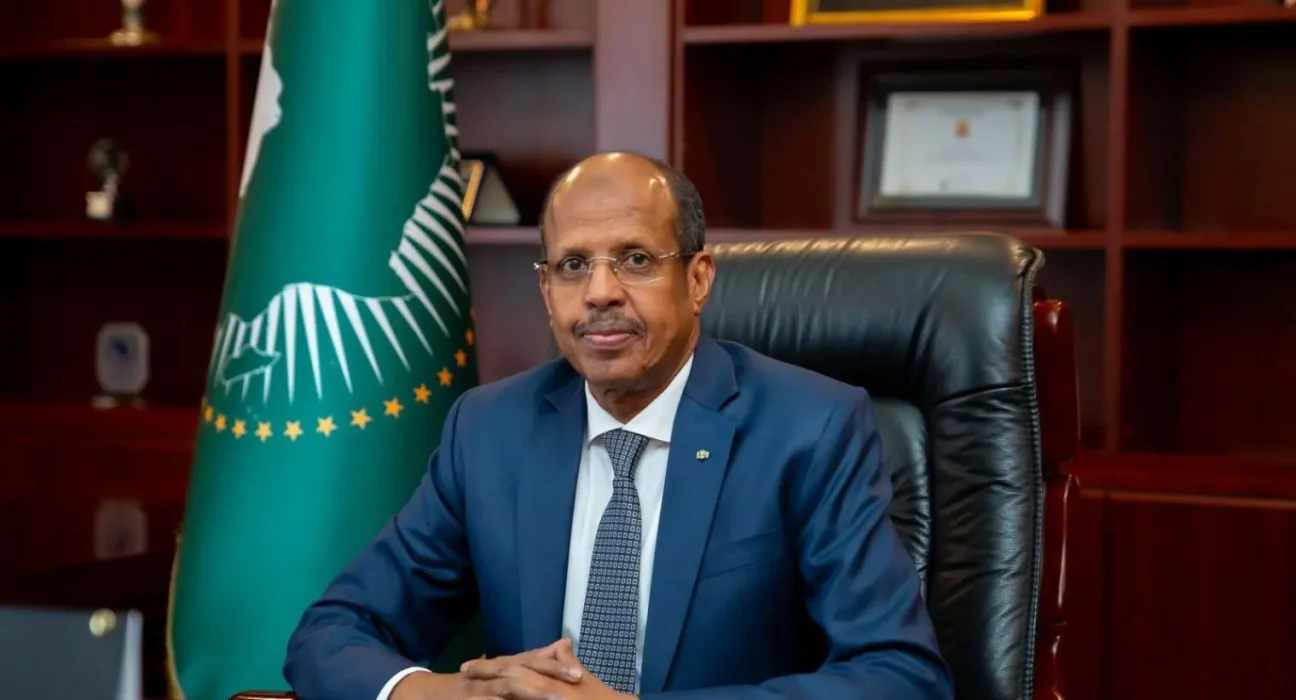
ADDIS ABABA, Ethiopia – African Union Commission Chairperson Mahmoud Ali Youssouf has delivered one of the strongest continental rebukes yet over South Africa’s treatment of African migrants, arguing official condemnations failed to stop perpetrators from continuing intimidation, attacks and forced removals.
Youssouf’s assessment strikes at the centre of Pretoria’s defence. President Cyril Ramaphosa and senior ministers have repeatedly rejected xenophobia and Afrophobia. Yet migrants, diplomats and rights groups say public statements did not produce enough protection on streets, in townships, at workplaces or outside public facilities.
The difference between condemnation and enforcement now defines South Africa’s continental crisis. A government earns trust through arrests, prosecutions, protection and visible control of public space. Speeches carry little weight when vigilante groups confront people, demand identity documents, close businesses or order families to leave communities.
Ramaphosa addressed the country on June 7 and declared immigration enforcement belongs to authorised state officials. “No other person is allowed, for example, to confront someone in the street to demand proof of nationality,” he said. He also promised action against groups exploiting public anger for political, criminal or personal aims.
Those words established a clear legal line. The state alone holds authority to check documents, arrest suspects, deport undocumented residents and prosecute offenders. Any civilian group claiming those powers acts outside the law. Youssouf’s criticism suggests Pretoria failed to enforce its own line with enough speed and force.
South Africa rejects the charge. Its Inter-Ministerial Committee on Migration reported 89 criminal cases linked to public disorder and incitement by June 21, up from 53 one week earlier. The committee also said police and prosecutors had intensified intelligence-led operations across the country.
Those figures show state activity. They do not settle the deeper question. How many organisers faced arrest? How many attackers reached court? How many victims received protection? How many businesses reopened? How many families returned home? Case registration matters, but outcomes determine whether law enforcement disrupted organised intimidation.
The human cost has already crossed borders. Nigeria repatriated 1,490 citizens after the attacks, according to its foreign ministry. Mozambique said five of its nationals died during anti-immigrant violence in Mossel Bay, although South African police disputed parts of the wider Mozambican account. Ghana also pressed the AU for urgent intervention after the killing of a Ghanaian national.
Thousands of migrants also left through formal repatriation programmes or private travel. South African authorities said more than 4,000 foreign nationals had returned home around the June 30 protests. Departure under fear does not represent orderly migration management. Such movement signals a protection failure when lawful residents, workers, traders and families flee alongside undocumented migrants.
Pretoria faces a genuine migration problem. South Africans demand secure borders, fair labour practices, reliable public services and firm action against undocumented residence. Those demands carry legal and political weight. No government should surrender border control. No employer should exploit undocumented workers. No criminal should hide behind nationality.
Yet citizens do not gain the right to punish people based on language, accent, skin tone or presumed origin. A lawful immigration policy targets legal status through trained officials and accountable institutions. Xenophobic mobilisation targets human beings through suspicion and collective blame. The distinction protects South Africans as much as migrants because vigilantes often misidentify South African citizens from minority language groups.
Economic pain feeds the anger. Statistics South Africa placed official unemployment at 32.7 percent during the first quarter of 2026, with youth unemployment at 45.8 percent. Those figures describe a severe national failure. Foreign nationals form a small share of the population, while census data recorded about 2.4 million foreign-born residents in 2022. Migrants did not create decades of weak growth, municipal collapse, corruption, unequal education or mass joblessness.
Political actors gain from redirecting public anger toward migrants. Blame moves away from failed councils, weak policing, corrupt procurement, broken borders and employers who prefer vulnerable labour. A frightened migrant provides an easier target than a minister, mayor, contractor or business owner with institutional protection.
Youssouf’s intervention also exposes a Pan-African contradiction. South Africa presents itself as a defender of African solidarity, constitutional rights and Global South cooperation. African states supported the liberation struggle against apartheid through diplomacy, funding, military training, sanctuary and personal sacrifice. Pretoria now faces a moral test over whether African citizens receive equal protection under its democratic order.
South Africa’s foreign ministry said on July 23 the country rejects xenophobia and remains committed to holding violent offenders accountable. The statement followed criticism from ECOWAS and called for continental dialogue on migration, stability and the rule of law.
Dialogue matters, but African governments now require evidence. Pretoria should publish arrest totals, prosecution progress, conviction outcomes and victim-support figures. Police should prevent civilian identity checks, reopen blocked services and protect threatened communities before crowds gather. Prosecutors should pursue organisers who incite violence, finance intimidation or direct unlawful removals.
The AU also carries responsibility. Youssouf should move beyond criticism and establish a transparent fact-finding process with South African cooperation. The process should document deaths, displacement, attacks, police responses and court outcomes. African institutions lose credibility when leaders issue declarations after each outbreak, then wait for another cycle.
You should judge South Africa’s response through measurable results, not official language. Are migrants safe in their homes? Do police stop vigilantes? Do courts punish offenders? Do legal residents access clinics, schools and workplaces without harassment? Those answers will show whether Pretoria governs migration through law or permits mobs to shape policy through fear.
Youssouf has placed the issue before Africa. South Africa now faces a direct choice. The government must prove constitutional promises protect every person within its borders, or accept growing evidence public condemnation serves as cover for state failure.