
LUNGI, Sierra Leone – West African leaders have renewed their pledge to launch the ECO single currency in 2027, reviving a regional project designed to reduce exchange costs, support trade, and deepen economic integration across ECOWAS.
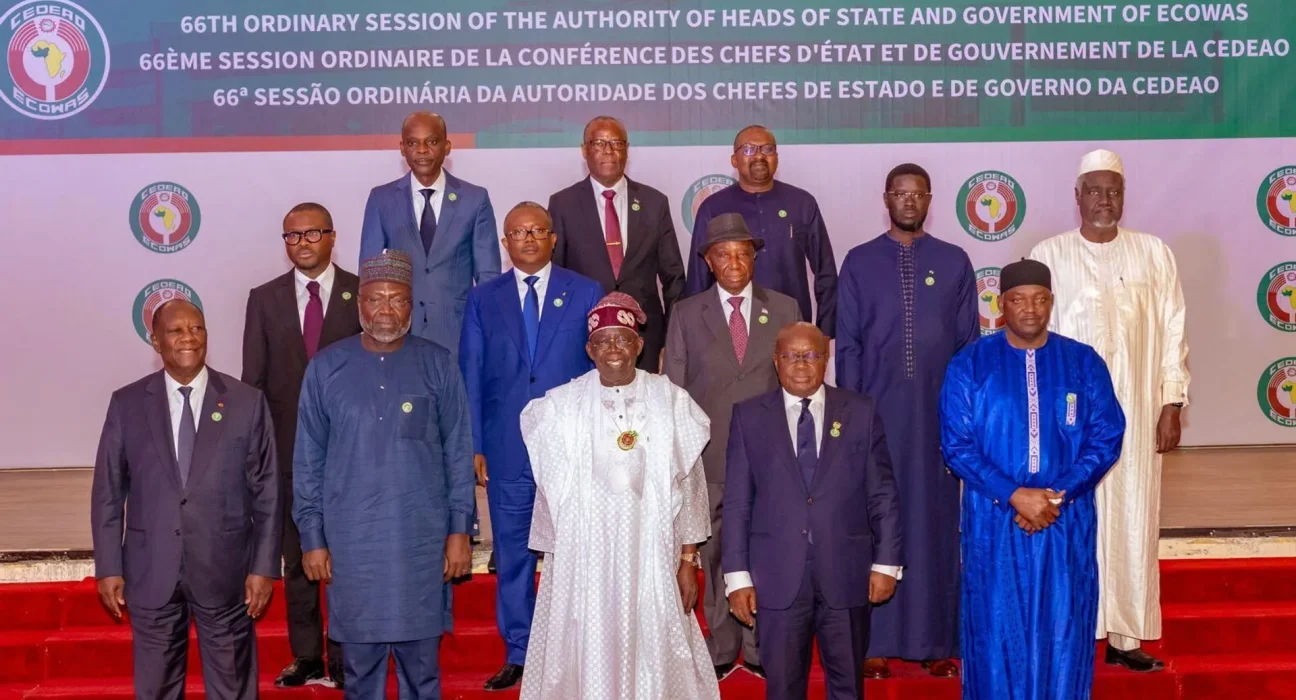
The commitment emerged from the bloc’s 69th ordinary summit, held in Lungi on July 19, 2026. Leaders backed a phased introduction, with states meeting agreed economic conditions entering first. Other members would join after reaching the required standards. The plan keeps 2027 as the official target rather than a guaranteed start date for every ECOWAS economy.
ECOWAS chose the name ECO in 2019 after years of technical discussions covering monetary policy, exchange-rate rules, central-bank design, legal structures, and regional financing. Officials regard one currency as a major step toward a common market where traders no longer lose money through repeated conversions between national currencies.
The promise carries strong appeal. A trader moving goods from Ghana through Togo into Benin faces currency conversions, bank charges, informal exchange risks, and price uncertainty. A shared currency would remove part of those costs. Regional companies would gain simpler accounting. Travellers would spend without searching for money changers at every border. Governments would also reduce dependence on foreign currencies for some regional transactions.
A common currency would also give West Africa a larger financial identity. The region contains major oil, gold, cocoa, agricultural, manufacturing, banking, and digital markets. One monetary area would carry more bargaining weight than a collection of smaller currency systems, provided members maintain credible institutions and disciplined public finances.
The challenge lies in the economic differences between members. Five current ECOWAS countries use the West African CFA franc through the West African Monetary Union. Seven others use national currencies with separate central banks, exchange-rate systems, debt structures, and inflation records. Bringing both groups under one monetary authority requires political compromise and technical preparation.
Nigeria presents the largest test. Its economy, population, banking system, and naira market would dominate any regional union. Smaller states will seek protection against Nigerian influence, while Abuja will resist rules viewed as unfair toward its economic scale. A stable ECO requires a central bank trusted by both large and small members.
ECOWAS convergence rules focus on public deficits, inflation, central-bank financing, foreign reserves, exchange-rate stability, and public debt. Current benchmarks include a budget deficit no higher than 3 percent of gross domestic product, average inflation no higher than 5 percent, foreign reserves covering at least three months of imports, public debt no higher than 70 percent of GDP, and exchange-rate movement within an agreed range.
Those conditions protect the future currency from irresponsible spending. A government running large deficits might pressure a regional central bank to create money. Such action would weaken purchasing power across every member. One country’s fiscal failure would spread beyond national borders after monetary union.
Meeting the rules has proved difficult. ECOWAS officials reported weak and uneven convergence long before the latest summit. Inflation, debt pressure, global shocks, currency depreciation, security spending, and food prices have repeatedly pushed members outside agreed limits. The Commission signed a cooperation agreement with the International Monetary Fund in March 2026 to strengthen policy coordination, surveillance, and progress toward monetary union.
The ECO has already survived several missed deadlines. Regional records show an earlier launch planned for July 2005 moved to December 2009. Later targets included 2010, 2014, and 2020. The pandemic then disrupted the 2020 timetable, leading leaders toward the present 2027 roadmap.
Such history gives citizens reason to treat fresh promises with caution. Summit declarations are easier than surrendering national monetary control. Governments value authority over interest rates, money supply, exchange policy, and emergency financing. A regional currency removes much of this freedom.
The political map has also changed. Mali, Burkina Faso, and Niger withdrew from ECOWAS and formed the Alliance of Sahel States. Their departure reduced the bloc from 15 members to 12 and weakened the original vision of one currency across the whole region. The three states also remain linked to existing West African monetary structures, creating another layer of uncertainty.
ECOWAS should pursue the ECO without turning 2027 into a reckless deadline. A phased launch offers a safer route. States meeting the rules should enter first, while others receive firm timetables and technical support. Leaders should resist political pressure to admit unprepared economies for ceremonial unity.
Citizens need answers before launch. Who will govern the regional central bank? Where will its headquarters stand? How will voting power work? Will the ECO float freely, follow a currency basket, or use another exchange arrangement? Who will supervise banks? Who will rescue a member facing a debt crisis? How will deposits, salaries, contracts, pensions, taxes, and prices convert?
The public also needs protection against price manipulation. Currency transitions often create confusion. Traders might round prices upward. Criminal groups might circulate fake notes. Banks might impose new charges. Governments should publish conversion rules, dual-pricing periods, consumer hotlines, anti-counterfeit measures, and public education plans months before circulation begins.
Digital payments should form part of the project from the start. West Africa already carries strong mobile-money and financial-technology activity. The ECO should support secure transfers across borders, low fees, rural access, and competition between banks and digital providers. A currency limited to banknotes would miss a large part of regional commerce.
The new system must also respect ordinary workers. Salaries should keep their real value. Pensioners should not lose savings during conversion. Small businesses should receive simple accounting guidance. Rural communities need cash access and reliable information in local languages.
Liberia’s finance minister, Augustine Kpehe Ngafuan, warned in February 2026, “We no longer have the luxury of drifting.” His message captured the urgency after repeated postponements. Urgency should produce institutions, laws, payment systems, and fiscal discipline rather than another rushed announcement.
The ECO offers a serious regional opportunity. West Africa needs easier trade, stronger financial cooperation, and less dependence on costly currency conversions. Yet one currency will not repair poor roads, border corruption, unstable electricity, weak ports, insecurity, or low industrial production.
ECOWAS should launch the ECO only when participating states meet clear standards and citizens understand the change. A credible currency would strengthen regional confidence. A poorly prepared launch would transfer national weaknesses into one shared crisis.
West African leaders have revived the dream. Their next task is harder. They must turn political language into a disciplined economic union before the first ECO enters a wallet.