

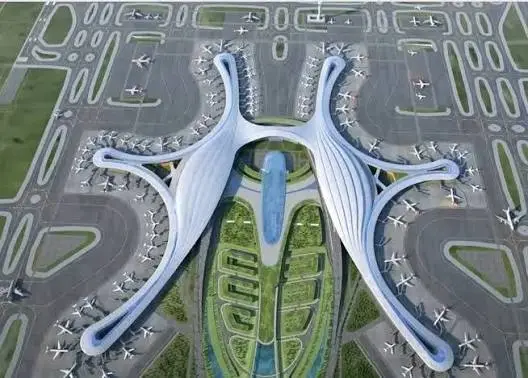
MBARARA, Uganda – President Yoweri Museveni has placed a huge aviation wager at Nyakisharara, where his government wants a rural aerodrome near Mbarara City to become one of the largest international airports on earth.
Museveni directed Prime Minister Robinah Nabbanja and state agencies in February to support Base Seven Company in developing a mega transport project around the government aerodrome, about 10 kilometres from Mbarara. The proposed complex includes two runways measuring 5.5 kilometres each, plus a 3.7-kilometre runway for VIP traffic. Developers also envisage hotels, logistics facilities and commercial infrastructure under a finance, build, operate and transfer arrangement. No final construction cost has entered the public record.
“I am writing to direct you and all concerned government departments to assist” the company, Museveni wrote in his February 11 directive. His letter presented Nyakisharara as a refuelling and logistics point between Brazil and China. Museveni argued existing journeys take between 34 and 42 hours, while a stop in western Uganda would reduce flying time to about 20 hours.
The ambition deserves serious attention. Uganda sits near the centre of Africa. Mbarara links Kampala with Rwanda, Tanzania and eastern Democratic Republic of Congo. Western Uganda produces milk, beef, coffee, bananas and other goods, while nearby tourism routes lead travellers toward Lake Mburo, Queen Elizabeth, Bwindi and Mgahinga national parks. A well-run cargo and passenger hub would give farmers, exporters, tour operators and manufacturers faster access to overseas markets.
Such a project might also reduce Uganda’s dependence on Entebbe International Airport. Entebbe occupies a constrained peninsula and carries almost all international passenger traffic. Monitor cited Uganda Civil Aviation Authority figures placing annual traffic near 2.4 million passengers after decades of growth. Nyakisharara’s promoters argue a second major gateway would spread investment inland and create a new commercial centre around Mbarara.
The Dubai comparison attracts attention because Dubai used aviation as a central economic strategy. Aviation supported 27 percent of Dubai’s economy in 2023 and more than 630,000 jobs, according to an economic impact study released by Dubai Airports and Emirates Group. Dubai International handled a record 95.2 million passengers in 2025. Those numbers show what aviation delivers when government policy, airline capacity, tourism, trade, property development and logistics move together.
Uganda should study the full Dubai model, not copy the runway. Dubai built Emirates into a global carrier. Dubai linked airports with ports, roads, hotels, free zones, visa systems, warehouses, conference centres and financial services. The emirate spent decades building demand before opening larger facilities. Runway length did not create Dubai. Commercial discipline, long-term capital, predictable regulation and constant passenger demand created the aviation economy.
Nyakisharara currently lacks those foundations. Monitor reported no completed feasibility study, no disclosed passenger forecast, no cargo forecast, no airline commitment and no public project price. Uganda’s National Development Plan IV does not list the proposed airport. The existing airfield reportedly handles roughly 40 passengers each month. Those facts demand caution before government transfers land, grants guarantees or approves a long concession.
Aviation expert Sean Mendis gave a blunt assessment. “Airport hubs succeed when there is enough traffic to justify them,” he told Monitor. Mendis argued aviation hubs need demand, connectivity and airline capacity. Without those elements, Uganda risks spending political energy and public resources on underused infrastructure.
The proposed route logic also faces scrutiny. Independent analysis published by Monitor found a Brazil-to-China flight through western Uganda would neither shorten the trip nor lower airline costs. Modern long-haul carriers select hubs through passenger demand, cargo volumes, alliances, fuel prices, airport charges and network economics. Geography matters, but airlines do not divert aircraft merely because a runway sits near a line drawn between two continents.
Promoters have raised an even larger claim. Consultant Eddie Kisitu Sengendo told the prime minister the airport aimed to take about 30 percent of traffic from other airports. Uganda needs published calculations behind such a forecast. Entebbe handles a fraction of Dubai’s annual traffic. Nyakisharara would compete with Nairobi, Addis Ababa, Kigali, Johannesburg, Doha, Dubai and Istanbul, where established airlines already feed passengers through dense global networks.
Questions also surround the project team. Reports identify Base Seven Aviation International Academy and Hamster Business Solutions as local promoters. China Southwest Architectural Design and Research Institute would conduct feasibility and design work. Hunan Construction and Investment Engineering Company would handle engineering, while Blackrock Uwekeza would provide financing. Monitor also reported Base Seven failed to establish an aviation academy after receiving access to Nyakisharara airfield under an earlier agreement.
The earlier failure does not automatically disqualify the group. The history demands strict due diligence. Parliament and the public need the concession period, financing source, interest terms, ownership structure, government guarantees, projected revenue, land requirements and compensation plan. Ugandans also need clarity on who carries losses if passenger numbers fall below forecasts.
Museveni still has a route toward a credible success. Government should commission an independent feasibility study, publish the findings and test demand with airlines, freight companies, tourism operators and exporters. Uganda should phase construction around proven traffic. A cargo terminal, maintenance centre, aviation academy and modest passenger facility would establish demand before two giant runways and a separate VIP strip consume capital.
Mbarara also needs reliable electricity, water, roads, digital systems, housing, emergency services and environmental safeguards. An airport city fails when passengers land beside weak transport links and exporters face slow customs procedures. Government should connect the project to industrial parks, cold storage, livestock processing, tourism circuits and regional trade corridors.
You should judge Nyakisharara by contracts, traffic forecasts and commercial partners, not drawings or political speeches. Uganda has a genuine chance to build a major inland gateway. The country also faces a genuine risk of pursuing scale before demand.
Africa does not need another prestige airport with empty terminals. Uganda needs an aviation economy with full aircraft, moving cargo, skilled workers and profitable businesses. Museveni’s project might move Uganda closer to an African Dubai. Sound planning must take off before the first aircraft does.