
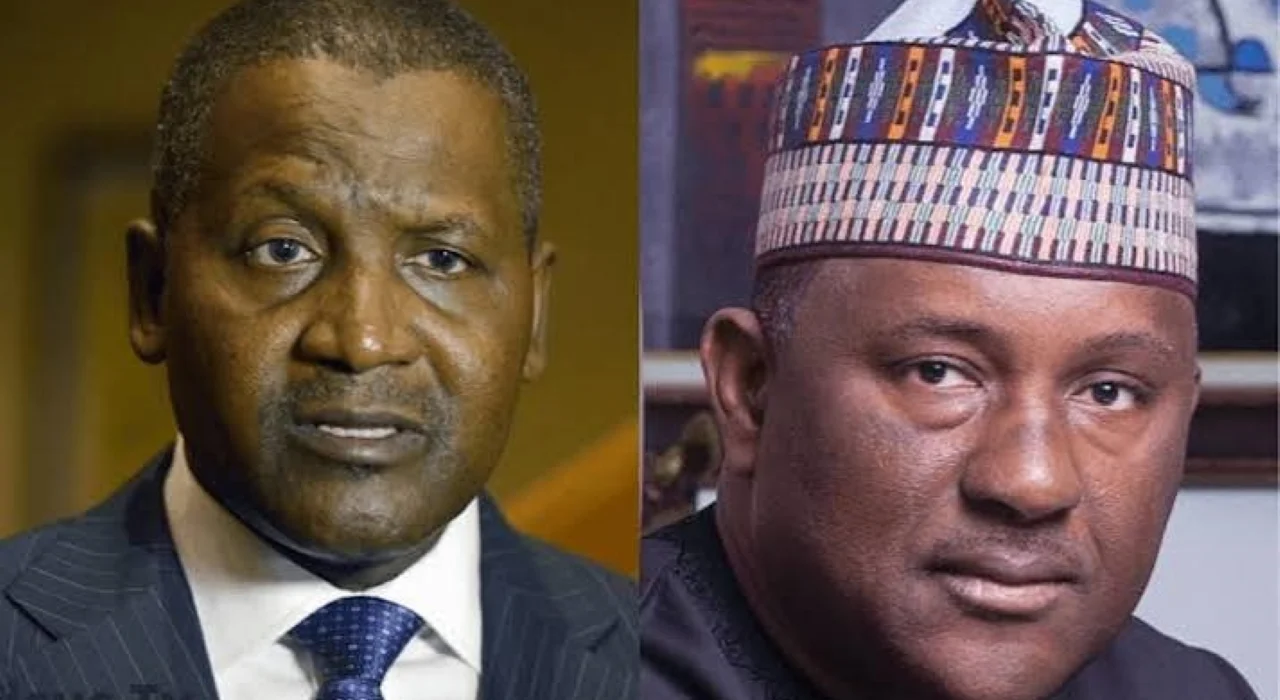
LAGOS, Nigeria – Seventeen individuals hold Nigerian Exchange shares worth about $37.7 billion, yet two industrialists control close to three quarters of the value inside this elite group. Abdul Samad Rabiu holds listed stakes worth about $16.5 billion. Aliko Dangote follows with about $12.1 billion. Together, their positions reach $28.6 billion, equal to almost 76 percent of the club’s combined holdings.
The figures come from a Billionaires.Africa review of company shareholder registers priced against Nigerian Exchange closing prices on September 11. Researchers counted individuals whose listed stakes exceeded $100 million. Six members crossed $1 billion. Eleven held between $106 million and $1 billion. The values measure gross listed equity, not personal net worth, and share prices plus exchange rates move the totals every trading day.
Rabiu dominates the ranking through BUA Foods and BUA Cement. His BUA Foods stake reached about $9.58 billion, while his BUA Cement interest reached about $6.95 billion. The review says Rabiu controls roughly 93 percent of BUA Foods and almost all BUA Cement through direct and indirect interests. Such ownership gives one businessman extraordinary exposure to two major listed companies while leaving relatively little stock available for wider trading.
Dangote’s listed holdings span Dangote Cement, Dangote Sugar Refinery, NASCON Allied Industries and Jaiz Bank. Dangote Cement accounts for about $11.44 billion of his $12.1 billion listed position. A separate Nairametrics review found Dangote Industries held 86.65 percent of Dangote Cement. The refinery now driving much of Dangote’s global profile sat outside the September 11 calculation because public trading had not started.
Below the two giants, the gap becomes enormous. Tony Elumelu ranked third with about $1.39 billion in listed interests across Seplat Energy, United Bank for Africa, Transcorp, United Capital and Africa Prudential. Femi Otedola followed with about $1.27 billion through First HoldCo. Samuel Dossou-Aworet held about $1.26 billion across Seplat and Aradel Holdings. Abdulaziz Yari and family held about $1.20 billion in Geregu Power.
Other names include Rasheed Sarumi, Victor Odili, Jim Ovia, Augustine Avuru, Kesington Adebutu, Isiyaku Rabiu Jnr, Fola Adeola, Ladi Jadesimi, Mike Adenuga, Wale Tinubu and Taiwo Afolabi. Their fortunes span banking, energy, telecoms, agriculture, aviation, construction and consumer goods. Nigeria therefore has a broad class of wealthy founders and major shareholders, yet market value clusters heavily around a few controlling owners.
The concentration deserves scrutiny without turning success into a crime. Rabiu and Dangote built factories, created jobs, expanded domestic production and invested billions of dollars inside Nigeria. Large founders often retain large stakes in companies they created. Ownership concentration alone proves no corruption, illegality or abuse.
The deeper question concerns market structure.
Nairametrics examined more than 100 listed companies and found major shareholders in ten mega-cap companies controlled stakes worth N73.11 trillion. Those interests represented about 46 percent of total Nigerian Exchange market capitalisation at the time of the review. The ten companies themselves represented more than 71 percent of total market value. Such figures show how a small number of companies and controlling shareholders shape the direction of Nigeria’s equity market.
Heavy concentration creates several risks. Thin public floats reduce the number of shares available for regular trading. Lower supply increases sensitivity to large transactions. Price movements in a handful of companies then influence headline market indices far more than movements across smaller firms. A market needs large successful companies, but deeper participation strengthens liquidity, price formation and public ownership.
Nigerian Exchange rules already recognise this problem. Listing standards require minimum public floats across different boards. Premium Board companies face a 20 percent public-float requirement or an alternative free-float value threshold. Main Board standards also impose public ownership requirements. The rules aim to support orderly and liquid trading while limiting excessive scarcity of shares.
Nigeria now faces an unusual opportunity to widen ownership. Dangote Petroleum Refinery launched Africa’s biggest initial public offering on September 14. The company offered 4.1 billion new shares at N525 each, seeking N2.15 trillion, around $1.6 billion. Retail buyers need only 10 shares, worth N5,250, to enter the offer. Dangote described the transaction as a “people’s IPO.”
Yet public participation starts from a small base. The refinery offer represents only a few percentage points of the company, while Dangote retains overwhelming beneficial control. Nairametrics calculated his post-offer beneficial ownership at 84.34 percent. The listing therefore broadens access without fundamentally changing control.
Nigeria needs more listings of this scale, especially from telecoms, energy, manufacturing, technology, logistics and consumer businesses. Pension funds, workers, young professionals and small investors need access to productive assets. More companies need deeper floats. More founders need succession plans capable of spreading ownership beyond family structures. More Nigerians need financial education before speculative enthusiasm turns savings into losses.
The $37.7 billion figure should therefore trigger two reactions. Nigeria should celebrate entrepreneurs who built large African businesses. Nigeria should also ask why public-market wealth sits inside such a narrow circle.
A healthy stock exchange does not require fewer billionaires. A healthy exchange requires millions more shareholders.
Dangote and Rabiu have shown how African industrial fortunes grow through cement, food, sugar, energy and large-scale production. The next challenge belongs to Nigeria’s capital market. Economic ownership must spread as corporate value grows.
If Africa’s largest economy wants a deeper capitalist system, ordinary citizens need more than jobs and consumer access. They need meaningful ownership in the companies shaping national wealth.