
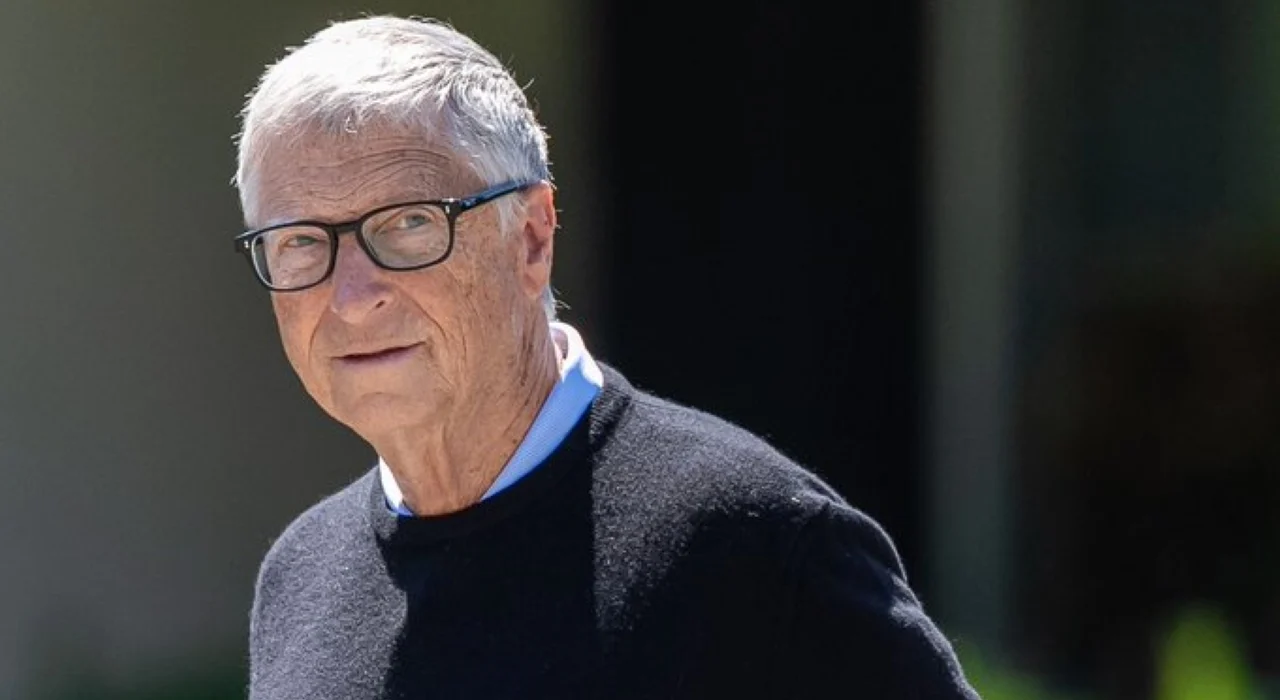
SEATTLE, United States – The Gates Foundation will spend at least $1 billion over the next two years to widen access to artificial intelligence, placing health, education, agriculture and neglected languages at the centre of a global effort aimed at stopping AI from deepening inequality between rich and poor societies.
The commitment arrives as Bill Gates warns governments and technology companies about a widening development gap. Wealthy countries already possess advanced data centres, research laboratories, specialist engineers and widespread broadband. Poorer countries often enter the AI era with weak connectivity, limited computing infrastructure and digital services built around languages their citizens do not speak.
“Governments are way behind on this one,” Gates told Reuters. He said no government had developed enough depth for the scale of social change approaching through AI. The Foundation plans to direct funding toward partners working in healthcare, education and farming while also building language data needed for AI systems to serve more communities.
The spending plan divides roughly $400 million toward education, around $400 million toward healthcare, about $100 million toward agriculture and about $100 million toward language datasets and related foundations. The Foundation wants models to work well beyond English and Mandarin, especially across communities excluded from mainstream technology development.
The language issue carries major significance for Africa. Hundreds of millions of Africans communicate daily through languages with limited digital training data. An AI assistant trained poorly on local speech, crops, diseases, school systems or laws offers less value to a farmer in Malawi, a nurse in Zambia or a teacher in Senegal than to an English-speaking professional in London or Seattle.
Such a gap risks becoming economic infrastructure. Countries with strong models, cheap computing and broad digital access gain faster research, better automation and higher productivity. Countries without those foundations pay foreign providers for tools designed elsewhere. Over time, such dependence risks reproducing an old pattern where African nations supply users and data while companies abroad capture most commercial value.
Gates has framed the choice sharply. He has described AI as either “the greatest equalizer” or the “worst source of injustice.” His warning reaches beyond access to chatbots. AI now influences drug research, crop advice, tutoring, clinical decisions, software development and public administration. Unequal access therefore threatens to widen differences in productivity, knowledge and public services.
Africa already sits near the centre of several Foundation projects. In January, the Gates Foundation and OpenAI announced Horizon 1000, backed by $50 million in funding and technology. The programme starts in Rwanda and targets 1,000 primary healthcare clinics and surrounding communities across Africa. Health workers will receive AI support for patient intake, triage and follow-up care.
The need is immense. The Foundation says sub-Saharan Africa faces a shortage approaching six million healthcare workers. A nurse serving an overcrowded rural clinic needs faster access to patient records, treatment guidance and referral information. AI support offers one route toward reducing administrative pressure while scarce professionals focus on patients.
The Foundation also announced a $200 million, four-year partnership with Anthropic earlier this year. The programme supports AI tools and shared public resources across health, education and agriculture. Early work covers vaccine research, public health datasets, crop information and tools designed around conditions in lower-income countries.
Agriculture offers another direct African use case. Small farmers often operate with limited weather information, scarce extension services and expensive agricultural advice. The new funding includes support for applications offering real-time guidance on weather, pests and fertiliser. Local language delivery matters because useful advice loses value when farmers struggle with the language or technical assumptions behind a service.
Education presents similar stakes. The Foundation plans to support tools helping teachers identify weak areas in a class and adapt lesson plans around misunderstood concepts. Such systems need local curricula, local languages and reliable teacher oversight. A classroom in Lusaka or Accra should not depend on material designed around American schools without adaptation.
For African governments, the announcement should trigger more than gratitude toward philanthropy. One billion dollars from a private foundation will not solve Africa’s digital divide. Governments need electricity, broadband, affordable data, local data centres, stronger universities and national computing capacity. They also need privacy rules protecting citizens from uncontrolled extraction of personal information.
African states should invest in local AI talent and language datasets as strategic infrastructure. Universities need funding for computer science, linguistics and applied research. Governments should publish useful public datasets under safeguards. Regional bodies should support shared computing resources where smaller economies lack money for expensive systems.
Local ownership also matters. If every important AI platform belongs to companies in the United States, China or Europe, Africa enters another technological cycle as a customer rather than a producer. Foundation money should help African researchers, start-ups, hospitals and universities build intellectual property and products suited to African conditions.
Gates also wants governments to cooperate on wider AI risks. He has warned about job losses, cyberattacks, fraud and unhealthy dependence on AI companions. His message combines two arguments. Governments need stronger safety policy, and poorer societies need fair access to beneficial systems. Focusing on only one side creates another imbalance.
The timing matters. The pledge arrives before high-level United Nations meetings where global AI governance will feature prominently. UN Secretary-General António Guterres has argued AI governance should not rest with a small group of governments or companies. Developing nations therefore face a rare opportunity to demand seats in negotiations shaping standards for access, safety and data.
For Africa, the central question is simple. Will AI narrow shortages in doctors, teachers and agricultural expertise, or widen dependence on richer economies?
Money alone will not answer the question. Policy, infrastructure, local research and political seriousness will decide the result.
The Gates Foundation has now placed $1 billion behind the argument for broader access. African leaders should treat the pledge as seed capital for capacity, not a substitute for national investment. Your country’s future competitiveness will depend on who owns the systems, who trains them, which languages they understand and whose problems developers choose to solve.
The AI divide is forming now. Africa needs to enter early, build locally and negotiate from strength.