
DAR ES SALAAM, Tanzania – Tanzania has moved from years of electricity shortages toward a position where regional power sales now form part of national economic strategy, after the Julius Nyerere Hydropower Project lifted installed generation capacity far above current peak demand.
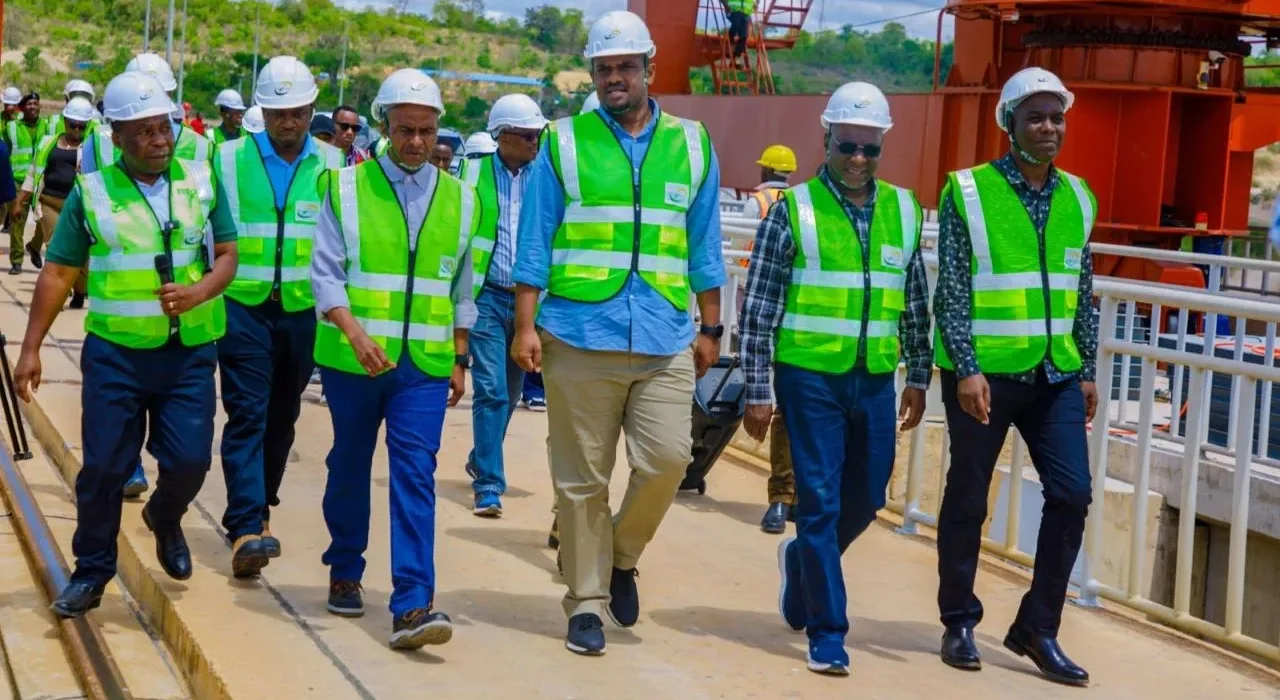
President Samia Suluhu Hassan formally inaugurated the 2,115 megawatt plant on August 22 at Rufiji in Coast Region. Energy Minister Deogratius Ndejembi said Tanzania now has 4,646 megawatts of installed generation capacity against peak national demand of 2,271 megawatts, leaving a theoretical surplus of 2,375 megawatts.
The government has already signed an agreement to sell electricity to Zambia. Tanzania also has a power trading arrangement with Kenya under which the two countries exchange electricity according to demand. Dar es Salaam is holding further discussions with neighbouring states as Tanzania seeks revenue from generation capacity beyond domestic requirements.
“We must now trade electricity,” Ndejembi said at the inauguration.
The shift gives Tanzania an opportunity to become an electricity supplier connecting Eastern and Southern Africa. TANESCO is expanding transmission infrastructure aimed at linking the Eastern Africa Power Pool with the Southern African Power Pool, placing Tanzania between two large regional electricity markets.
For Zambia, the timing matters. Hydropower shortages have exposed the country to severe electricity deficits during drought periods, with low water levels at major dams disrupting generation and forcing utilities to seek imports. A direct Tanzania-Zambia link would give Lusaka another source of electricity while widening the pool of suppliers available to southern African buyers.
The Tanzania-Zambia Transmission Interconnector, known as TAZA, forms part of the wider Zambia-Tanzania-Kenya interconnection programme. Tanzania is building a 400 kilovolt transmission corridor from Iringa through Kisada, Mbeya and Tunduma toward the Zambian border. Zambia is also advancing transmission works toward Nakonde. The project aims to create the first high-voltage connection between the Eastern Africa Power Pool and Southern African Power Pool.
ZESCO procurement notices issued this month show Zambia is moving ahead with major sections of the network, including the Kasama-Nakonde line, a cross-border section toward Tanzania and associated substations. The World Bank reported on 20/05/2026. Transmission and substation works were under way on the Tanzanian side.
Kenya already has a stronger physical connection with Tanzania. Regulators approved a power exchange arrangement involving TANESCO and Kenya Electricity Transmission Company through the 400 kilovolt interconnector. Tanzanian and Kenyan energy officials agreed on 14/05/2026 to accelerate cross-border transmission projects and strengthen electricity trade.
The result moves regional integration away from speeches and toward infrastructure with commercial value.
Tanzania also plans deeper links toward Burundi, the Democratic Republic of Congo, Uganda, Rwanda, Malawi and Mozambique. TANESCO lists Burundi and DRC interconnectors among future transmission priorities. A proposed Tanzania-DRC line would run from the Rukwa region toward Katanga, creating another route into one of Africa’s largest mining markets.
The DRC point needs precision. Public project records show the Tanzania-DRC interconnector remains under development rather than an established large-scale export route. Burundi also sits within Tanzania’s regional interconnection plans, while existing cross-border links in the wider East African system already support electricity exchange among neighbouring states.
Julius Nyerere now gives Tanzania greater generation depth to support those ambitions.
The plant contains nine turbines rated at 235 megawatts each. TANESCO director-general Lazaro Twange said the station supplied 43.5 percent of electricity fed into the national grid during 2025 and around half during 2026.
“The Julius Nyerere plant has already become a major pillar of energy,” Twange said.
The project cost about 7.45 trillion Tanzanian shillings. Construction started in June 2019 and finished in March 2025. The plant began feeding electricity into the grid before formal inauguration, helping end generation shortages which previously contributed to rationing.
Tanzania has also completed the 400 kilovolt Chalinze-Dodoma transmission line, a 345 kilometre project built to move Julius Nyerere electricity toward central and northern demand centres. Energy officials have stressed a simple point. New generation has limited value without enough transmission capacity to move electricity to industries, mines, cities and border interconnectors.
Transmission now becomes central.
Installed capacity does not equal permanent export availability. Hydropower output depends on water conditions, plant availability, transmission limits and domestic demand. Tanzania’s economy is also expanding, and industrialisation will raise electricity consumption. The 2,375 megawatt figure therefore represents the gap between installed capacity and present peak demand, rather than a guaranteed export volume every hour of the year.
For investors, this distinction matters. If you follow Tanzania’s next phase, watch actual generation, cross-border transmission capacity, signed power purchase terms and payment performance from importing utilities. Those figures will show whether Tanzania turns surplus capacity into dependable export revenue.
Hydropower also brings concentration risk. Julius Nyerere now accounts for a large share of Tanzania’s supply. Government plans for natural gas, wind, solar and other generation sources will matter if Tanzania wants to protect regional contracts during dry periods or plant outages.
President Hassan has linked the new capacity to manufacturing, mining, agriculture, trade and jobs. Her government wants domestic industry to consume more electricity while regional buyers absorb excess supply.
Such a balance offers Tanzania a stronger economic position than exporting raw commodities alone. Electricity trade provides recurring revenue from infrastructure already serving domestic development. Regional interconnectors also give Tanzania access to imported electricity when conditions reverse, since modern power pools support two-way trading.
The wider African lesson is significant. Countries with surplus generation need buyers. Countries with shortages need alternative suppliers. Interconnected grids reduce dependence on one dam, one fuel source or one national utility.
Tanzania now sits closer to the centre of this regional market.
The Julius Nyerere project does not guarantee Tanzania will dominate East African electricity trade. Transmission projects still need completion. Commercial agreements need reliable settlement. Domestic demand will rise. Water conditions will change.
Yet the strategic direction is clear. Tanzania has built generation capacity ahead of present demand and is now building the wires needed to sell part of its output across borders.
Zambia and Kenya stand first in line for the next phase. DRC, Burundi and other neighbours remain part of a wider expansion plan. If Dar es Salaam converts generation, transmission and contracts into reliable delivery, electricity exports will give Tanzania a new regional economic role beyond ports, mining, tourism and agriculture.