
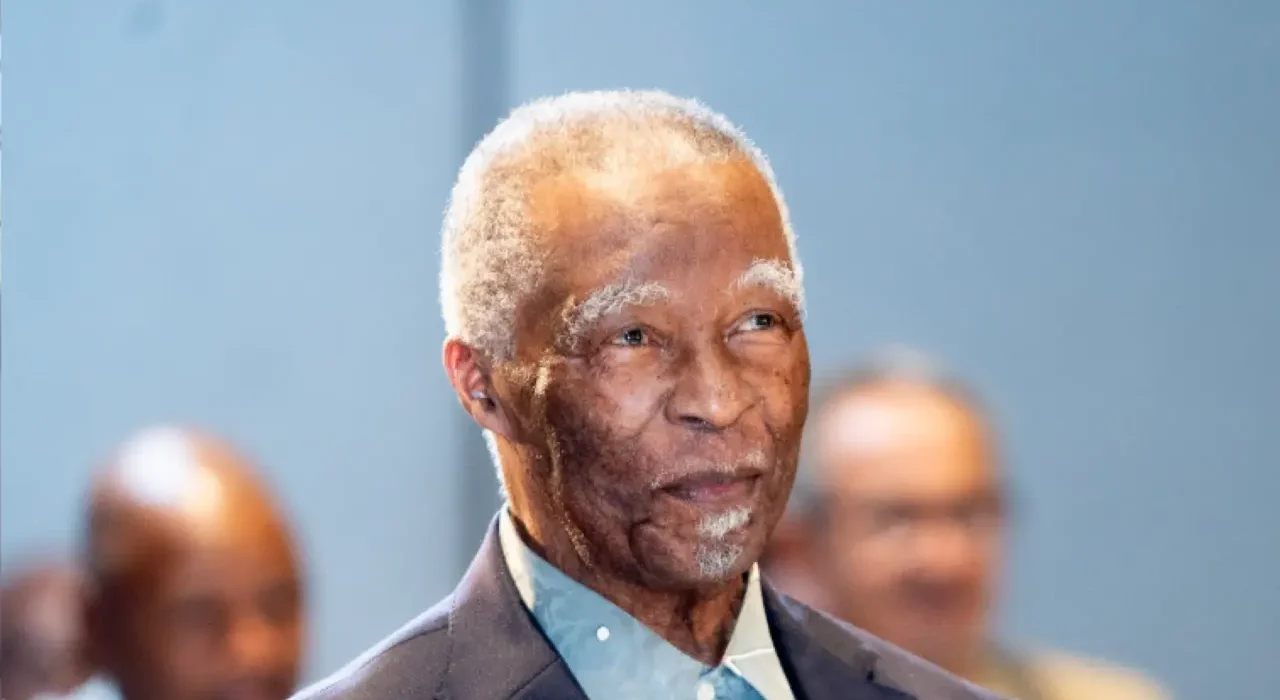
KIGALI, Rwanda – Former South African President Thabo Mbeki has urged African leaders and citizens to stop shielding poor governance behind diplomatic language, arguing misconduct in one country often damages neighbours across an increasingly connected continent.
Speaking during a panel discussion at the inaugural Africa Mindset Reset Forum in Kigali on Tuesday, Mbeki called for direct criticism when presidents or governments act against public interests.
“When a leader is doing the wrong things, let's not be diplomatic. Let’s call out wrong doing because the African countries are linked, for example what South Africa is doing will affect Rwanda,” Mbeki said.
The intervention struck at one of Africa’s longest political habits. Governments routinely defend sovereignty and non-interference when peers face accusations involving disputed elections, corruption, repression or economic mismanagement. Mbeki argued regional interdependence makes silence costly because national failures rarely remain within national borders.
Kigali Today reported Mbeki also placed leadership quality at the centre of Africa’s development problem. He argued major continental problems will persist without better leaders. He urged voters to judge politicians through living conditions and results, rather than loyalty or promises.
Mbeki offered a simple test for citizens. A voter who remains poor after five years should ask a returning presidential candidate why conditions failed to improve. His argument shifts responsibility in two directions. Leaders must deliver. Citizens must demand evidence before renewing political mandates.
The forum opened at Kigali Convention Centre on August 25 under the African School of Governance. Organisers built discussions around governance, institutions, economic transformation and a move from Pan-African rhetoric toward execution. President Paul Kagame, former Ethiopian Prime Minister Hailemariam Desalegn and Ghanaian Vice President Naana Jane Opoku-Agyemang joined Mbeki among senior participants.
Kagame delivered a related warning. He said Africa has spent decades identifying problems while progress still falls short of available resources and human talent. “The task is: how do we change our minds?” Kagame asked. His message focused on confidence, institutions and implementation rather than another cycle of declarations.
Mbeki’s comments carry special weight because he helped shape an earlier African attempt at peer accountability.
African heads of state created the African Peer Review Mechanism in 2003 from governance commitments linked to NEPAD. The mechanism asks governments to examine one another on democracy, economic management, corporate governance, development, resilience and digital governance. Somalia became its 45th member in February 2026.
The APRM says heads of state should use peer dialogue and persuasion to change poor practices. Such language already accepts Mbeki’s core point. African leaders have a continental responsibility to question peers when governance failures threaten citizens, economies or regional stability.
Practice often falls short.
Presidents regularly congratulate disputed winners before courts finish hearing petitions. Regional bodies often issue cautious statements during political crises. Governments facing criticism frequently accuse outsiders of interference. Leaders then defend one another through private engagement while citizens demand public accountability.
Mbeki’s latest position also invites examination of his own record.
During his South African presidency, critics attacked his approach toward Robert Mugabe’s government in Zimbabwe as “quiet diplomacy.” In a 2006 BBC interview published by the South African government, Mbeki rejected the label and argued diplomacy works through engagement rather than public shouting. He said Zimbabweans themselves needed to solve Zimbabwe’s political crisis.
A decade later, Mbeki defended the same approach, saying South Africa sought a negotiated Zimbabwean solution rather than foreign-directed regime change. Researchers remain divided over results. Critics say Pretoria gave Mugabe political room during repression and disputed elections. Supporters credit negotiations with helping produce the 2008 Global Political Agreement and coalition arrangement.
His Kigali remarks therefore mark an important emphasis. Diplomacy still has a role, but diplomacy should not become silent when leaders damage their countries.
Regional consequences support his argument.
A political crisis in Zimbabwe sends migrants toward South Africa, Botswana and Zambia. Conflict in eastern Democratic Republic of Congo draws Rwanda, Burundi, Uganda and regional armies into security calculations. Sudan’s war sends refugees across multiple borders. Economic disruption in South Africa affects transport, investment, trade and employment far beyond South African territory.
National governance has regional consequences.
Africa also wants deeper economic integration through the African Continental Free Trade Area. Deeper integration increases shared exposure. A port failure in one country delays exporters elsewhere. Currency instability disrupts regional suppliers. Violence closes borders. Corruption raises transport costs. Bad regulation discourages investors across neighbouring markets.
Leaders therefore lose credibility when they demand African integration while treating governance failures as purely domestic affairs.
Mbeki’s argument also challenges liberation-era political solidarity. Many ruling parties built deep relationships during anti-colonial and anti-apartheid struggles. Those bonds shaped regional diplomacy after independence. Historical loyalty sometimes discourages public criticism between governments whose parties once supported one another.
Citizens now face different priorities.
A young African looking for work cares about electricity, investment, transport, housing and wages. A trader crossing borders cares about customs efficiency and currency stability. A farmer needs markets. A family needs security. None gains from leaders protecting peers from scrutiny.
Kagame’s forum message reinforces the same pressure for results. Africa possesses resources, young populations and decades of policy experience. Leaders already know many problems. The missing element often lies between promises and execution.
Mbeki has now added political honesty to the list.
Calling out wrongdoing does not require hostility between states. Governments still need negotiation. Leaders still need private channels during crises. Public criticism becomes necessary when diplomatic courtesy starts protecting failure.
Africa already created institutions for peer accountability. The harder task involves using them without fear or political favour.
If one government damages democratic institutions, destabilises its economy or abuses citizens, neighbours eventually carry part of the cost. Mbeki’s example linking South Africa and Rwanda captures this reality even across long distances.
African solidarity should protect Africans first, rather than protect presidents from embarrassment.