

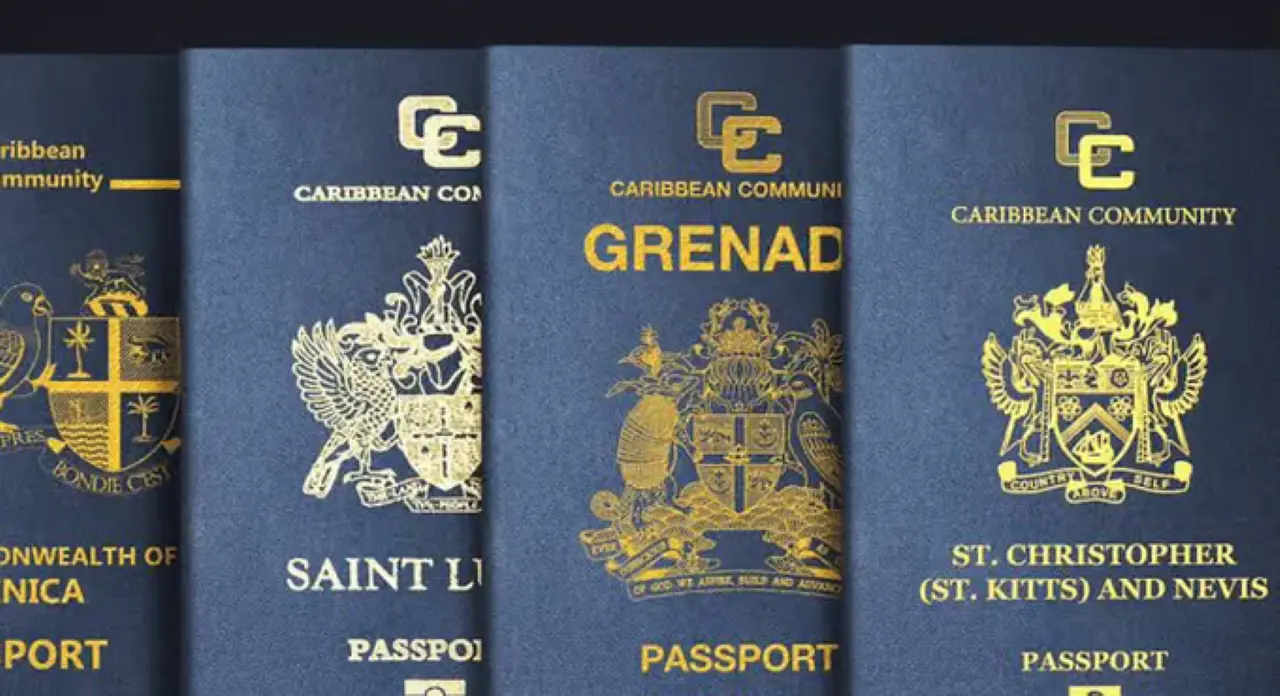
ST JOHN'S, Antigua and Barbuda – Five Caribbean states face direct pressure from the European Union over citizenship-by-investment programmes popular with wealthy Africans seeking easier international travel. Brussels wants Antigua and Barbuda, Dominica, Grenada, Saint Kitts and Nevis, and Saint Lucia to phase out their programmes by 1 June 2028 or risk losing visa-free access to the Schengen area.
The European Commission sent formal letters to the five governments on 25 June. Antigua and Barbuda later confirmed the demand publicly. Brussels relied on a revised visa suspension mechanism adopted at the end of 2025, which treats investor citizenship schemes as grounds for suspending visa-free travel.
For African investors, the dispute reaches far beyond Caribbean politics. Second passports from these small island states have become mobility tools for business owners, professionals and wealthy families from countries where Schengen visa applications face high refusal rates.
Nigeria illustrates the pressure.
European Commission data placed Nigeria's Schengen refusal rate at 45.9 percent in 2024, up from 40.8 percent in 2023. Applicants also lose their visa fee after refusal. For business owners who travel frequently, repeated applications create cost, uncertainty and lost time.
A Caribbean passport changes the calculation. Citizens of the five states currently travel visa-free across much of the Schengen area for short stays. Applicants acquire citizenship through government contributions, approved property purchases or other qualifying investments after due diligence.
The price remains high. Grenada's programme requires a government contribution of about US$235,000 for a single applicant under one route. Saint Kitts and Nevis starts around US$250,000. Dominica offers a route beginning near US$200,000. Investors also face processing, legal and due-diligence fees.
Such sums explain why these programmes attract a narrow African clientele. A middle-income traveller facing a rejected visa does not suddenly find US$200,000. The market targets business owners, investors and wealthy families seeking mobility, asset diversification and contingency planning.
Nigeria appears among important source countries identified by European authorities. The European Commission said applicants in 2024 often came from countries whose nationals already require Schengen visas, including Nigeria, China, Syria and Iraq.
Across the five programmes, authorities estimate more than 107,000 passports have been issued. Applications reached 13,113 in 2023 and 10,573 in 2024.
Brussels says volume, short processing periods and low rejection rates create security and due-diligence concerns. In 2024, Antigua and Barbuda rejected 1.7 percent of applications, Saint Lucia rejected 5.3 percent and Dominica rejected 6.5 percent. European officials argue passport sales allow nationals from visa-required countries to gain easier access to Europe without passing through ordinary Schengen screening.
Caribbean governments reject the idea their programmes deserve treatment as security threats regardless of reforms.
Antigua and Barbuda says regional states strengthened due diligence, information sharing and regulation. Eastern Caribbean governments also established a regional citizenship-by-investment regulatory authority intended to harmonise standards and oversight.
Their economic argument carries weight.
Citizenship revenue finances public budgets in small island economies vulnerable to hurricanes, tourism shocks and high borrowing costs. Antigua and Barbuda Prime Minister Gaston Browne has defended such revenue as important for hospitals, schools and infrastructure.
The confrontation therefore places Europe against governments defending a major source of national income.
For African passport buyers, Schengen access sits near the centre of the product's value. A Nigerian executive holding a Caribbean passport gains easier short business travel to Paris, Frankfurt, Amsterdam or Madrid without submitting a separate Schengen application before each trip.
Losing visa-free access would remove one of the strongest commercial reasons for paying six figures.
Demand would likely fall if Brussels suspends the waiver.
The passports would still retain value outside continental Europe. Several offer broad travel access to the United Kingdom and many other destinations. Grenada also holds a treaty relationship connected to the United States E-2 investor visa, subject to separate American eligibility rules and residence requirements.
Loss of Schengen access would still reduce the mobility premium buyers currently purchase.
Vanuatu provides a warning. Europe suspended Vanuatu's visa exemption after years of concern over its investor citizenship programme. The EU's current mechanism gives Brussels greater legal room to apply similar pressure elsewhere.
The Caribbean governments now face difficult choices. They might end the programmes, negotiate tighter conditions acceptable to Brussels, or retain the schemes and risk European visa restrictions.
A united regional response has already started.
Antigua and Barbuda says Organisation of Eastern Caribbean States leaders agreed on collective diplomatic engagement rather than unilateral surrender. Their position argues investment migration exists across many jurisdictions and small Caribbean states should not face rules designed without regard to their fiscal dependence on programme revenue.
Africa should study this dispute closely.
The popularity of Caribbean passports among Africans exposes a separate problem. African passports often carry weak travel access despite growing wealth, businesses and international investment across the continent.
Entrepreneurs from Lagos, Accra, Nairobi, Harare or Lusaka frequently face expensive visa procedures when seeking meetings in major global markets.
African governments spend years talking about continental integration while citizens still struggle with mobility inside Africa and abroad. Wealthy citizens respond by buying another nationality.
This represents a political failure.
A Nigerian investor paying US$235,000 for a Grenadian passport purchases access his original passport fails to provide. The money leaves Africa. The fiscal benefit goes to a Caribbean government. The underlying demand comes from African economic weakness, diplomatic weakness and restrictive global visa systems.
African states should improve their own mobility strategy. Governments need stronger bilateral visa agreements, credible identity systems, better passport security and deeper diplomatic negotiation. The African Union also needs faster implementation of free movement across the continent.
Europe holds sovereign authority over visa-free entry. Caribbean states hold sovereign authority over citizenship rules. Conflict begins when one side sells mobility built partly around access controlled by another government.
The next two years will decide whether the Caribbean model survives in its present form.
For wealthy African buyers, the warning is immediate. A second passport purchased mainly for European access carries policy risk. Governments change rules. Visa waivers disappear. Investment decisions built around mobility require careful legal and financial review.
For Africa, the deeper lesson carries greater importance.
When successful African citizens spend hundreds of thousands of dollars buying another country's passport simply to move more freely around the world, the problem does not begin in the Caribbean.
The problem begins with the limited global value attached to African passports.