
LUSAKA, Zambia – Zambia enters another presidential election with rallies, songs, motorcades, party colours, and promises of national renewal. Voters will choose a president on August 13, alongside lawmakers and local representatives. A winning presidential candidate needs more than half of valid votes, with a second round required when no candidate crosses the threshold.
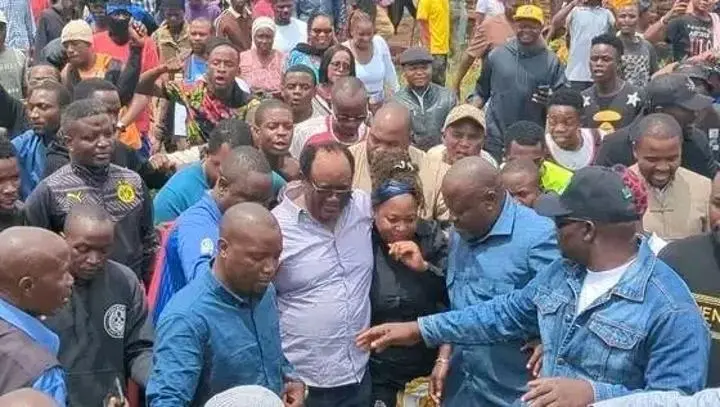
Opposition candidate Brian Mundubile captured the campaign mood after a Lusaka gathering. “In 3 weeks time, Zambia will have a new President. The people of Zambia are tired of fake promises,” he wrote. His declaration presents victory as settled before voters cast ballots. President Hakainde Hichilema seeks a second term and recent reporting still places him ahead, though Mundubile has emerged as his strongest challenger.
Political commentator Joseph Kalimbwe answered with a harder question. “How many times will our people change Presidents and nothing truly happens?” His challenge reaches beyond Hichilema or Mundubile. Zambia has mastered peaceful political turnover better than many African states, yet elections often replace office holders without changing weak institutions, delayed projects, poor maintenance, procurement abuse, or dependence on presidential promises.
Zambians should celebrate elections. Peaceful voting, concession, and transfer of authority protect citizens from coups and one-party rule. In 1991, voters removed Kenneth Kaunda and UNIP. In 2011, voters ended two decades of MMD government and placed the Patriotic Front in office. In 2021, voters removed Edgar Lungu and handed power to Hichilema’s UPND. Three major party turnovers since 1991 show real democratic strength.
Still, a ballot does not grade a road, employ a graduate, stock a clinic, deliver electricity, or repay public debt. Institutions perform those duties. Zambia’s political culture places huge hope in one president, then shifts blame toward one president when systems fail. Parties encourage this habit because personal campaigns hide weak plans, vague budgets, and absent deadlines.
Mundubile says Zambia wants change. Voters need to ask what kind of change he offers. A new face at State House means little when procurement rules stay opaque, contractors receive projects without capacity, ministries hide completion dates, and Parliament fails to track spending. Hichilema also needs to answer why economic stabilisation has not produced enough relief inside homes, markets, farms, and townships.
The current administration has secured major debt restructuring after Zambia defaulted in 2020. Public debt fell from an estimated 133.4 percent of gross domestic product in 2023 to 93.4 percent in 2025. Inflation has also eased, while foreign reserves and investor confidence have improved. Yet Reuters reports many households still face high living costs, limited jobs, and deep poverty. Economic repair on a spreadsheet does not automatically create household security.
Zambia now seeks another International Monetary Fund programme after completing a US$1.7 billion arrangement in January. Government expects 6.4 percent growth during 2026, while the IMF projects 4.3 percent amid energy constraints, weaker mining output, and global instability. Finance Minister Situmbeko Musokotwane says Zambia needs investment in mining, energy, and agriculture to create jobs. Voters deserve precise numbers for jobs, wages, local ownership, and tax receipts.
Roads expose the gap between campaign language and state performance. Zambia’s own development plan identifies inadequate transport and logistics as barriers to economic transformation and employment. World Bank project reviews also record stalled works linked to currency weakness, rising fuel and cement costs, poor contractor performance, and weak price-adjustment systems. These problems survive elections because governments announce roads as political gifts instead of managing them as public assets.
No president builds a national road network alone. Engineers design roads. Procurement officers select contractors. Treasury releases funds. Parliament approves budgets. Auditors inspect spending. Councils protect drainage and local access. Courts punish fraud. Citizens monitor delivery. When every function waits for presidential attention, the state becomes slow, expensive, and vulnerable to patronage.
Zambia needs a public national project register. Each road, school, hospital, dam, and power line should carry a contract value, contractor name, beneficial owners, start date, completion date, payment record, physical progress, and reason for delay. Citizens should access the register online and through district offices. Quarterly photographs and engineering certificates should support every progress claim.
Your vote should purchase measurable commitments, not emotional slogans. Ask each candidate to name five priority roads, full costs, funding sources, procurement methods, construction periods, and maintenance plans. Ask how many jobs each project will create and how many contracts will reach Zambian firms. Ask which projects face cancellation and which officials will answer for delays.
Candidates should also explain how they will reduce presidential control over development. Constituency and council funding need transparent formulas. Parliament needs stronger project oversight. The Auditor General needs timely access to contracts and payments. Anti-corruption agencies need freedom from party pressure. Courts need resources for fast commercial and procurement cases.
Mundubile’s claim of a new president in three weeks is campaign confidence, not an election result. Hichilema’s record on debt and stability also does not settle the election. Voters hold the decision. Zambia’s electoral system requires a majority, not rally noise, online applause, or declarations from candidates.
The deeper question concerns what happens after inauguration. Will the winner publish targets within thirty days? Will ministers face removal for missed deadlines? Will stalled roads receive honest explanations? Will opposition lawmakers scrutinise contracts instead of waiting for their own turn to distribute them?
Zambia does not suffer from a shortage of presidents, parties, slogans, or manifestos. Zambia suffers when institutions restart every five years, projects change names, contracts disappear, and citizens receive another promise instead of a completion certificate.
Elections matter because leaders matter. Institutions matter more because institutions outlive leaders. On August 13, Zambians should vote with hope, but hope needs a ledger, a deadline, and a named official responsible for delivery.
A new president alone will not build the road. A state designed to finish work will.