


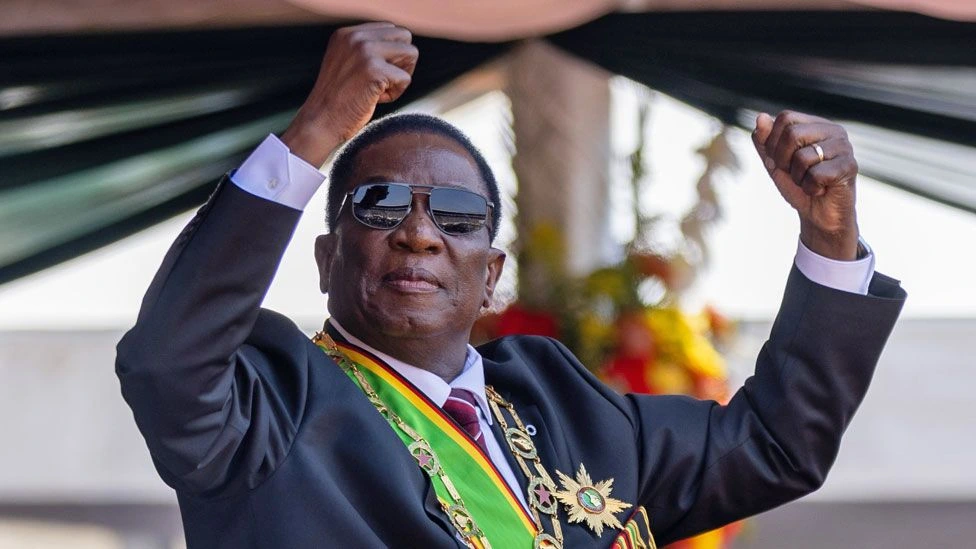
HARARE, Zimbabwe – President Emmerson Mnangagwa has signed Constitution Amendment Bill Number 3 into law, extending his rule from 2028 to 2030 and turning Zimbabwe’s 2013 Constitution into another battlefield in the country’s long struggle against life presidency politics.
Reuters reported on July 7, 2026, that government spokesperson Nick Mangwana confirmed Mnangagwa had signed the legislation, giving the 83-year-old leader two extra years in office. The move comes after Parliament and Senate pushed through amendments that extend presidential, parliamentary, and local authority terms from five years to seven years.
This is not normal constitutional reform. This is a sitting president signing a law that directly benefits his own stay in power. That single fact should trouble every Zimbabwean, every SADC leader, every African Union official, and every citizen in a liberation movement state where ruling parties still treat the government as war booty.
Zimbabwe removed Robert Mugabe in 2017 after nearly four decades in power. The public was told a new era had arrived. Zimbabweans were told the country had moved away from one-man rule, fear, patronage, and personalised power. Mnangagwa stood before the nation as a reformer. He promised renewal. He promised constitutionalism. He promised a break from the past.
CAB3 now tells Zimbabweans the hard truth. The past did not leave. It changed its jacket.
The amendment postpones the next presidential election from 2028 to 2030 and extends Mnangagwa’s current tenure by two years. AP reported that the Senate approved the bill by 75 votes to four, after the lower house also backed it. The same amendments replace direct presidential elections with selection by lawmakers and stretch the terms of the president and parliament from five to seven years.
That change cuts deeper than one man’s term. Zimbabweans will no longer hold the same direct power to choose their president. Parliament will gain that role. In a country where ZANU-PF dominates Parliament, controls state institutions, and benefits from weak opposition structures, such a change shifts power away from voters and into a political machine.
A constitution should protect citizens from rulers. CAB3 protects rulers from citizens.
Supporters call the amendment lawful. They say Parliament passed it with the required two-thirds majority. They argue that the two-term limit still exists, only with longer terms. That argument hides the obvious. A term limit loses meaning when politicians stretch the term while already sitting in office.
If five years becomes seven years during the current term, the ruler has changed the finish line while running the race.
CITE Zimbabwe explained before assent that CAB3 would become law only after Parliament passed it, the president signed it, and the amendment was published in the Government Gazette. Reuters now reports the presidential signature has happened. The state must now show the public every legal step, every certificate, every gazette notice, and every constitutional basis used to justify this self-serving amendment.
The political damage began long before the signature. Public hearings on the bill exposed intimidation and fear. AP reported that a parliamentary hearing in Harare descended into violence after human rights lawyer Doug Coltart was attacked, bruised, and robbed of his phone and glasses. Critics said they were heckled, drowned out, denied fair participation, or intimidated at hearings across the country.
That is the old Zimbabwean method. Call it consultation. Pack the venue. Silence critics. Claim the people spoke.
Former finance minister Tendai Biti was detained after allegedly holding an unsanctioned meeting against the amendments. Other critics reported harassment. Authorities denied suppressing dissent and insisted the process followed the law. Yet law without freedom becomes procedure without democracy.
The most painful part is the historical insult. Zimbabwe’s 2013 Constitution came after years of national pain. Citizens wanted checks and balances, term limits, stronger institutions, wider rights, and a future where one man would never again sit above the state. CAB3 weakens that settlement.
Revolutionary parties across Africa keep repeating this failure. They begin as liberation movements. They end as gatekeepers of privilege. They defeat white minority rule, then build party minority rule. They replace colonial arrogance with comrade entitlement. They tell citizens the party liberated the country, so the party must rule forever.
Zimbabwe now shows the danger again.
When the army is married to the ruling party, succession becomes a security matter. When tenders are married to party donations, corruption becomes policy. When courts fear power, law becomes theatre. When Parliament obeys the executive, citizens lose their last shield.
This is why CAB3 matters beyond Zimbabwe. It sends a warning to South Africa, Mozambique, Angola, Namibia, Tanzania, and every state still governed by liberation-era parties. The temptation is always the same. First, the party says only it understands the revolution. Then it says only it can protect stability. Then it says elections are disruptive. Then it changes the Constitution.
The argument always comes dressed as national interest.
But no country develops because one elderly leader stays longer. Development needs working hospitals, secure property rights, reliable currency, clean courts, honest procurement, free elections, and accountable leaders. Zimbabweans are not leaving home because the presidential term is too short. They are leaving because life is too hard, money is too unstable, hospitals are too weak, corruption is too protected, and opportunity is too scarce.
CAB3 does not solve those problems. It protects the political class that helped create them.
Mnangagwa’s defenders will say Vision 2030 needs continuity. But a national vision built around one man is not a national vision. It is a succession blockade. Real continuity comes from institutions, not personalities. Real stability comes from trust, not fear. Real sovereignty comes from citizens who believe their vote can change power.
Zimbabwe now faces a constitutional crisis of legitimacy. Legal passage does not equal moral acceptance. A law passed by Parliament can still injure democracy. A signature can still wound a nation.
The tragedy is that Zimbabwe already knows this road. It walked it under Mugabe. It watched institutions bend, courts shrink, Parliament clap, and citizens suffer while one man became the state. Mnangagwa came through a military-backed transition that promised to end that era. Now he has signed a law that extends his own presidency.
So Zimbabweans must ask the question nobody in power wants asked.
Why did the country remove Mugabe if the final lesson was only that another man should stay longer?