
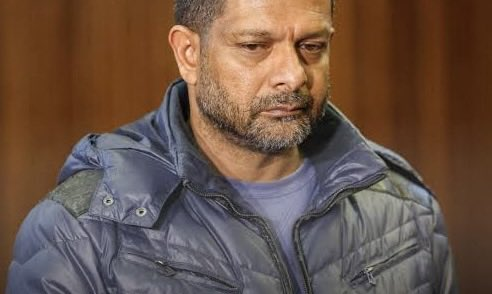
South Africa’s police corruption crisis has taken a dangerous turn after gunmen shot Major General Feroz Khan days before his scheduled testimony before the Madlanga Commission, a judicial inquiry probing alleged criminal infiltration, corruption, and political interference inside the country’s justice system.
Khan, the suspended deputy head of Crime Intelligence, survived what police described as an attempted assassination on Sunday evening, June 28, on 3rd Avenue in Houghton, Johannesburg. The South African Police Service said Gauteng Hawks, Gauteng Crime Intelligence, and SAPS Detective Service teams are leading a high-level investigation into the shooting. Acting National Commissioner Lieutenant General Puleng Dimpane also directed the Political Killings Task Team to join the case.
The timing has raised serious concern. Khan was due to appear before the Madlanga Commission on July 1, 2026. Police said any attempt to intimidate, silence, or attack a person involved in a judicial process would face the full force of the law. Dimpane condemned the attack and said police would use every available resource to find the attackers.
Africanews reported that gunmen opened fire on Khan’s vehicle while he travelled home on Sunday evening. The report said Khan was hospitalised and local media reported he underwent emergency surgery. Police spokesperson Brigadier Athlenda Mathe urged caution over claims linking the shooting directly to Khan’s planned testimony.
The attack has placed South Africa’s security establishment under fresh pressure. Khan’s expected testimony was not routine. The Madlanga Commission had reserved several days for his appearance and said he would remain before the inquiry until excused by its chairperson, Justice Mbuyiseli Madlanga.
The commission also sought access to electronic devices seized from Khan on May 10. According to IOL, the commission issued a Regulation 10(6) notice authorising SAPS to give access to the devices, arguing that their contents were central to its work. Khan had approached the Gauteng High Court in Johannesburg on June 3 seeking an urgent order to stop the commission and police from accessing the devices.
Mail and Guardian reported earlier this month that Khan later dropped his court bid and was expected to testify in person. Commission spokesperson Jeremy Michaels said Khan’s testimony was key because of serious allegations involving him, other SAPS officers, and other individuals.
Khan is not only a witness. He also sits at the centre of several allegations and legal processes. Mail and Guardian reported that he is out on R20,000 bail and that his criminal trial is scheduled to continue in the Kempton Park Magistrate’s Court on July 14, 2026.
The wider inquiry began after KwaZulu-Natal Police Commissioner Lieutenant General Nhlanhla Mkhwanazi publicly alleged that senior politicians and police officials were interfering in sensitive investigations to protect crime syndicates and drug cartels. AP reported that Mkhwanazi’s claims caused public anger and led President Cyril Ramaphosa to appoint the commission of inquiry.
Mkhwanazi told the commission that South Africa’s criminal justice system faced long-term sabotage. He warned that the system stood at risk of collapse if authorities failed to act. His testimony added weight to concerns about corruption, organised crime, and weak accountability inside law enforcement.
The scandal has already reached the highest levels of policing. Reuters reported in April that President Ramaphosa suspended National Police Commissioner Fannie Masemola over allegations linked to an irregular police tender. Masemola denied the charges. Prosecutors also charged businessman Vusimuzi Matlala and others with corruption, fraud, and money laundering in relation to the same contract.
Reuters also reported that the Medicare24 contract became one of the focal points of the Madlanga Commission, which is investigating allegations that criminal syndicates infiltrated parts of South Africa’s law enforcement and criminal justice system.
Khan’s shooting now deepens the sense of crisis. If the attack was linked to his pending testimony, the case would point to a direct threat against the inquiry. If the motive lies elsewhere, the public still sees a senior police officer shot days before a major appearance in a corruption probe. Either way, public confidence suffers.
South Africa faces a hard question. How does a country fight crime when senior police structures are themselves under investigation? The Madlanga Commission has placed that question in public view. The Khan shooting has made it more urgent.
The state now needs to prove three things.
First, police must identify and arrest the gunmen. Second, the commission must continue without fear. Third, the government must protect witnesses, investigators, and officials linked to sensitive testimony.
The case also affects South Africa’s regional image. The country already faces pressure over organised crime, contract killings, police corruption, and public distrust in state institutions. A shooting linked in time to a major inquiry gives critics more reason to question whether the justice system remains strong enough to confront criminal networks inside power structures.
For now, Khan remains the key figure in a story bigger than one attack. His testimony, if he recovers and appears, would help the commission test claims about police corruption, state capture by criminal syndicates, and the alleged use of law enforcement structures for private interests.
South Africans have heard many promises after past commissions and scandals. This case now demands results. The shooting of a police general before key testimony is not only a crime story. It is a test of whether the state still controls the institutions meant to protect the public.