
PORT SUDAN, Sudan, June 30, 2026
China has cancelled about $50 million of Sudan’s debt, giving Khartoum a small but politically important economic boost as the country struggles with war, sanctions, hunger, displacement, and a shortage of foreign financing.
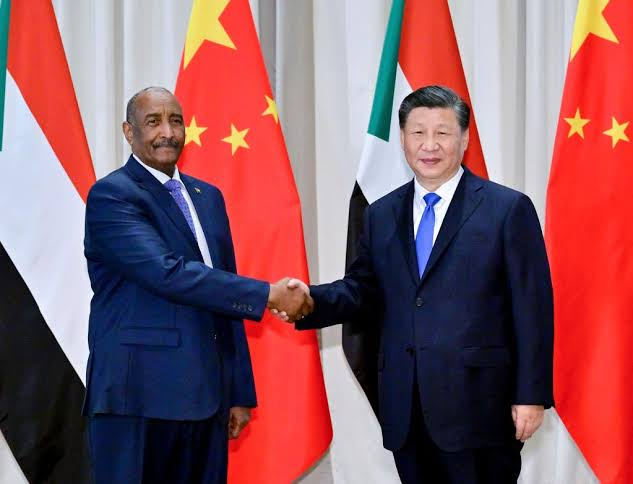
The agreement was signed in Port Sudan on Sunday, June 28. Sudan’s Finance Minister Jibril Ibrahim signed for the Sudanese government, while Xu Jian, China’s chargé d’affaires in Sudan, signed for Beijing. The deal writes off four interest-free Chinese loans worth 344.52 million yuan, equal to about $50 million. The protocol took effect immediately after signature.
The Central Bank of Sudan and the China Development Bank will complete the accounting process linked to the cancelled loans. Sudanese officials said the move forms part of wider economic cooperation between the two countries.
For Sudan, the debt relief arrives at a hard moment. The country has been trapped in war since April 2023, when fighting broke out between the Sudanese Armed Forces and the Rapid Support Forces. The conflict has destroyed homes, markets, factories, hospitals, roads, power systems, and state revenue. It has also pushed millions from their communities.
The United Nations and aid agencies describe Sudan as the world’s largest displacement crisis. OCHA says more than 9 million people are internally displaced inside Sudan. Other humanitarian agencies estimate about 14 million people have been forced from their homes since the war began.
The economic damage is severe. Al Jazeera reported that the war has cut Sudan’s economy by roughly 40 percent, citing United Nations estimates. It also reported that Sudan had more than $56 billion in external debt before the war. Against that figure, the Chinese write-off is small, but its timing gives the deal political value.
Sudan was once close to a much larger debt relief package. In 2021, the International Monetary Fund and the World Bank approved Sudan’s eligibility under the Heavily Indebted Poor Countries Initiative. The IMF said full participation by creditors would have reduced Sudan’s debt from about $56 billion to around $6 billion at completion point.
That process lost momentum after Sudan’s October 2021 military takeover. The current war then made normal economic reform almost impossible. International lenders now face political, legal, and security risks when dealing with Khartoum.
China’s move therefore carries a message beyond the numbers. Beijing is signalling continued engagement with Sudan at a time when many Western governments have stepped back, applied sanctions, or limited financial contact with Sudanese authorities.
Jibril Ibrahim praised what he called a long-standing economic partnership with China. He said Beijing had supported Sudan during difficult periods, including through work in the oil sector and support in regional and international forums. He also welcomed China’s decision to remove customs duties on goods from 50 African countries.
Xu Jian said China remained committed to supporting Sudan’s national economy, easing the country’s debt burden, and strengthening bilateral economic cooperation. The two sides also discussed Chinese grant-funded projects in Sudan, including the West Omdurman abattoir project and a 200 million yuan grant for energy, water, and agriculture.
The meeting also touched on banking cooperation and the possible return of China National Petroleum Corporation operations in Sudan. That point matters because oil shaped Sudan-China relations for decades. Chinese firms invested heavily in Sudanese oil before South Sudan’s independence in 2011 reduced Khartoum’s oil revenue base.
For China, Sudan sits in a strategic corridor linking the Red Sea, North Africa, the Horn of Africa, and the Sahel. Port Sudan also gives Sudan access to one of the region’s most important maritime routes. A stable relationship with Khartoum gives Beijing room to protect old investments and position itself for future reconstruction work.
For Sudan, China offers diplomatic cover, technical support, and possible project finance. The debt relief does not inject new cash into the economy, but it removes a small repayment burden and signals that Sudan still has partners outside Western financial circles.
The deal also comes as hunger deepens. Reuters reported in May that almost 20 million people in Sudan faced acute hunger, with famine risk still present in parts of Darfur, South Kordofan, and other conflict-hit areas. The war has damaged farms, blocked roads, raised food prices, and disrupted aid routes.
This makes the Chinese debt cancellation useful but limited. Sudan needs far more than debt relief. It needs a ceasefire, safe aid corridors, working banks, stable currency management, restored agriculture, reopened factories, and a path back to broader international financing.
The agreement also raises wider questions for Africa. China has often cancelled interest-free loans as part of its diplomacy with African states. These write-offs usually target older, smaller loans, while larger commercial and concessional debts remain subject to tougher negotiations. Al Jazeera cited research from the Johns Hopkins China Africa Research Initiative showing China forgave at least $3.4 billion of such debts across Africa between 2000 and 2019.
For now, Khartoum will present the deal as proof that Sudan is not isolated. Beijing will present it as proof of friendship and long-term partnership.