

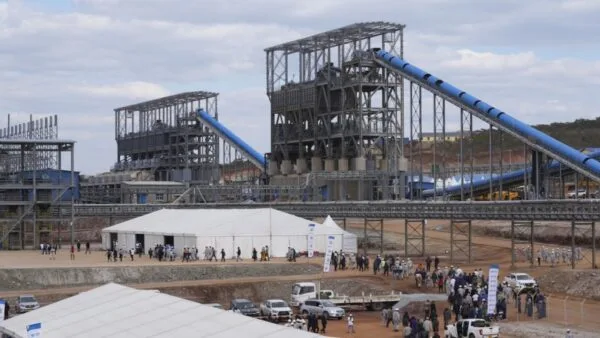
HARARE, Zimbabwe – Zimbabwe has produced lithium sulphate with purity of at least 99.5 percent, a milestone officials describe as Africa’s first battery-grade output of its kind. Mines and Mining Development Minister Polite Kambamura displayed the material during a visit to Prospect Lithium Zimbabwe’s Arcadia operation near Harare on Friday. The achievement moves Zimbabwe beyond ore and concentrate exports into higher-value chemical processing.
The development deserves serious recognition. For generations, African mines supplied raw materials while factories elsewhere captured processing income, patents, technical skills, and manufacturing jobs. Zimbabwe has now shown African lithium ore does not need to leave the continent before chemical conversion begins.
Yet celebration must carry discipline. Lithium sulphate is an intermediate product. Manufacturers refine the compound further into lithium carbonate or lithium hydroxide before producing cathode materials and battery cells. Zimbabwe has entered a higher section of the value chain, but the country has not built a complete electric vehicle battery industry.
Prospect Lithium Zimbabwe operates the Arcadia mine and processing complex under Chinese parent company Zhejiang Huayou Cobalt. Huayou completed the sulphate plant in October 2025 after investing about US$400 million. The facility holds annual capacity of roughly 50,000 tonnes, with some configurations placing potential output above 60,000 tonnes.
In April, the company shipped Africa’s first recorded consignment of locally produced lithium sulphate. Prospect Lithium Zimbabwe called the shipment “a major step forward in regional mineral beneficiation and industrialisation.” The company did not disclose shipment size, buyer details, pricing, or local revenue retained from the transaction.
Friday’s presentation added a quality claim. Reports placed purity at no less than 99.5 percent and labelled the product battery-grade. Such language carries commercial weight, since high-end buyers demand strict limits for metals, moisture, sodium, calcium, magnesium, and other impurities. A single purity figure offers an important signal, though independent certificates, customer qualification, consistent batches, and long-term offtake agreements will provide stronger proof of industrial readiness.
Kambamura has framed the shipment as a continental industrial marker. He said, “Value, not volume alone, must drive the future of our mining sector.” His statement defines the correct test. Zimbabwe should measure lithium policy through retained income, skilled work, local procurement, tax receipts, infrastructure, technical training, and national ownership, rather than tonnes leaving mine gates.
The numbers explain government urgency. Zimbabwe exported 1.13 million tonnes of spodumene concentrate to China during 2025. Those shipments accounted for about 15 percent of Chinese concentrate imports. Export volume rose from 2024, yet income stayed near US$514 million because weaker lithium prices reduced returns.
Chemical processing offers a route toward better export value, but ownership shapes who receives the reward. Chinese firms dominate Zimbabwe’s lithium sector after investing about US$2 billion in mining and processing since 2021. Huayou owns Prospect Lithium Zimbabwe outright. Sinomine, Chengxin Lithium, Yahua, and other Chinese groups control major projects across the country.
Foreign capital has supplied equipment, finance, engineering, and market access. Chinese investment funded Arcadia’s mine, concentrator, and sulphate facility. Still, citizens should ask a direct question. Does higher processing inside Zimbabwe create Zimbabwean industrial power, or does foreign ownership move overseas extraction deeper into the country?
A processing plant located in Goromonzi does not guarantee broad national benefit. Government should publish fiscal terms, tax payments, employment grades, wage levels, power subsidies, water use, export prices, local supplier spending, ownership structures, and environmental liabilities. Public figures would let citizens judge whether beneficiation serves the treasury and communities.
Capacity also presents an immediate problem. Arcadia’s sulphate plant has no room for material from other producers. Mine manager Mthokozisi Goliath said the facility only handles concentrate produced by Arcadia’s own plant, which produces about 400,000 tonnes each year. Zimbabwe’s only completed lithium salt facility therefore does not solve the processing needs of the wider industry.
Government plans to ban lithium concentrate exports from January 2027. Miners have requested more time because plants planned by Bikita Minerals and Kamativi Mining Company appear unlikely to reach completion before the deadline. Kambamura rejected an extension during Friday’s visit and urged producers to meet the date.
The policy goal makes sense. Raw or lightly processed exports surrender income and jobs. Poor sequencing still risks mine closures, stockpiles, layoffs, smuggling, or emergency exemptions if domestic plants lack sufficient capacity. Harare needs a published national processing map showing each producer, plant capacity, construction stage, commissioning date, energy demand, and contingency plan.
Zimbabwe must also prevent an enclave industry. Lithium plants require reliable electricity, chemicals, laboratories, transport systems, water, engineers, quality controls, and waste management. Industry specialists also warn buyers require rigorous environmental standards and qualification periods lasting six months or longer. Government should connect those investments to universities, technical colleges, local chemical producers, transport firms, research laboratories, and African battery projects.
Your measure of success should extend beyond the first white bag of refined material. Ask how many Zimbabwean chemists run the process. Ask who owns intellectual property. Ask whether local pension funds hold equity. Ask whether communities receive royalties. Ask whether Zimbabwe sells a branded chemical under transparent contracts. Ask whether the next plant produces carbonate, hydroxide, cathode precursor, or cells.
Regional cooperation also matters. Zimbabwe brings lithium resources. The Democratic Republic of Congo and Zambia bring major copper and cobalt production, while South Africa brings established industrial capacity. The African Development Bank identifies those strengths as a foundation for a regional lithium-ion battery value chain. African states should combine resources through shared standards, research, infrastructure, procurement, and investment rules.
Zimbabwe’s 99.5 percent lithium sulphate marks real progress. The milestone breaks an old pattern where Africa exported rock and imported finished technology. Yet one Chinese-owned plant does not complete national industrialisation.
The next stage needs local ownership, verified quality, wider processing capacity, transparent revenue, environmental protection, and downstream manufacturing. Zimbabwe has produced the chemical. Now Zimbabwe must prove the wealth, knowledge, and industrial control will remain in African hands.