
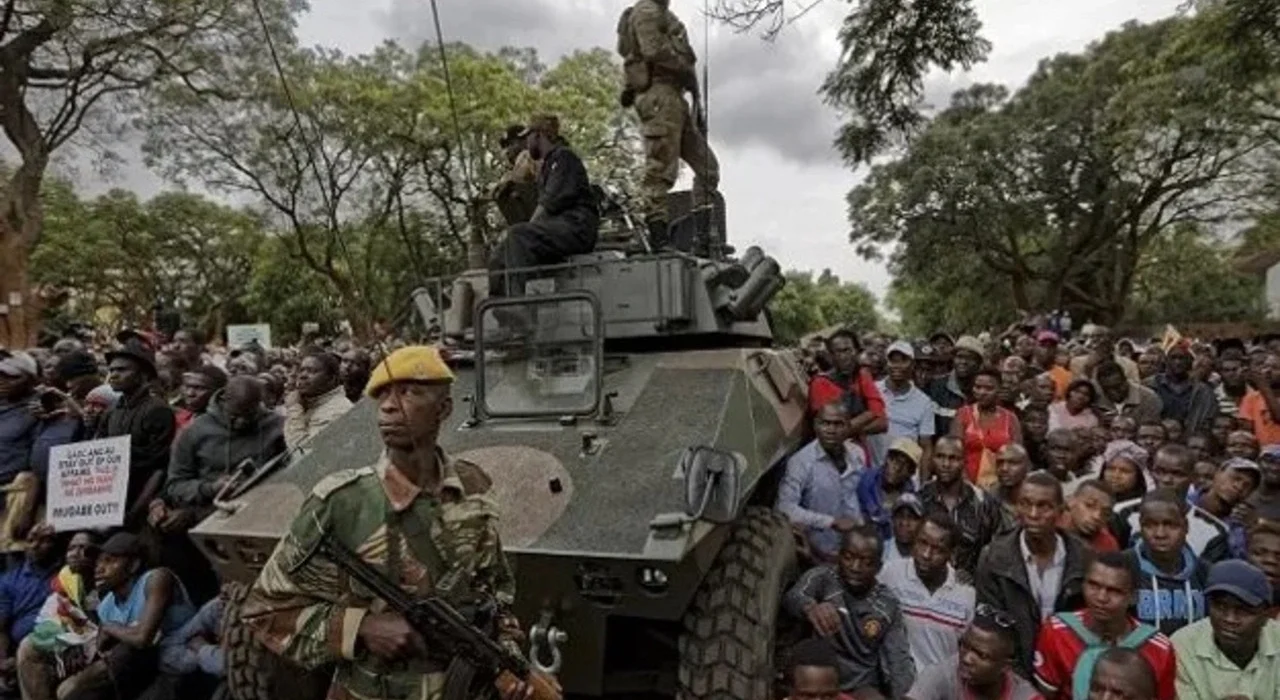
HARARE, Zimbabwe – Zimbabweans filled Harare’s streets in November 2017, embraced soldiers, waved flags and demanded Robert Mugabe’s departure. Many believed a long national nightmare had ended. Nine years later, President Emmerson Mnangagwa has signed a constitutional amendment extending his tenure to 2030, delaying elections and removing the public’s direct vote for president.
The question now confronts every citizen. Why remove Mugabe for overstaying, then change the Constitution so another leader stays longer?
The answer begins with an uncomfortable distinction. Zimbabweans wanted Mugabe gone. The ruling elite wanted control of succession.
Those aims met briefly in 2017, but they were never identical.
Mugabe’s dismissal of Mnangagwa in November 2017 threatened a political and security network built across decades. General Constantino Chiwenga warned against purges inside ZANU-PF. Soldiers entered Harare, seized key institutions and placed Mugabe under house arrest. ZANU-PF then removed Mugabe as party leader, Parliament started impeachment proceedings and Mugabe resigned before lawmakers completed the process. The military settled a ruling-party succession battle, while public crowds supplied national approval.
Those crowds expressed genuine anger. Zimbabweans had endured cash shortages, collapsing confidence, weak growth and a fiscal deficit equal to 10 percent of gross domestic product in 2016. The World Bank warned during 2017 state borrowing had drained cash from the economy and weakened long-term investment.
Citizens therefore celebrated more than Mugabe’s fall. They celebrated a promise of jobs, stable money, honest government, open politics and national renewal.
The promise failed because Operation Restore Legacy restored the governing network more successfully than public freedom.
Mnangagwa did not arrive as an outsider. He had served Mugabe for decades across security, justice, defence and senior party offices. Many generals, ministers, business allies and administrators who sustained Mugabe’s rule retained influence after 2017. Academic analysis published soon after the transition warned of continuity under a new leader, with tighter political control accompanying economic reform. Recent research reaches a similar conclusion, describing post-coup Zimbabwe as a system of security-sector dominance and authoritarian entrenchment.
The Constitution of Zimbabwe Amendment Act Number 3 now confirms the central lesson. Parliament approved the measure in June. Mnangagwa signed the law on July 7, 2026. The Act raises presidential and parliamentary terms from five years to seven, extends the current presidency and Parliament to 2030, delays elections scheduled for 2028 and replaces direct presidential elections with selection by Parliament.
This change does more than grant Mnangagwa two additional years. The law removes a major democratic safeguard. Zimbabweans previously chose a presidential candidate through a national ballot. Members of Parliament will now choose the president in a joint sitting. ZANU-PF controls Parliament, while party systems often punish legislators who resist leadership instructions. Presidential selection therefore moves from millions of voters to a political chamber dominated by one organisation.
Supporters defend the amendment through “continuity, stability and the sustained transformation of the nation.” ZANU-PF argues longer terms will protect development planning and reduce disruption from frequent elections.
The argument carries a dangerous implication. Elections become obstacles when leaders fear public judgment. Stability starts meaning the stability of officeholders, not stable food prices, hospitals, schools, salaries, electricity or constitutional rules.
Mnangagwa had previously presented himself as a constitutionalist. Asked whether supporters would persuade him to remain beyond 2028, he answered, “I will persuade the persuaders not to persuade me.” The new law turns his assurance into another broken political promise.
Calls comparing Zimbabwe with a monarchy now arise from this repeated concentration of authority. Zimbabwe has no king and the presidency does not pass formally through blood. Yet republican government loses meaning when leaders alter constitutional rules around personal tenure, weaken direct elections and leave succession inside a closed elite system.
A monarchy names its succession rules openly. Zimbabwe’s ruling system describes itself as democratic while political elites repeatedly manage presidential succession among themselves.
Ordinary people therefore ask what changed after Mugabe.
Zimbabwe has recorded stronger growth and lower official inflation during recent periods. The IMF projected growth near 5 percent and average inflation near 5.1 percent for 2026. Yet the same IMF review found government missed a protected social and priority spending target. Growth figures mean little to families facing weak services, insecure work and limited social protection.
The deeper problem concerns political accountability. Mugabe’s removal changed the person at State House. The military, ruling party, patronage networks and concentrated executive power survived. Those structures now protect another extended presidency.
Zimbabweans did not march in 2017 demanding seven-year terms. They did not demand parliamentary selection of presidents. They demanded change.
The ruling elite interpreted public relief as permission to rearrange power without surrendering control.
The nostalgia and deception from politicians is astounding. Mugabe’s final years brought economic distress, political repression and succession paralysis. His removal deserved public relief. Yet replacing one long-serving ruler with another leader protected by amended rules does not complete liberation.
The country needs fixed constitutional limits, direct presidential elections, independent institutions and a peaceful transfer of power. No president should benefit from a term extension approved during his own tenure. No Parliament should cancel a scheduled national vote without direct public consent.
Zimbabweans removed Mugabe’s name from office. They never removed Mugabe’s system.
Until citizens dismantle the system through constitutional rule, accountable elections and genuine leadership renewal, every promised new beginning will end with the same ruling elite asking for more years.