
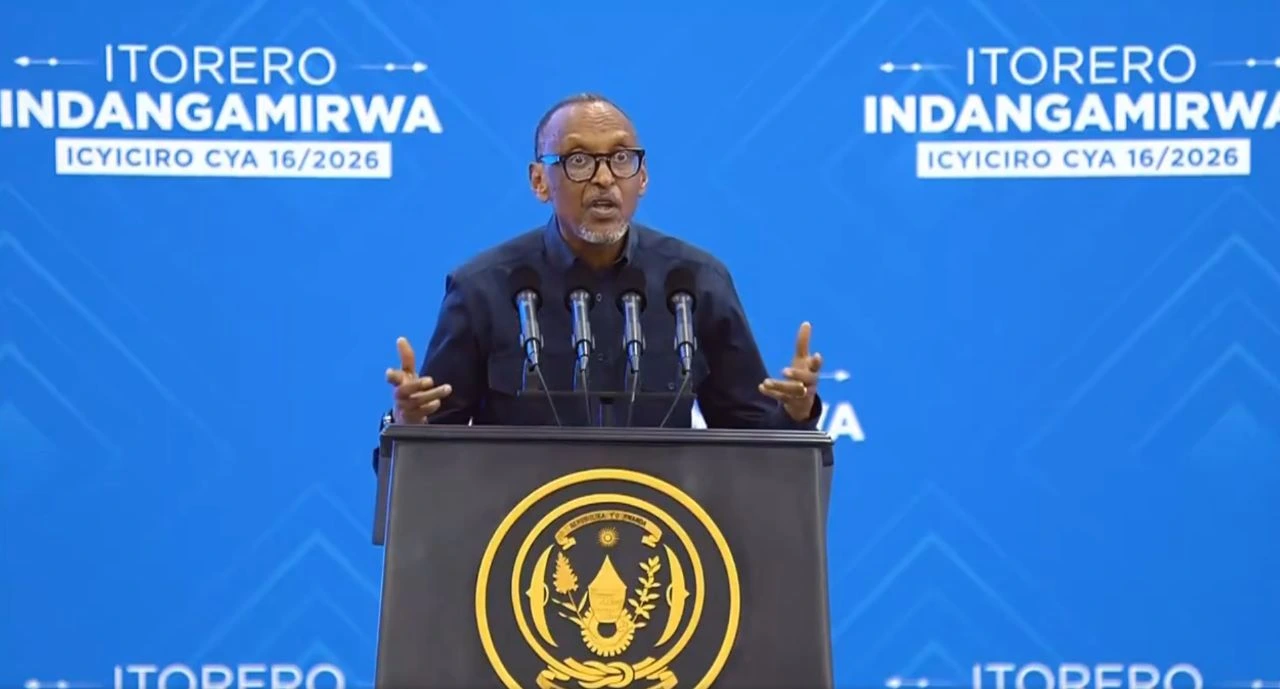
KIGALI, Rwanda – President Paul Kagame has recalled the pain of growing up outside Rwanda while the government responsible for protecting his rights denied refugees permission to return home.
Kagame said Rwandan refugees approached governments and international institutions to explain one basic demand. They wanted to return to their country. Rwanda’s former authorities answered by claiming the small, densely populated nation had no space for them.
“Imagine being told there is no place for you in the country you came from,” Kagame said.
His testimony presents Africa with a serious warning. A citizen does not lose ownership of home after crossing a border to escape persecution, war or political violence. Refugee status should provide temporary protection. No government should turn exile into a permanent sentence passed from parents to children.
Kagame grew up in Uganda after his family fled violence in Rwanda during the upheaval beginning in 1959. Large numbers of Rwandans settled in Uganda, Burundi, Tanzania and the former Zaire. Many spent decades in refugee settlements while negotiations over voluntary return produced little progress.
The former Rwandan government argued population pressure made large-scale return impossible. Kagame rejected the argument during a 2022 interview, saying a country always has space for its citizens. He linked Rwanda’s present refugee policy to lessons learned during his own exile.
His latest account places responsibility where African leaders rarely place responsibility. Kagame said his grievance did not lie with ordinary citizens of host countries. His grievance rested with officials in Rwanda who denied him the right to return.
Such reasoning challenges a destructive political habit across Africa. Governments create refugees through persecution, disputed elections, war, ethnic exclusion and state violence. Host communities later receive blame for crowded schools, strained clinics, low wages and rising housing demand.
The country of origin escapes serious judgment.
A government which forces citizens abroad carries primary responsibility for their suffering. Neighbouring countries provide sanctuary, often under heavy economic pressure. Refugees then face suspicion from residents who never caused the original crisis.
Rwanda’s refugee history shows where prolonged exclusion leads. Failed negotiations over return contributed to the formation of the Rwandan Patriotic Front. The RPF launched an armed struggle from Uganda in 1990. The organisation later took power in 1994 after stopping the genocide against the Tutsi.
Kagame’s remarks do not mean every displaced community should organise an armed campaign. They explain why denying citizenship rights creates permanent instability. People denied a lawful route home eventually seek other routes.
African governments should study this history before treating exiles as forgotten populations.
Sudanese families now live across Chad, Egypt, South Sudan and Ethiopia while war destroys their cities. Congolese communities have spent generations moving between Rwanda, Uganda, Burundi and eastern Congo. South Sudanese refugees repeatedly return home, face renewed conflict and flee again. Citizens from Eritrea, Somalia and the Central African Republic also endure prolonged displacement.
West and Central Africa alone could host 25.1 million forcibly displaced people by the end of 2026, according to UNHCR projections. Internally displaced people would form the largest group.
These figures represent political failure, not natural migration.
No child chooses life inside a refugee settlement. No parent chooses food dependence, restricted movement, uncertain schooling and separation from family property. Leaders create such conditions when they place power above citizenship.
Africa already possesses a legal framework for action. The 1969 Organisation of African Unity Refugee Convention requires countries of asylum and countries of origin to arrange safe voluntary return for refugees requesting repatriation.
Governments sign conventions, then ignore the political conduct producing refugees.
Return must also involve safety and dignity. Sending people back into persecution does not solve displacement. A serious return programme requires security, restored documentation, access to land, schools, health services and protection from revenge.
Rwanda later worked with UNHCR and several African host countries to resolve the status of refugees who fled between 1959 and 1998. Participating countries included Angola, Burundi, Cameroon, Congo, Kenya, Malawi, South Africa, Uganda, Zambia and Zimbabwe. The process promoted voluntary repatriation, local integration and other lawful solutions.
Kagame’s warning also speaks directly to governments which denationalise political opponents or deny passports to critics. Citizenship must never become a reward for loyalty to a ruling party.
A passport belongs to the citizen. The ruling party does not own the nation.
African states should register citizens abroad, protect property left behind and establish lawful return procedures. Parliaments should investigate policies producing political exile. Courts should stop governments from using nationality laws against opponents.
The African Union should also measure displacement by country of origin, then demand explanations from governments producing repeated refugee movements. Hosting nations receive international scrutiny. Origin states often avoid equal pressure.
Kagame’s account also raises an uncomfortable question for Rwanda’s current leadership. A government shaped by refugee exclusion carries a special duty to protect political rights and prevent new exile. Critics accuse Kigali of restricting opposition and creating fear among dissidents. Rwanda rejects many such allegations. A country built by former refugees should apply the principle of belonging to supporters and opponents alike.
No liberation history gives permanent moral immunity.
Kagame’s personal story still carries a clear continental lesson. Refugees do not stop belonging to their countries because governments reject them. Borders do not erase citizenship. Exile does not cancel birthright.
African leaders should stop asking neighbouring states to manage political crises created at home. They should build governments where citizens never need armed struggle to reclaim the right to return.
A nation has room for its people. The real shortage usually lies in justice, responsible leadership and political courage.