

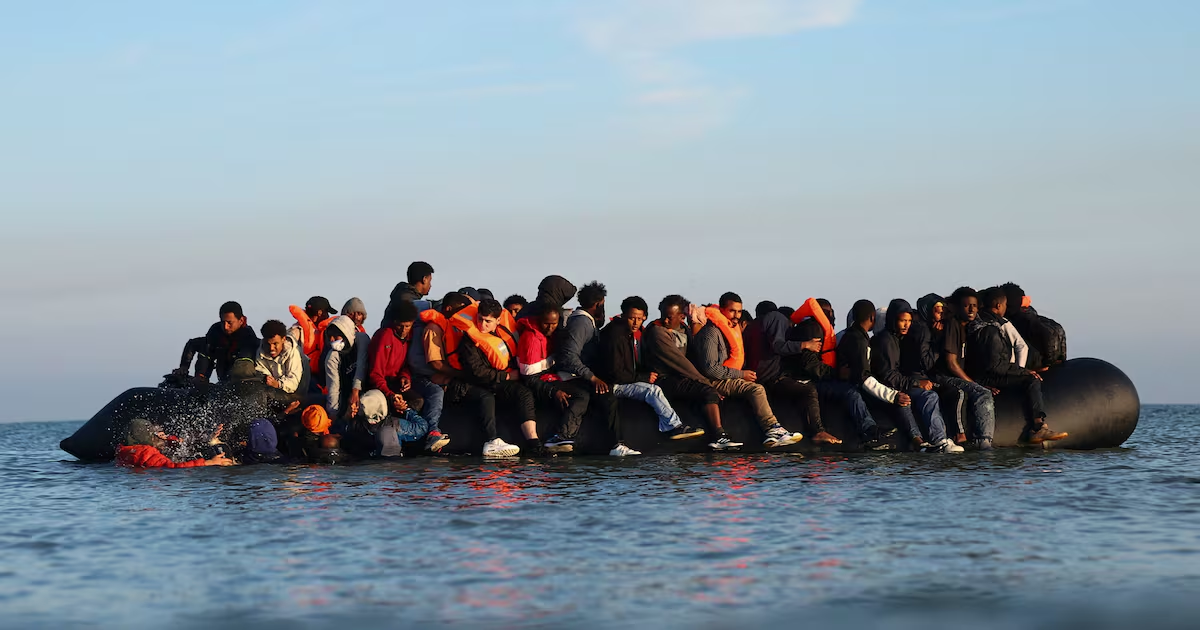
LONDON, United Kingdom – A record 230 migrants reached Britain in a single inflatable boat after crossing the English Channel from France, exposing a dangerous shift in smuggling tactics even as total small-boat arrivals fall sharply compared with last year.
The vessel reached Dover early Monday after an overnight journey from northern France. British officials described the crossing as the largest number of people recorded aboard one small boat on the route. The previous record stood at 165 earlier this summer, after another crossing involving 128 people. The Home Office condemned the “reckless and dangerous tactics” used by criminal gangs behind the journey.
The record does not mean more people are crossing overall. Around 14,819 people had reached Britain by small boat during 2026, roughly 43 percent fewer than during the same period last year. The new danger comes from how smugglers are moving people. Fewer boats now carry far larger groups.
Britain’s House of Commons Library shows the average number of people aboard each detected small boat rose from seven in 2018 to 63 during the year ending March 2026. Monday’s vessel carried more than three times the recent average.
Smuggling networks appear to be adapting to stronger enforcement along French beaches. Authorities have disrupted launch sites, seized engines and inflatables, expanded surveillance and deployed specialist police units. Smugglers increasingly respond with larger vessels and so-called taxi boats, launching offshore before collecting groups from several points along the coast.
This creates a grim arithmetic. When enforcement makes each launch harder and more expensive, traffickers have an incentive to load more paying passengers onto every boat which reaches the water.
The risk rises with every additional person.
Overloaded inflatables sit low in the sea. Engines face greater strain. Passengers crowd along flexible tubes with little room to move. Panic during an engine failure, fire or sudden wave risks sending dozens into cold water within seconds.
At least nine “mega-dinghy” crossings have taken place this year, according to reporting cited by The Guardian. One vessel carrying 173 people capsized. A separate boat fire on August 4 added another warning about the human cost of increasingly crowded journeys.
The latest record therefore presents Britain and France with an uncomfortable policy problem. Enforcement appears to have reduced overall arrivals, yet organised smuggling networks have changed methods in ways which place larger numbers of people at risk during each successful attempt.
London and Paris signed a new three-year agreement in April aimed at suppressing departures from northern France. Britain committed £500 million toward stronger controls, with a further £161 million linked to results. The plan expands personnel, drones, helicopters, intelligence operations and specialist units targeting launch sites and taxi boats.
The Home Office says joint operations have prevented tens of thousands of attempted crossings since the 2024 British election. The government deployed two specialist French police units this summer with 125 officers and reservists. Aircraft, drones and cameras support their operations. British officials said French operations stopped around 40 percent of attempted crossings during the fifth month of 2026.
Those figures show enforcement produces results. Monday’s crossing shows why results need careful interpretation.
A government focused only on the number of boats risks missing changes in passenger density. One boat carrying 230 people represents fewer vessels reaching Britain, yet far greater danger aboard each vessel.
The political consequences will grow as well.
Opposition politicians seized on the record crossing as evidence Britain still lacks control over the Channel. Reform UK leader Nigel Farage described the situation as a national security emergency. Critics also attacked French authorities over reports officers tracked the vessel during its long journey along the coast without stopping the crossing.
French policing faces legal and operational limits once overloaded boats reach the water. Intercepting a fragile vessel at sea risks capsizing the vessel. Smugglers understand this constraint and exploit the point where enforcement turns into rescue responsibility.
Britain has also pursued returns through its agreement with France. The bilateral arrangement created a “one in, one out” system under which selected small-boat arrivals face return to France while an equal number of eligible people enter Britain through a controlled legal route after security and identity checks.
The policy seeks to destroy the commercial promise sold by smugglers. If paying thousands of pounds for a Channel crossing ends with return to France, demand should weaken.
Yet deterrence depends on scale, speed and credibility. Traffickers advertise success through social networks and migrant communities. Every overloaded boat reaching Dover gives smugglers another sales image.
Britain also needs to separate border enforcement from asylum law. Almost all people arriving by small boat lodge asylum claims, according to Parliament’s research service. An unauthorised crossing does not determine whether an individual later qualifies for refugee protection.
Governments therefore face two duties at once. They need to secure borders and prosecute trafficking networks. They also need to process protection claims lawfully, identify children and trafficking victims, and return people who have no legal basis to remain.
Safe legal routes form part of the argument. Refugee organisations say tighter coastal enforcement without accessible alternatives pushes desperate people toward more dangerous smuggling methods. The British government argues stronger deterrence and controlled admission routes reduce incentives for criminal crossings.
Both sides now face evidence from the same boat.
The 230-person crossing proves criminal networks remain adaptive. Pressure on beaches has not ended their business. The networks have altered boat size, routes, collection methods and passenger loads.
British policy should therefore judge success through more than annual arrival totals. Officials need to measure deaths, rescues, boat capacity, smuggler profits, prosecutions, returns and the number of vulnerable people entering legal routes.
France needs equal scrutiny over enforcement effectiveness and rules governing intervention near shore.
A 43 percent decline in crossings matters. A boat carrying 230 people matters too.
The first figure shows pressure on smugglers.
The second shows their response.
Britain and France now need a strategy which closes the route without turning every remaining crossing into a floating mass-casualty risk.