
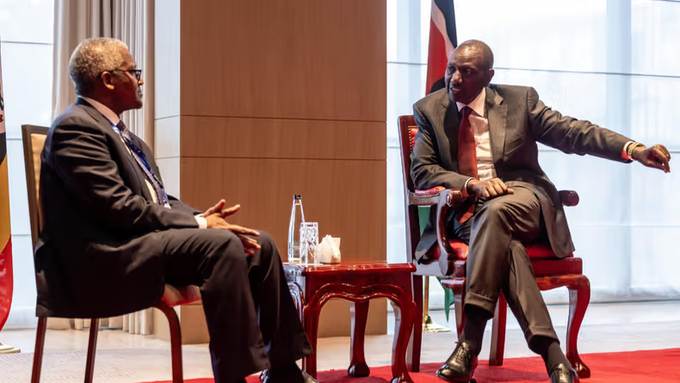
LAMU, Kenya – Aliko Dangote is moving closer to launching a 700,000-barrel-per-day refinery on Kenya’s northern coast, a project designed to challenge East Africa’s long dependence on imported petrol, diesel, jet fuel and other refined petroleum products.
Dangote Industries has selected Lamu for the refinery, started soil investigations, and begun engineering and design work. Company vice president for oil and gas Edwin Devakumar told Reuters: “Preliminary work has already started. The site has been selected, soil tests are under way, and design and engineering work has commenced.” The group plans to finance the project through internal cash generation, bonds and proceeds from a planned public listing.
Dangote has also indicated a September or October launch window during remarks at the African Caucus meeting in The Gambia. He said: “Either September or October we are going to launch another 700,000 barrels per day refinery in East Africa in Lamu.” A formal construction-start date has not appeared in the strongest public company or Kenyan government statements reviewed by The African Telegraph. Preliminary works have started, while full construction still depends on financing, approvals and final project agreements.
The proposed scale would transform East Africa’s downstream petroleum sector.
Kenya currently imports all petroleum requirements, according to the Ministry of Petroleum. Around 90 percent of those imports consist of petrol, diesel and kerosene products. National consumption stands near five million tonnes a year. East Africa as a wider region also imports virtually all refined petroleum products, leaving households and businesses exposed to shipping disruptions, war-risk premiums, foreign exchange pressure and price shocks.
A 700,000-barrel refinery would therefore serve a market far larger than Kenya.
Dangote and regional leaders have discussed supply into Uganda, Tanzania, Ethiopia, South Sudan, the Democratic Republic of Congo and other neighbouring markets. Ugandan President Yoweri Museveni has publicly backed regional participation and said Uganda was ready to buy shares in the refinery as part of a wider industrial integration strategy.
The location also gives new economic weight to Lamu.
Kenya developed Lamu Port as the maritime anchor of the Lamu Port South Sudan Ethiopia Transport Corridor, known as LAPSSET. The corridor seeks to connect Kenya’s northern coast with South Sudan, Ethiopia and wider regional markets through ports, roads, railways, pipelines and industrial zones. A refinery of this size would give Lamu a major industrial anchor after years of slower progress across parts of the corridor.
Lamu won after months of competition and changing regional discussions.
In April, Kenyan President William Ruto spoke about a joint East African refinery at Tanga in Tanzania. Dangote said the project would process crude from regional producers and take four to five years once agreements were reached. Mombasa later emerged as another possible Kenyan location. By July, Dangote Industries confirmed Lamu as the selected site, with Devakumar citing infrastructure, logistics and market considerations.
The refinery’s projected cost sits around US$15 billion to US$17 billion in public estimates. Dangote Industries has not published a final construction budget. Earlier reporting compared the plan with Dangote’s 650,000-barrel-per-day refinery near Lagos, which ultimately cost more than US$20 billion after delays and cost overruns.
The Nigerian experience offers Kenya both a model and a warning.
The Lagos plant broke Nigeria’s dependence on imported fuel in several product categories and expanded African refining capacity. The project also faced years of delays, financing strain, crude supply disputes and a final cost far above its original estimate.
Kenya therefore needs strong contracts before celebrating projected jobs or cheaper fuel.
President Ruto has said the Lamu project should create about 60,000 jobs. Local leaders in Lamu have already demanded transparency, community participation and a clear share of employment. Residents also want environmental safeguards and public disclosure over land, infrastructure and project benefits.
Those demands deserve serious attention.
A refinery processing 700,000 barrels every day requires vast water, storage, pipeline, port, power and waste-management infrastructure. Lamu County also carries sensitive coastal ecosystems, fishing communities and tourism assets. Environmental assessments must address emissions, marine risks, waste, spills, water use and emergency response before heavy construction begins.
Kenya also needs answers on crude supply.
Ruto previously mentioned crude from Kenya, Uganda, South Sudan and the Democratic Republic of Congo. Yet regional production and transport infrastructure remain uneven. Kenya has not developed commercial crude production at the scale needed for such a refinery. Uganda is developing Lake Albert resources and export infrastructure. South Sudan produces oil but depends on difficult transport routes. Congo’s major production lies far from Lamu. Reuters reporting has highlighted those supply questions.
The refinery therefore will likely need imported crude alongside regional barrels, especially during early operations.
Such imports do not destroy the economic case. Refining imported crude inside East Africa still keeps more processing, employment, storage and trading activity within the region. The central test concerns whether locally refined fuel reaches consumers at competitive prices after crude costs, financing charges, taxes and distribution expenses.
Financing presents another major test.
Reuters reported Dangote plans a US$5 billion initial public offering around October for the Nigerian refinery business, with proceeds supporting expansion in Nigeria and the planned Kenyan facility. Kenya has discussed possible participation, while exchanges and investors across Africa have shown interest in the listing.
The project therefore carries a wider Pan-African argument.
Africa exports crude oil and repeatedly imports petrol, diesel, fertiliser, plastics and other higher-value products made from African resources. Dangote has built his industrial strategy around reversing parts of this trade pattern.
East Africa now has an opportunity to test the same idea at regional scale.
The real success measure will not be a ceremonial launch in Lamu.
Success will mean a completed refinery, dependable crude supply, competitive fuel, Kenyan and regional jobs, transparent procurement, environmental protection, local supplier participation and transport links serving neighbouring states.
If those conditions hold, Lamu will become more than another coastal infrastructure promise.
The refinery would place one of Africa’s largest fuel-processing centres beside a corridor built to connect the Indian Ocean with the continent’s interior, shifting part of East Africa’s energy bill from imported finished fuel toward regional industrial production.
The prize for Kenya is larger than a refinery. Nairobi has a chance to turn Lamu into an industrial gateway serving several economies, while East Africa gains a serious test of whether regional integration delivers factories and processing capacity rather than declarations alone.
Dangote, Ruto and regional governments now face the harder phase. They must move from speeches and site studies into financing, permits, construction and supply contracts without repeating the delays and cost escalation seen in Lagos.