
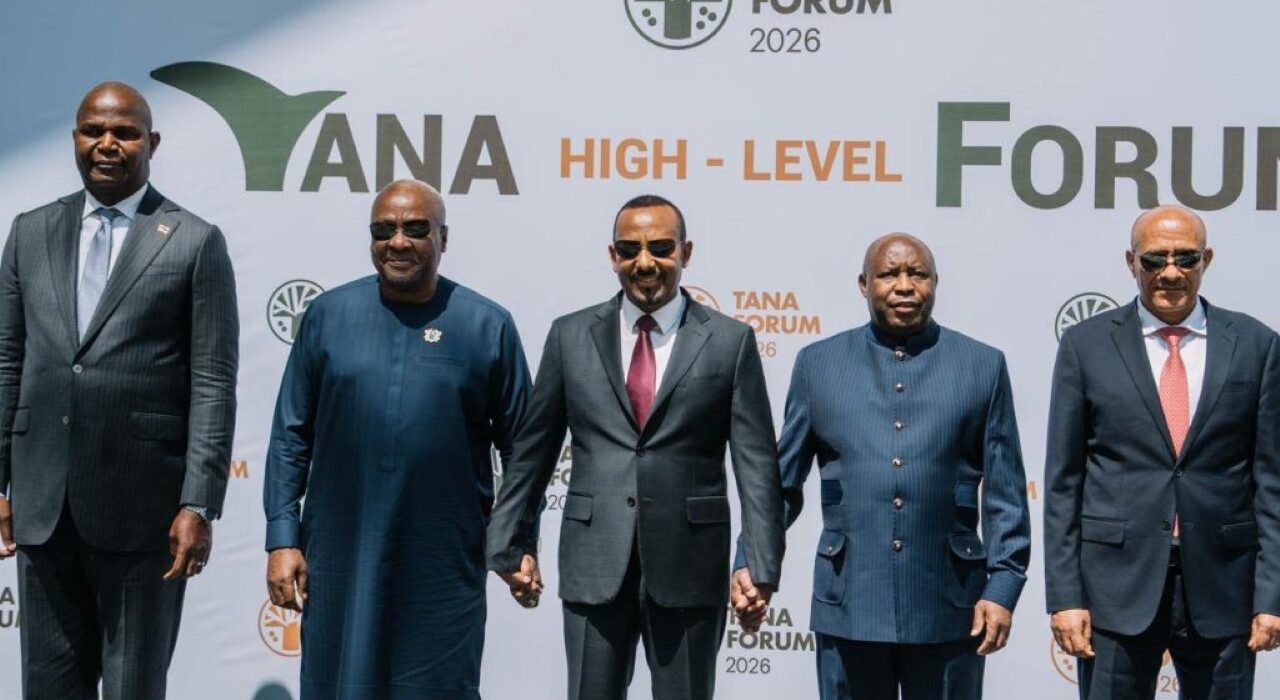
BAHIR DAR, Ethiopia – Ghanaian President John Dramani Mahama urged African governments on Sunday, October 25, to turn security commitments into measurable results as the 12th Tana High-Level Forum on Security in Africa concluded in Ethiopia after three days of talks on conflict, sovereignty and regional cooperation.
Mahama, who chairs the forum's board, challenged political leaders to address weaknesses in regional coordination, economic exclusion and government accountability. His closing remarks placed implementation above additional declarations as armed violence continues to threaten communities across several parts of Africa.
“We need to move from dialogue to action,” Mahama said during the closing session in Bahir Dar.
The gathering ran from October 23 to 25 under the theme “Pathways to Peace in Africa: Economic Sovereignty and Geopolitical Transformation.” Ethiopian Prime Minister Abiy Ahmed hosted the forum, which brought together presidents, senior officials, researchers and security specialists.
Mahama identified the State of Peace and Security in Africa report as an important contribution to policy discussions. The report examines developments from January 2025 through June 2026, connecting armed conflict with economic pressure, political divisions and institutional weaknesses.
The Ghanaian leader urged governments to combine security operations with cross-border commerce, diplomatic coordination and greater opportunities for young people, women and persons with disabilities. He argued for political leadership measured through improvements in public welfare, rather than the possession of office.
The urgency becomes clearer through recent conflict data. The Africa Center for Strategic Studies recorded 23,872 deaths linked to militant Islamist violence during the 12 months ending in mid-2026. The organisation identified the Sahel as the largest regional concentration, accounting for 42 percent of those fatalities.
Somalia and the Lake Chad Basin each accounted for approximately 28 percent. Researchers also found 94 percent of recorded fatalities across five countries: Somalia, Nigeria, Burkina Faso, Mali and Niger. These figures concern militant Islamist violence, not every armed conflict or homicide across Africa.
For families living near affected borders, security means more than military patrols. You need safe roads, functioning markets, reliable schools and accessible medical facilities. Attacks on transport corridors interrupt trade, raise operating costs and restrict movement between communities.
West Africa presents a direct institutional challenge. The withdrawal of Burkina Faso, Mali and Niger from the Economic Community of West African States complicated cooperation between coastal states and countries under military rule. The three Sahel countries formed their own Alliance of Sahel States.
During the forum, Mahama proposed a Sahel-Gulf of Guinea security accord involving willing governments. He said Ghana was pursuing new bilateral and regional partnerships after difficulties affected the Accra Initiative, an existing mechanism for counterterrorism cooperation.
“Africa has developed several policies and agreements but has struggled to implement them effectively,” Mahama said while discussing security cooperation.
The proposed accord still requires clear membership arrangements, financing, command responsibilities and information-sharing safeguards. A political proposal does not constitute an operational treaty. Governments would need to negotiate terms and explain how any new institution would coordinate with existing organisations.
Mahama also called for closer scrutiny of commitments governments already made. He asked the African Union and regional economic communities to examine compliance and identify failures. Such oversight would help citizens distinguish official pledges from implemented programmes.
Sudan provides another example of the consequences of prolonged warfare. The United Nations estimated 33.7 million people needed humanitarian assistance in 2026. By June, aid operations had reached an estimated 10.6 million people, according to figures cited in a September British government assessment.
The war between the Sudanese Armed Forces and Rapid Support Forces has damaged healthcare, agriculture, transport and public administration. Fighting and insecurity have forced people to cross provincial and international borders, creating additional pressure on neighbouring states.
Mahama's argument for economic integration therefore intersects with humanitarian priorities. Governments managing displacement need coordinated border procedures, health services and funding. Commercial recovery also depends on secure infrastructure and predictable regulation.
In eastern Democratic Republic of Congo, armed groups and recurring displacement continue to challenge regional diplomacy. Security agreements require monitoring, transparent reporting and credible mechanisms for handling violations. Announcements alone offer limited protection to families facing renewed fighting.
The African Union sent Deputy Commission Chairperson Selma Malika Haddadi to deliver a message from Commission Chairperson Mahmoud Ali Youssouf during the forum. Burundi's President Évariste Ndayishimiye, the African Union chairperson, also joined senior leaders at the gathering.
The summit placed economic sovereignty alongside peace negotiations. Discussions included domestic resource mobilisation, value addition, regional industrial production and governance of emerging technologies. Delegates considered ways to reduce dependence on external finance while strengthening African institutions.
Economic sovereignty carries practical questions. Governments seeking greater revenue from minerals must examine contract terms, processing capacity, electricity supply and public procurement. Without transparent oversight, increased state control does not automatically improve household incomes or conflict prevention.
Regional trade also demands specific investment. Efficient border posts, predictable customs procedures and safer transport routes reduce costs for farmers and manufacturers. The African Continental Free Trade Area offers an existing framework, although national implementation differs across member states.
If you follow Africa's peace negotiations, examine the official commitments behind public speeches. Look for published implementation timetables, identified funding, independent monitoring and evidence of civilian protection. Those measures provide a more reliable assessment than attendance figures or conference declarations.
Mahama urged leaders to return to the next Tana Forum with evidence of progress. Organisers have not announced a binding continent-wide peace agreement arising from Sunday's closing session. Governments and regional bodies now hold responsibility for deciding which proposals receive funding, legal authority and implementation plans.
The three-day meeting ended with demands for closer regional cooperation and stronger political accountability. The next test concerns documented reductions in violence, improved cross-border services and credible enforcement of government commitments before African leaders assemble again.