
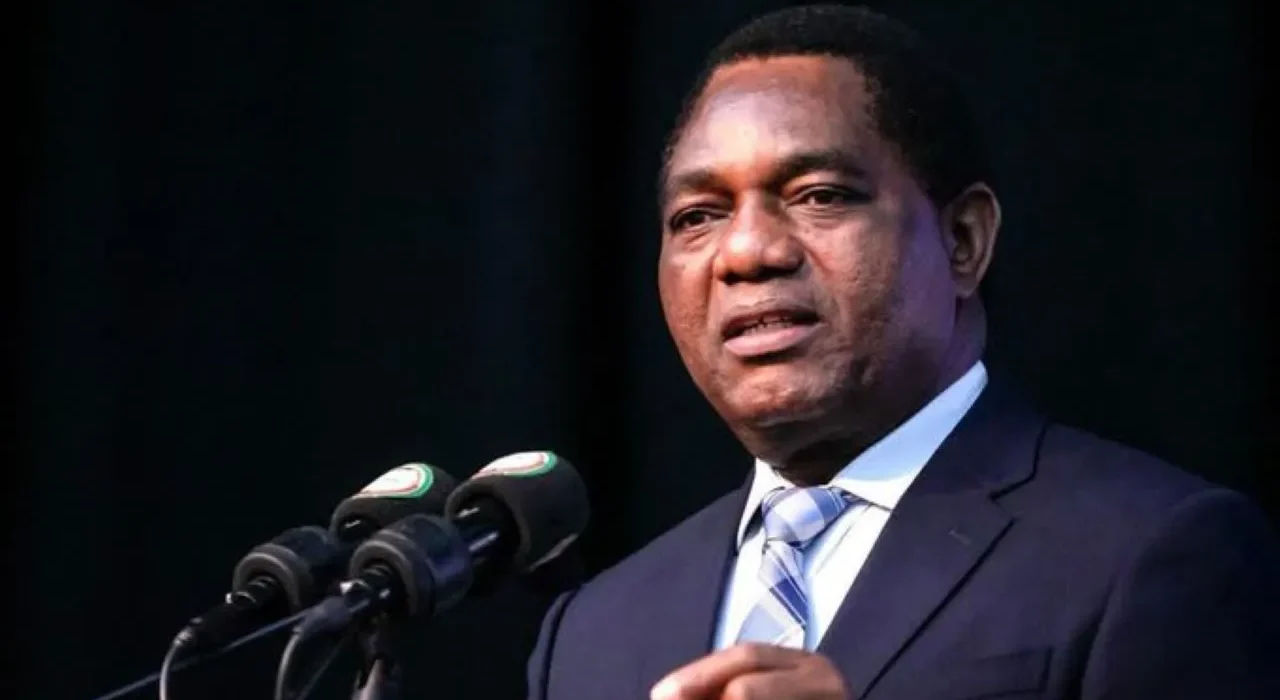
LUSAKA, Zambia – President Hakainde Hichilema has issued a fresh warning against political violence as Zambia approaches its August 13 general election, urging parties, candidates and supporters to protect a democratic tradition increasingly tested by confrontations during campaigning.
“Political violence has no place in our democracy,” Hichilema said. “I appeal to all political parties, candidates, and supporters to respect the law, allow peaceful campaigns, and act responsibly. Together, let us protect Zambia’s peace, unity, and democracy.”
The appeal comes during an increasingly tense campaign between Hichilema’s ruling United Party for National Development and opposition parties seeking to deny him a second presidential term.
Political violence has already entered the campaign.
Police confirmed in July suspected UPND cadres attacked Resolute Party Lusaka Central parliamentary candidate Charity Lumpa and members of her campaign team during a roadshow in Lusaka. Eleven people suffered injuries. UPND officials denied party involvement and condemned political violence.
Earlier clashes also occurred in Kabwe’s Katondo Township between ruling-party supporters and opposition activists. UPND officials condemned the violence and said members responsible for lawlessness would receive no political protection.
Opposition organisations have made stronger accusations. Leadership Movement secretary-general Jairos Ngoma accused UPND supporters of involvement in numerous violent incidents across several provinces and criticised electoral authorities over what his organisation considers weak enforcement. The ruling party rejects accusations portraying violence as an organised UPND strategy.
Hichilema’s words therefore face a simple test.
Police must apply the same law to every supporter wearing every party colour.
A presidential statement opposing violence carries little value when attackers escape prosecution because they belong to the governing party. Equally, opposition supporters who assault rivals should face arrest without political excuses.
Zambia enters this election carrying painful memories of earlier campaign violence.
Before Hichilema defeated Edgar Lungu in 2021, political cadres regularly disrupted meetings, fought rivals and created areas where opposition campaigning became dangerous. Hichilema himself repeatedly accused the former Patriotic Front government of restricting opposition political activity.
His administration therefore carries a higher responsibility.
A leader who suffered under an unfair political environment should never reproduce similar conditions after gaining power.
In January, Hichilema promised peaceful, credible and transparent elections. He said electoral victory mattered less than preserving democracy and pointed toward peaceful by-elections as evidence Zambia had moved away from violent politics.
He repeated the promise after filing his nomination in May, warning political actors against intimidation and declaring no person would receive protection after committing violence.
In June, Hichilema again assured citizens the election season would remain peaceful and described campaigns as opportunities for presenting development ideas rather than pursuing personal interests.
Repeated promises now require repeated enforcement.
Zambia has built one of Africa’s stronger records of peaceful presidential transfers. Kenneth Kaunda surrendered power after losing to Frederick Chiluba in 1991. Rupiah Banda accepted defeat against Michael Sata in 2011. Hichilema defeated Lungu in 2021 after years of intense political rivalry.
Such history gives Zambia democratic value far beyond its borders.
Across Africa, disputed elections regularly produce arrests, internet shutdowns, military deployments, deaths and prolonged political crises. Zambia holds an opportunity to prove competitive elections do not require bloodshed.
The August contest also carries major economic consequences.
More than eight million voters have registered. Hichilema seeks another term after overseeing debt restructuring and renewed mining investment following Zambia’s 2020 sovereign default. His government points toward lower inflation, stronger foreign reserves, free education and investment commitments as evidence of recovery.
Opposition leaders argue economic recovery has failed to reach enough households. Poverty, unemployment, electricity shortages and household costs remain central campaign concerns.
Brian Mundubile has emerged as a major opposition challenger. His campaign attacks Hichilema’s economic record and raises concerns about governance, constitutional amendments and restrictions affecting political opposition. Reuters reported analysts still view Hichilema as the favourite, though voter frustration leaves important uncertainty.
A close political contest increases pressure on security institutions.
Police commanders must resist partisan orders. Electoral officials must enforce campaign rules consistently. State media must offer fair political access. Prosecutors must act against violence regardless of party membership.
Hichilema also needs discipline from his own supporters.
Government supporters sometimes confuse incumbency with ownership of public space. Ruling-party shirts do not create greater rights than opposition shirts. A road, market, stadium or community hall belongs to citizens, not whichever organisation controls State House.
The opposition carries the same obligation.
No candidate should send supporters to disrupt government meetings, attack UPND campaigners or manufacture confrontations for political publicity. Democracy gives every party the right to seek votes. Democracy gives no party permission to use fists, stones or weapons.
Zambia’s economy gives another reason for restraint.
Investors entering copper, energy, agriculture and manufacturing watch political stability closely. Mining companies want policy continuity, reliable electricity and rule of law as Zambia pursues a target of three million tonnes of annual copper production. The mining sector contributes roughly half of government revenue and forms a major part of national export earnings.
Political violence threatens far more than campaign rallies.
Violence frightens businesses, divides communities and weakens trust in election results. Once supporters believe physical force decides political outcomes, losing candidates face pressure to mobilise crowds instead of accepting legal remedies.
Hichilema knows where such politics leads.
His years in opposition included arrests, restrictions and confrontations with state institutions. His presidency now gives him authority to prove Zambia learned from those years.
No opposition rally should require presidential permission. No ruling-party cadre should receive immunity. No police commander should calculate a suspect’s political membership before making an arrest.
The Electoral Commission also needs visible enforcement before polling day. Warning letters alone will fail where physical attacks occur. Parties whose supporters repeatedly engage in violence should face penalties available under electoral rules, while individual offenders should face criminal prosecution.
Zambian citizens also carry responsibility.
Supporters should reject politicians who offer alcohol, money or transport in exchange for confrontation. Young people should refuse recruitment into political gangs. Churches, traditional leaders and civil society organisations should expose violence before local disputes become national crises.
Hichilema’s statement arrives at the right moment.
The stronger question concerns what follows his words.
Zambia does not need another presidential appeal after somebody dies. Authorities need to stop violence before election day, prosecute offenders now and demonstrate equal treatment across party lines.
August 13 should settle Zambia’s political argument through ballots.
Whoever wins should govern.
Whoever loses should retain every right belonging to a citizen.
A peaceful election would strengthen Hichilema if voters return him to office. A peaceful transfer would strengthen Zambia if voters choose someone else.
The presidency belongs to one person for a limited period.
Zambia belongs to its people.