
KUMASI, Ghana – Ghana’s opposition New Patriotic Party has sworn in a new national executive team after an overnight leadership vote in Kumasi, opening a fresh phase of internal reorganisation ahead of the 2028 general election.
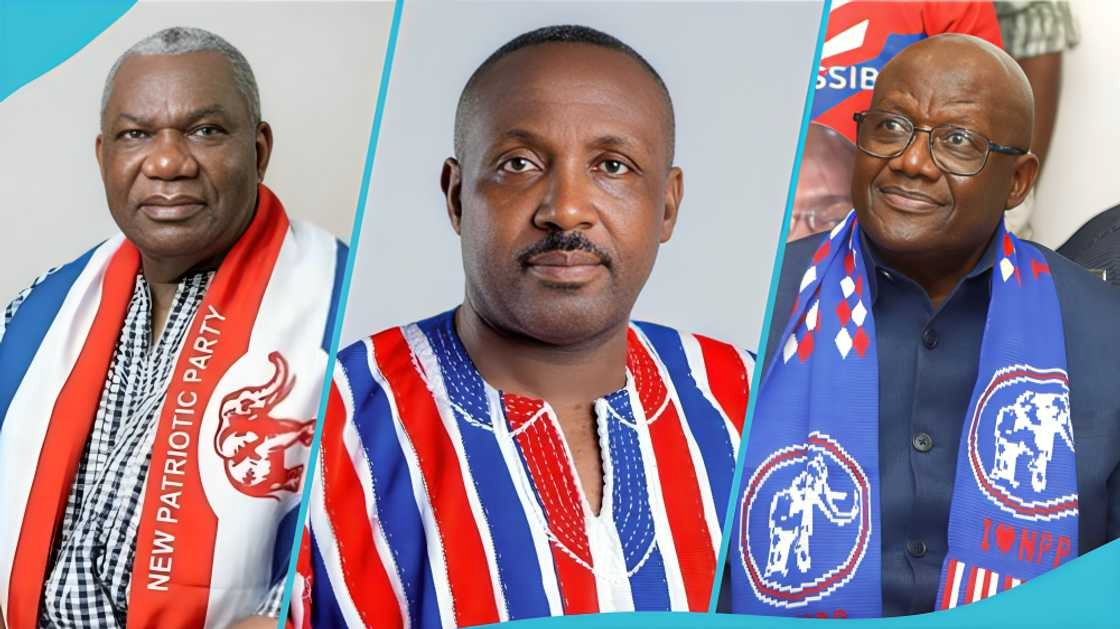
The swearing-in took place early Sunday after more than 7,000 delegates gathered at Baba Yara Sports Stadium to choose officers for key national positions. John Boadu emerged as National Chairman, while Justin Frimpong Kodua retained the General Secretary post.
Boadu secured 2,888 votes in the chairmanship contest. Former Energy Minister Boakye Agyarko followed with 2,408 votes, while former chairman Paul Afoko received 790. Sammy Crabbe recorded 41 votes after announcing support for Boadu during the conference.
The result returns Boadu to the centre of NPP administration after previous service as General Secretary. His new role places him in charge of party organisation during a period of rebuilding following the NPP’s defeat in the 2024 presidential and parliamentary elections.
Kodua retained his position with 4,486 votes. Sylvester Tetteh received 1,340, Eugene Boakye Antwi secured 162 and Charles Dwamena received 126. The margin gives Kodua a renewed mandate inside the party secretariat as the executive prepares for constituency work, membership mobilisation and campaign administration.
Other winners included Titus Glover as National Organiser, Mavis Hawa Koomson as National Women’s Organiser and Abanga Fuseini Yakubu as National Youth Organiser. Kojo Fosu Boadu became First Vice Chairman, Henry Nana Boakye became Second Vice Chairman and Nana Akomea became Third Vice Chairman.
The early-Sunday swearing-in represents the newest development from the conference. Results emerged through the night before party officials formally inducted the new leadership team.
Boadu used his acceptance address to move attention away from internal rivalry.
“Political victory is never an entitlement,” Boadu said.
He also urged members to reunite after the leadership contest.
“Let us choose unity over division, service over personal ambition, organisation over disorder and hope over despair,” he said.
The message reflects a central organisational challenge for the NPP. Internal elections create winners and losers across regional, ideological and personal networks. Party leaders now face the task of integrating unsuccessful candidates and their supporters into one national structure.
Kodua also addressed questions over his working relationship with Boadu. The pair previously competed against each other for the General Secretary position in 2022, when Kodua defeated Boadu.
“We are all mature politicians,” Kodua said while rejecting suggestions of an internal working dispute.
The leadership election followed a major constitutional review at the same conference. Delegates approved 14 amendments to the NPP constitution before completing the national executive vote.
One amendment makes the party’s elected presidential candidate the political leader of the NPP. Under the revised structure, the President leads the party while the NPP holds government, until a new presidential candidate receives election.
The changes also expand vice-chairmanship arrangements. Delegates now elect First, Second and Third Vice Chairpersons separately. Additional appointed vice chairpersons form part of the revised structure, although appointed holders do not enter the succession route for National Chairman.
Another amendment places the presidential candidate at the centre of national campaign organisation, subject to oversight from party institutions. The constitutional changes also address disciplinary structures, women’s participation and internal administrative responsibilities.
Acting National Chairman Joseph Danquah Smith had earlier proposed postponing consideration of the amendments. He cited limited time and concerns over whether delegates had enough opportunity to study proposals while also participating in executive elections. Delegates proceeded with the review and approved all 14 motions.
The sequence gives the new national executives both an organisational mandate and a changed constitutional framework.
For Ghanaian voters, the development concerns the internal leadership of the country’s main opposition party rather than a national election result. President John Dramani Mahama and the National Democratic Congress hold government following the 2024 election. The next general election is scheduled for 2028.
The NPP selected former Vice President Mahamudu Bawumia as its presidential candidate for 2028. Party officials now face the practical work of rebuilding constituency structures, recruiting volunteers, organising communications and defining policy positions before the campaign period intensifies.
Boadu said grassroots structures would receive priority under his chairmanship.
“We must rebuild from the grassroots upwards, strengthen our constituency structures, empower our youth, support our women, value our professionals and listen to our traditional and religious leaders,” he said.
His statement identifies several constituencies the NPP wants to reconnect with after losing national power. The electoral challenge involves more than internal unity. Party officials also need to address voter concerns around employment, living costs, public services, governance and the record of the previous NPP administration.
The new executive team enters office with clear institutional responsibilities. The chairman coordinates political leadership across national structures. The General Secretary handles administration and implementation. The National Organiser leads mobilisation. Women and youth organisers manage key party constituencies.
Those roles become important long before formal campaigning begins. Opposition parties depend on functioning branch structures, constituency officers, voter data, polling agents, fundraising networks and communication teams. Weak organisation at local level often reduces national campaign effectiveness regardless of headline visibility.
The conference also showed the NPP seeking continuity alongside leadership change. Kodua stayed as General Secretary while Boadu returned in a different national role. Several former ministers and established party figures secured positions, while other offices brought new leadership into the national executive.
No internal party election determines Ghana’s next government. Voters will make the decision in 2028. The immediate significance lies in how the NPP organises itself after defeat and how the new team manages competing factions, constitutional changes and preparation for opposition politics.
Boadu’s first public message focused on responsibility rather than celebration.
“Today is not a day of victory but a day of responsibility and great unity,” he said.
The statement now faces an organisational test. The new executives need to convert conference unity into functioning regional and constituency structures while maintaining internal discipline and giving unsuccessful aspirants space inside the party.
Ghana’s next national contest remains two years away. For the NPP, preparation has already moved from conference ballots to party management.