

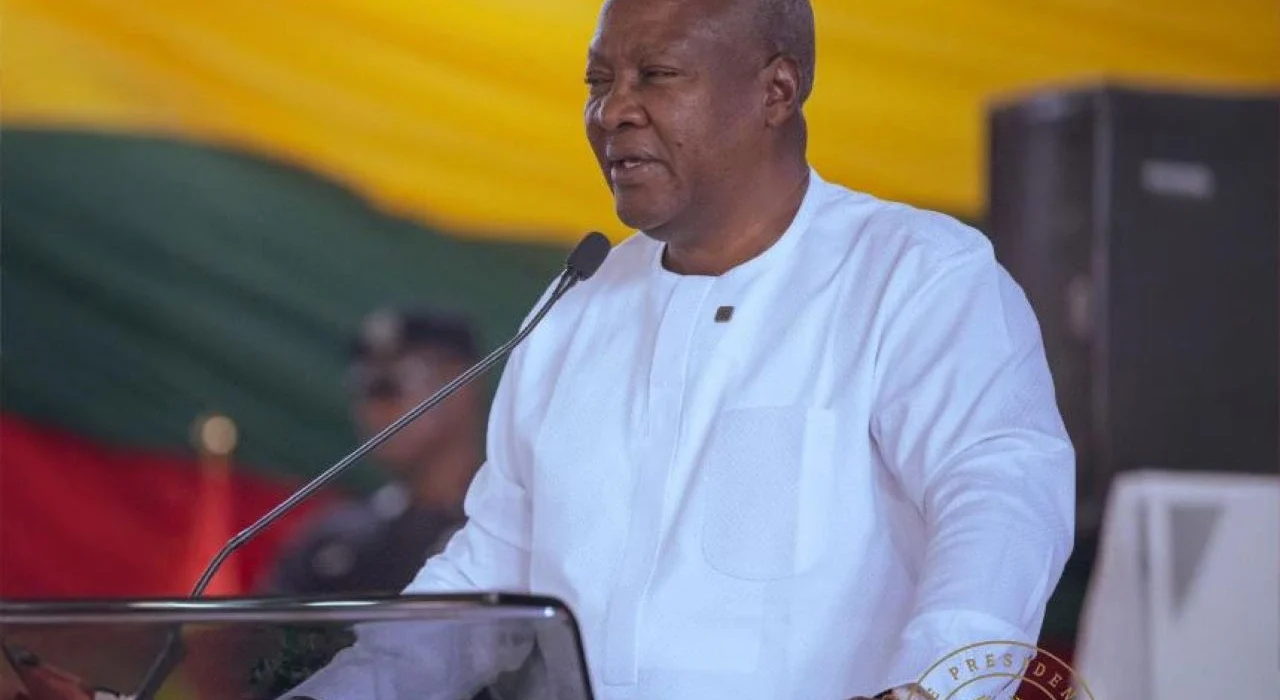
Justice Minister Dominic Ayine announced Cabinet’s position on Thursday. Government also supports matching the parliamentary term with the proposed five-year presidential cycle and lowering the minimum presidential age from 40 to 35. Officials plan two constitutional amendment bills by October, followed by a national referendum in 2027.
The proposal has not entered law. Ghana still operates under the 1992 Constitution, which gives presidents four-year terms and limits each person to two elected terms. Any change affecting entrenched constitutional provisions requires approval through a referendum with at least 40 percent voter turnout and support from at least 75 percent of valid votes cast.
Mahama’s administration says five years would give governments more time to organise, implement and complete national programmes. Supporters argue Ghana loses too much governing time after each election as ministers settle into office, review inherited projects and prepare for another campaign.
Such reasoning deserves a hearing. Major roads, hospitals, schools, energy projects and economic reforms often need more than one budget cycle. Policy reversals between the National Democratic Congress and New Patriotic Party have also left unfinished projects, unpaid obligations and abandoned programmes.
Yet time alone does not produce competent government.
A weak administration does not become effective because the Constitution grants another year. Poor planning, corruption, partisan appointments and waste still consume public resources. Ghana’s political class must prove a five-year term would serve citizens rather than officeholders seeking longer access to state power.
The Constitutional Review Committee, chaired by Professor H. Kwasi Prempeh, first recommended the five-year term after nationwide consultations. The committee presented its report to Mahama in December 2025. Government then reviewed the recommendations before accepting selected proposals.
The committee rejected any attempt to create a third presidential term. Ghana’s two-term ceiling would remain. A president would therefore serve no more than 10 years instead of the current maximum of eight.
This distinction matters across a continent where leaders often use constitutional review to prolong personal rule. Ghana must make sure a legitimate review never becomes an entry point for future incumbents seeking extra terms.
Ghana’s proposal also raises a direct question about Mahama’s current mandate.
Mahama served one presidential term from 2013 to 2017 and returned to office after winning the December 2024 election. Under the present Constitution, his current term represents his second elected term. Government must state clearly whether the proposed five-year arrangement would apply only after the next election.
Any attempt to add a year to Mahama’s current mandate without a fresh election would damage public trust. Voters elected him for four years. Constitutional reform should govern future contests, not rewrite an existing electoral contract after ballots have been counted.
Ghana holds a stronger democratic record than many neighbouring states. Peaceful transfers between the NDC and NPP have protected political stability since the return to constitutional rule. The country’s two-term presidential limit has survived every transfer of power.
This record gives Ghana an opportunity to conduct constitutional reform without violence, intimidation or executive manipulation. The referendum must belong to citizens, not Cabinet, Parliament or either major party.
Government should publish both amendment bills, the full legal reasoning and an implementation timetable. Civil society groups, universities, traditional leaders, unions, youth organisations and political parties need enough time to study every clause.
The public debate should also separate three proposals which raise different questions.
Extending presidential and parliamentary terms affects electoral accountability. Lowering the minimum presidential age to 35 expands political participation. Matching both terms keeps elections aligned and avoids separate national voting cycles.
Officials should not package unrelated reforms in a manner which forces voters to accept one proposal in order to support another. A young Ghanaian might favour lowering the age requirement while opposing longer terms. Referendum design must respect such differences.
The government’s argument about governing time also needs evidence. Officials should publish data showing how much of each four-year term goes toward transition, budgeting and election preparation. They should compare Ghana with African democracies operating five-year terms and identify measurable improvements linked to term length.
Five-year cycles dominate many presidential systems across Africa. Longer terms have not automatically delivered stronger economies, better hospitals or cleaner government. Leadership quality, institutional strength and public oversight determine results.
Ghanaians already appear divided. Supporters say four years gives governments inadequate time to complete major programmes. Critics say elections every four years force leaders to answer citizens more frequently. Both concerns deserve serious national debate.
Ghana also faces a practical political risk. Extending parliamentary terms gives legislators another year before voters review their performance. Members of Parliament already face criticism over absenteeism, weak constituency service and loyalty to party leadership.
A longer mandate should come with stronger attendance rules, transparent voting records and tighter oversight of public spending. Ghana should never reward Parliament with extra time while leaving weak accountability untouched.
The lower age proposal deserves broad consideration in a youthful nation. The Constitution currently blocks every citizen below 40 from seeking the presidency. Lowering the threshold to 35 widens eligibility without removing citizenship, experience or character requirements.
Age reform alone will not open politics. Campaign finance, party gatekeeping and patronage still prevent many qualified young people from entering national leadership. Ghana should pair the lower threshold with transparent political donations, fair media access and internal party democracy.
The 2027 referendum will test more than constitutional wording. The vote will show whether Ghana still trusts its institutions after economic hardship, public debt, unemployment and frustration with both major parties.
Government must avoid using state media, public funds or official vehicles to campaign for one side. The Electoral Commission needs independence, adequate funding and public confidence. Domestic observers should receive full access. Results should appear polling station by polling station.
The referendum threshold sets a demanding national standard. At least 40 percent of registered voters must participate, and three-quarters of valid votes must support the entrenched changes. Such a rule protects the Constitution from narrow partisan alteration.
Mahama’s government has started a legitimate constitutional process. Ghanaian citizens hold final authority.
A five-year term might improve policy continuity. The same term might also reduce accountability and reward ineffective leaders with another year in office. The outcome depends on safeguards, implementation and public consent.
Ghana should reform its Constitution only after open debate and clear guarantees. The country must never join the African pattern where leaders praise national development while adjusting constitutional clocks around political convenience.