

WASHINGTON, United States – A US-led coalition of trade ministers has moved from debate to coordinated action on industrial overcapacity, signing a joint statement aimed at production levels sustained by non-market policies and state support.
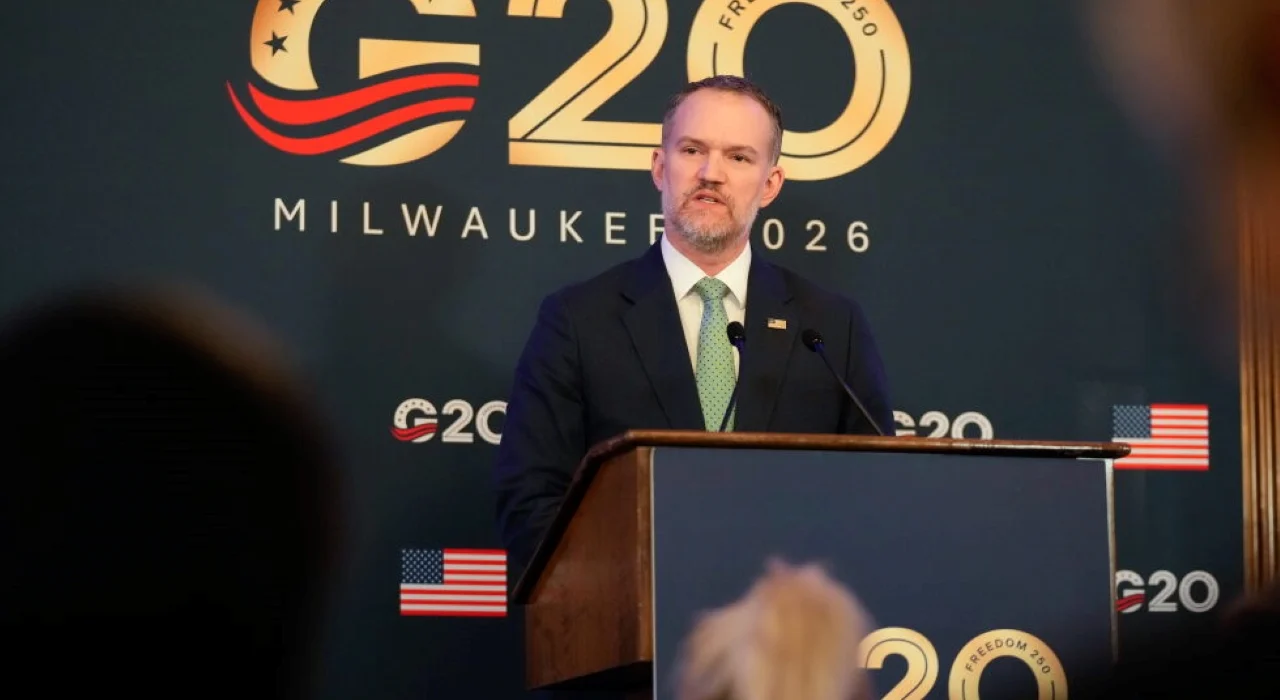
Trade ministers signed the agreement on Wednesday, October 7, less than a week after G20 trade ministers failed to reach consensus in Milwaukee. Fifteen signatories backed the new statement. They include Argentina, Australia, Canada, the European Union, France, Germany, India, Italy, Japan, South Korea, Mexico, Poland, Türkiye, Britain and the United States. China, Brazil, Indonesia, Russia, Saudi Arabia and South Africa did not sign.
The timing matters. Industrial overcapacity has moved to the centre of global trade policy as governments confront weak domestic manufacturing, low-priced imports, state subsidies and pressure on strategic supply chains. Steel, vehicles, batteries and clean-energy manufacturing sit near the centre of the dispute.
The signatories called for action against structural excess capacity and production. Their position focuses on government measures that keep output above sustainable market demand, distort pricing, weaken private investment and push surplus goods into export markets.
US Trade Representative Jamieson Greer framed the agreement as a defence of domestic production. “Left unchecked, these issues will continue to cripple domestic industries and displace local production,” Greer said in a statement announcing the pact.
Greer also described the trading system in unusually sharp terms. “The global trading system is completely out of whack,” he said.
Washington has placed China near the centre of its industrial overcapacity campaign. US officials argue Chinese state subsidies, cheap finance and industrial policy have supported production beyond domestic demand, sending large volumes of manufactured goods into foreign markets at prices rival producers struggle to match.
Beijing rejects the accusation. Chinese officials describe Western overcapacity claims as protectionist justification for trade barriers. China argues strong manufacturing output reflects competitiveness, scale, innovation and supply-chain efficiency rather than unfair production.
This disagreement now drives a major global trade dispute. The latest statement does not name China directly. Its list of signatories and recent G20 negotiations still place Chinese industrial policy at the centre of the political dispute.
At the Milwaukee G20 trade meeting last week, ministers discussed structural excess capacity, forced labour, food trade coercion and reform of the Most Favoured Nation tariff principle. Officials failed to secure full G20 agreement on industrial overproduction. The new coalition has now moved outside full G20 consensus and formed a smaller bloc around shared trade concerns.
This shift carries weight. The signatories represent several of the world’s largest consumer markets and manufacturing economies. Their next step involves sector-focused platforms designed to examine overcapacity and coordinate responses. Those responses include trade remedies, subsidy scrutiny, anti-dumping investigations, countervailing duties and tighter import rules.
Steel already provides a working model. Twenty-eight countries recently backed the Milwaukee Framework under the Global Forum on Steel Excess Capacity. The framework seeks stronger subsidy discipline, better supply-chain data and national responses to surplus steel production. China and India sit outside the forum.
For businesses, the phrase “excess capacity” has direct commercial meaning. A factory supported by state finance or loss-tolerant policy produces goods even when normal market signals point toward lower output. Export markets absorb the surplus. Prices fall. Competing plants lose margins. Capital expenditure slows. Governments then face pressure for tariffs, quotas or other trade defence instruments.
You should watch three areas next. Steel policy provides the first test. Electric vehicles and batteries present another front because governments increasingly treat them as strategic industrial sectors. Solar manufacturing also faces disputes over pricing, subsidies and domestic production targets.
The political stakes extend beyond Washington and Beijing. The European Union, Japan, South Korea, India, Canada and Britain signed the statement. Each faces its own mix of industrial policy, import competition and domestic employment pressure. Their participation gives the initiative broader diplomatic reach than a bilateral US-China tariff dispute.
South Africa’s absence also deserves attention across Africa. Pretoria belongs to the G20 and did not join the statement. African economies now face a difficult policy calculation. Lower-priced imported machinery, vehicles and equipment reduce costs for consumers and firms. Heavy import penetration also places pressure on local industrialisation programmes where governments seek domestic assembly, mineral beneficiation and manufacturing jobs.
Trade diversion presents another risk. If major economies raise barriers against surplus production, exporters search for alternative destinations. African markets with lower tariff walls and weaker trade-defence capacity face greater exposure to diverted manufactured goods. Local producers then compete against export volumes shaped by policy decisions taken far outside Africa.
The same tension affects African commodity exporters. China remains a major buyer of iron ore, copper, lithium and other industrial inputs. Any sustained reduction in Chinese factory output would affect demand projections for raw materials. A policy confrontation which changes production patterns therefore reaches mining economies, freight corridors, ports and fiscal planning across resource-producing states.
For consumers, lower import prices offer immediate value. For governments, the issue centres on long-term industrial capacity, employment and tax bases. Policymakers must weigh short-term affordability against the survival of domestic manufacturing. Trade officials also need reliable import data before imposing remedies, since poorly targeted protection raises input costs for local firms.
Implementation now becomes the main test. Signing a statement costs little. Coordinating tariffs, subsidy rules and enforcement across economies with different commercial interests demands sustained political alignment. India protects sectors Washington wants opened. Europe uses its own industrial subsidies. The United States relies on tariffs at a scale several partners resist.
Still, the October 7 agreement marks a clear change from last week’s G20 deadlock. A group of major economies has chosen coordinated pressure without waiting for unanimous G20 approval. Global trade policy has entered a period where industrial capacity, national security and manufacturing employment increasingly shape tariff decisions.
For your business, investment or policy planning, follow the sector platforms that emerge from this agreement. Their rules will determine whether Wednesday’s statement develops into coordinated enforcement or stays a political declaration. The next measures on steel, electric vehicles, batteries and other strategic sectors will show how far the coalition intends to go.