
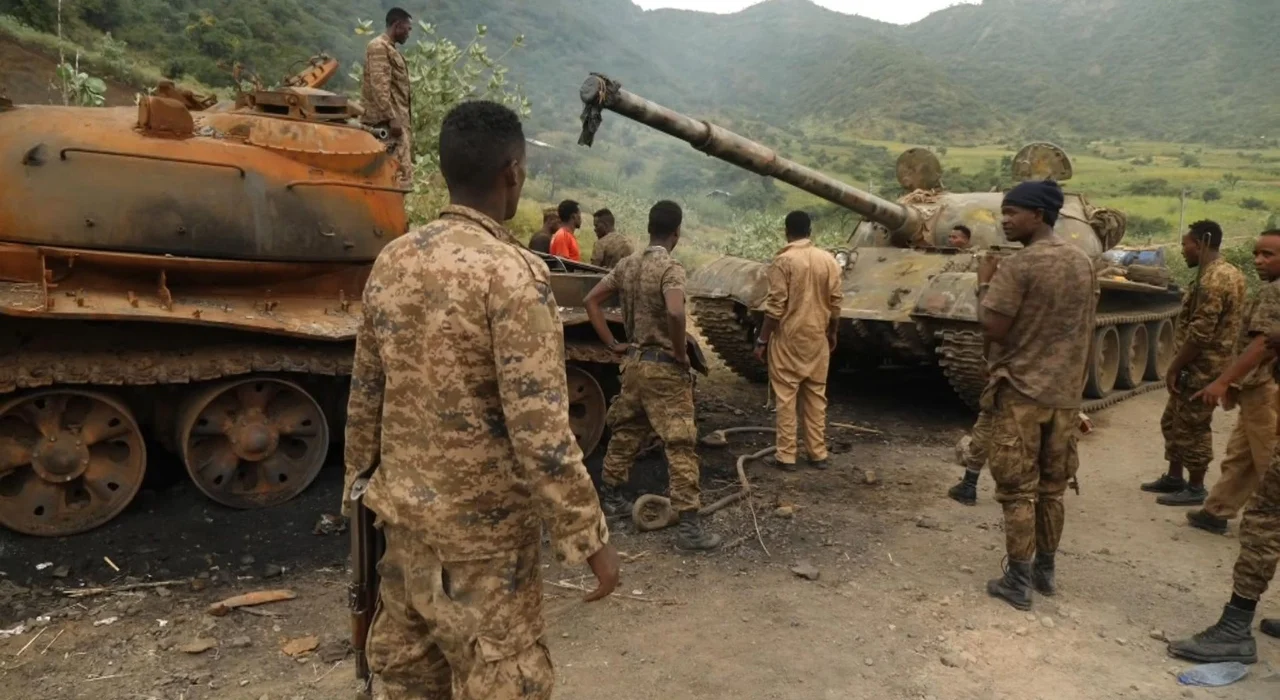
ADDIS ABABA, Ethiopia – Ethiopia faces its gravest internal military escalation since the 2022 Pretoria peace agreement after Tigrayan forces seized three airports, fighting spread into neighbouring regions, and a new armed alliance declared an objective of removing Prime Minister Abiy Ahmed’s government.
The African Union confirmed Tigray forces took control of the civilian airports at Mekelle, Axum and Shire. The AU also reported the detention of federal personnel and disruption of civilian air services. Ethiopian Airlines suspended flights into Tigray as the security situation deteriorated.
Fighting also spread beyond Tigray. Reuters reported clashes in Afar and Amhara, with Tigrayan forces operating alongside local allies. Residents around Lalibela in Amhara reported federal forces firing heavy weapons toward advancing Fano fighters. In Afar, regional authorities accused the TPLF of launching an invasion.
Tigray’s regional leadership offered the opposite account, saying federal forces had attacked first with aircraft, drones, artillery and ground troops. Independent verification of responsibility for the opening attacks remains incomplete.
Getachew Reda, an adviser to Abiy and a former senior TPLF figure, accused the Tigray People’s Liberation Front of starting an “all-out offensive” against federal positions in Afar and Amhara.
“The TPLF politico-military leadership has obviously taken irresponsibility to new heights,” Getachew said.
Tigray’s leaders reject Addis Ababa’s account. The regional administration says its forces entered a defensive war after federal attacks. On Thursday, Tigrayan officials described the conflict as a “full-blown war” with the federal government, marking a sharp escalation from months of drone strikes, troop movements and smaller confrontations.
The airport seizures matter far beyond aviation. Mekelle, Axum and Shire form essential civilian gateways for a region still recovering from mass displacement, hunger, infrastructure destruction and the collapse of medical services during the 2020 to 2022 war.
Control of those airports also carries military importance because airfields affect troop movement, logistics, surveillance and access to northern Ethiopia.
The timing adds another danger. Only days before the airport seizures, seven armed and opposition groups announced the Ethiopian Peoples’ Forces Alliance for Survival.
The coalition includes the TPLF, the Amhara Fano National Movement, the Oromo Liberation Army and groups from Ogaden, Afar, Benishangul-Gumuz and Gumuz areas. The alliance says its objective involves removing Abiy’s government.
The alliance brings together forces with deep disagreements and, in some cases, recent histories of fighting each other.
Fano forces fought alongside the federal side against the TPLF during the previous Tigray war. Fano later turned against Addis Ababa and has fought federal forces in Amhara since 2023.
Such partnerships show how Ethiopia’s security crisis has expanded beyond a single dispute between Addis Ababa and Mekelle.
TPLF spokesman Michael Asgedom said cooperation with the new alliance covers political and military activity. Asked whether TPLF participation breached the 2022 peace agreement, Asgedom described the accord as “no longer valid.”
Those words strike directly at the foundation of the peace process signed on November 2, 2022.
The agreement halted one of the deadliest wars of recent decades, restored federal services to Tigray, created an interim regional administration and started demobilisation efforts.
Abiy told parliament in July more than 60,000 former combatants had entered demobilisation, rehabilitation and reintegration programmes.
The human cost of the previous war explains the alarm now spreading across the region.
Former Nigerian president Olusegun Obasanjo, who served as the AU’s lead mediator, estimated the conflict killed around 600,000 people.
“The number of people killed was about 600,000,” Obasanjo said after the peace agreement.
Researchers have produced different totals. ACLED has stressed the difficulty of verifying aggregate fatality estimates, while Ethiopia’s former human rights chief Daniel Bekele urged caution over precise numbers.
Even lower research estimates place the death toll in the hundreds of thousands once conflict-related hunger and loss of medical access enter calculations.
Around 750,000 Tigrayans remained internally displaced as of February, according to UN refugee data cited by Reuters. Many families have yet to recover homes, farms, businesses or relatives lost during the previous fighting. Drought has added pressure. Another prolonged conflict threatens a population already carrying the effects of the first war.
Signs of civilian fear have already appeared.
Residents in Mekelle rushed to buy food and withdraw cash on Thursday. Shops in Adigrat, near the Eritrean border, reported shortages as families prepared for possible isolation.
Reuters also reported claims from residents involving forced recruitment of young people by Tigrayan forces. Such claims require further verification, yet the reports deepen fears among families whose children already lived through one major war.
The regional dimension raises the stakes further.
Eritrea fought alongside Ethiopian federal forces against the TPLF during the 2020 to 2022 war. Relations between Addis Ababa and Asmara later deteriorated.
Ethiopia now accuses Eritrea of financially supporting members of the new anti-government alliance. Eritrea denies allegations of backing Ethiopian armed groups.
Sudan’s civil war sits to Ethiopia’s west. Conflict already affects Amhara and Oromia. Disputes over Red Sea access have strained regional relations.
A renewed northern war therefore risks intersecting with several existing security crises across the Horn of Africa.
United States Ambassador to Ethiopia Ervin Massinga accused TPLF leaders of “engaging in an unwinnable fight” and urged political dialogue.
African Union Commission Chairperson Mahmoud Ali Youssouf called for an immediate halt to further escalation and asked former Nigerian president Obasanjo to re-engage both sides.
The AU says the seizure of Mekelle, Axum and Shire airports conflicts with obligations under the Pretoria agreement. Youssouf also urged neighbouring states to avoid actions which deepen the conflict.
UN Secretary-General António Guterres expressed grave concern over the seizure of the three airports and spreading hostilities. He urged both sides to protect civilians, allow humanitarian access and return to talks under the Pretoria framework.
The next stage depends on decisions in Addis Ababa, Mekelle and among allied armed groups.
The scale of troop deployments, airport control, drone operations and battles in Afar and Amhara already marks a break from the uneasy peace of recent years.
Ethiopia has lived through this sequence before. Political rupture led to mobilisation. Mobilisation led to war. War produced mass death, displacement, hunger and destruction across northern Ethiopia.
Three airports now sit under Tigrayan control. Armed groups once fighting on opposite sides now share an anti-government alliance. Federal forces remain deployed across several fronts. Both camps accuse the other of starting the latest violence.
The Pretoria agreement stopped the previous war. Ethiopia now faces a renewed test of whether political leaders and armed commanders return to negotiations before the present fighting expands into another prolonged national conflict.