
HARARE, Zimbabwe – Comparisons between China and Africa often go wrong when they ignore political systems, legal safeguards and human rights. China operates under Communist Party rule, restricts political competition and dissent, and faces sustained criticism over censorship, arbitrary detention and judicial independence. Human Rights Watch and Amnesty International documented serious restrictions during 2025. Any discussion of Beijing’s governance therefore needs a clear boundary. Admiring enforcement against corruption does not require admiration for one-party rule.
The phrase “many African politicians would not last a day under Xi” works as political rhetoric, not a measurable fact. The evidence supports a narrower point. China attaches severe personal consequences to corruption investigations involving senior officials, while several African states have produced commissions, audits and investigations whose findings have taken years to reach criminal courts.
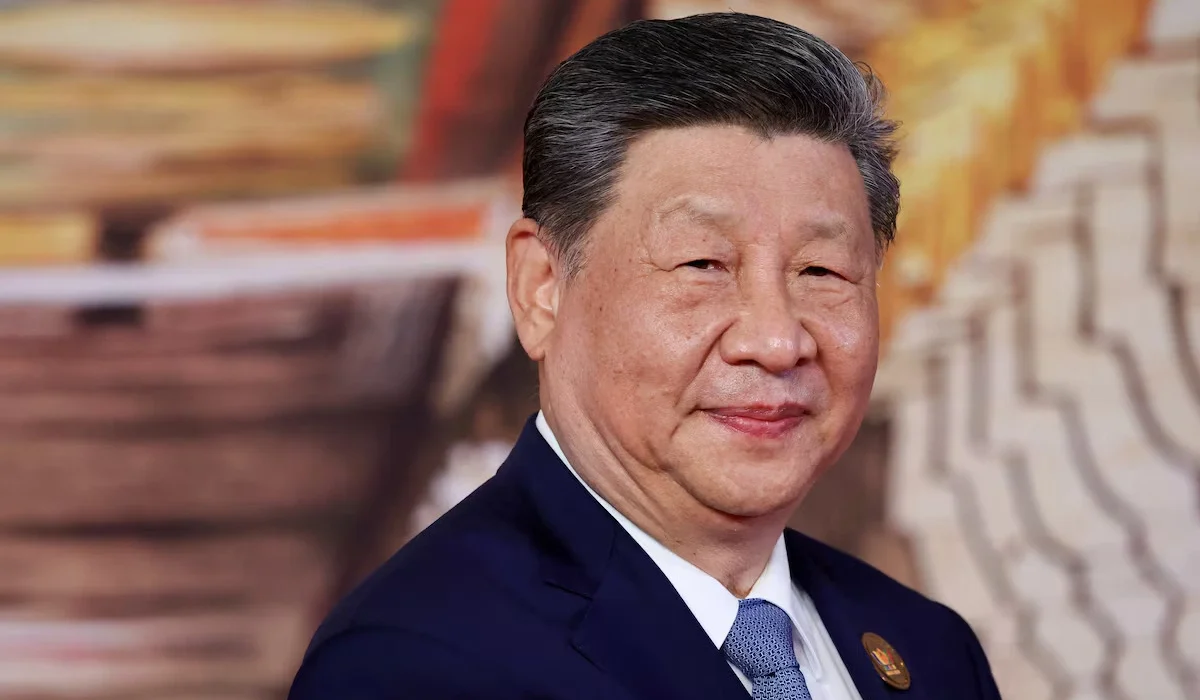
Under President Xi Jinping, corruption investigations have reached senior officials, military commanders, executives and members of the judicial system. China’s Central Commission for Discipline Inspection reported 1.012 million cases opened in 2025, including cases involving 115 officials at provincial or ministerial level or above. Authorities disciplined 983,000 people during the year.
Xi has described corruption as a threat to Communist Party survival. In a major statement on governance, he said China had resolved to “offend a few thousand rather than fail 1.4 billion.” His programme targets senior “tigers” and lower-ranking “flies”, alongside people who offer bribes.
The sanctions reach levels rarely seen in African corruption prosecutions.
A Chinese court convicted Lai Xiaomin, former chairman of China Huarong Asset Management, after prosecutors established bribes worth more than 1.78 billion yuan, alongside embezzlement and bigamy. China executed Lai in January 2021 after Supreme People’s Court approval. Zhao Zhengyong, a former Shaanxi Communist Party chief, received a death sentence with a two-year reprieve over more than 717 million yuan in bribes.
Capital punishment should not form the comparison between Africa and China. China retains the death penalty, while rights organisations challenge its use, secrecy and wider justice system. Amnesty International also reports severe restrictions on speech, association and peaceful dissent. The relevant comparison concerns certainty of consequence, institutional discipline and the political cost attached to graft.
Xi’s “Two Mountains” idea adds another part of his governance record. During a 2005 visit to Yucun village in Zhejiang, Xi backed the closure of polluting mines and argued green mountains and clean water held economic value comparable with material wealth. Chinese authorities later placed the concept at the centre of national environmental policy.
For African governments facing illegal mining, polluted rivers, deforestation and degraded farmland, the comparison raises an uncomfortable policy question. Governments regularly speak about investment and mineral wealth while communities absorb environmental damage. China’s own environmental record includes serious pollution problems, yet Beijing’s official policy now places ecological protection inside national development planning.
The “Two Musts” also deserve accurate attribution. Xi did not originate the phrase. Mao Zedong formulated the principle before the Communist victory in 1949. Mao told Party members to remain modest and prudent, avoid arrogance and rashness, and preserve a tradition of hard work. Xi-era party discipline has revived those themes alongside the Eight-Point Decision and campaigns against formalism, bureaucratism, hedonism and extravagance.
References circulating online to a fixed Xi doctrine called the “Six Nos” deserve caution. The better documented Xi-era framework is the Eight-Point Decision, backed by disciplinary campaigns against expensive gifts, public-funded entertainment, unnecessary ceremony, bureaucratic excess and extravagant official conduct. During 2025, Chinese authorities reported 290,752 cases involving breaches of the Eight-Point Decision, with 261,788 people receiving party or administrative sanctions.
Now place this beside parts of Africa’s accountability record.
South Africa provides unusually detailed evidence because the Zondo Commission placed state capture under public examination. The commission heard more than 300 witnesses, accumulated about 1.7 million pages of documentary evidence and implicated 1,438 people and entities. A commission finding is not a criminal conviction, and describing every person implicated as “guilty” would be legally wrong. Still, several senior political figures received adverse findings or recommendations for criminal investigation without facing trial on those specific Zondo matters years later.
By July 2026, former minister Nomvula Mokonyane had not faced trial over the Bosasa matters identified by the commission. The commission found evidence warranting criminal investigation. Mokonyane denied wrongdoing.
Mineral and Petroleum Resources Minister Gwede Mantashe also had not faced trial over Bosasa-funded security upgrades identified by Zondo. He told the commission, “I am not amenable to bribes.” Zondo nevertheless recommended further investigation. Deputy Minister David Mahlobo and parliamentary figure Cedric Frolick also remained without trials on specific Zondo recommendations cited in later reviews of commission follow-up.
The record also contains prosecutions. Former parliamentarian Vincent Smith received a seven-year corruption sentence in March 2026 over Bosasa-related conduct. Former minister Malusi Gigaba faces a separate Transnet corruption prosecution. Those cases show enforcement operating alongside a Zondo follow-up process where numerous major findings have moved slowly from public exposure toward courtroom resolution.
Equatorial Guinea presents another form of accountability gap.
France’s highest court upheld the corruption-related conviction of Vice President Teodorin Nguema Obiang Mangue in 2021 and confirmed confiscation of roughly €150 million in assets. He continued serving as vice president. The case provides a direct example of an African political leader suffering a final corruption conviction abroad without equivalent removal from domestic political power.
Zimbabwe’s picture also requires precision.
A Zimbabwean court convicted former Public Service Minister Petronella Kagonye of theft of trust property, and the Supreme Court upheld her conviction in 2024. Former minister Prisca Mupfumira, by contrast, faced prosecution over an NSSA matter and won an acquittal after the magistrate ruled prosecutors had failed to prove the case. Those outcomes matter because anti-corruption reporting must distinguish suspicion, commission findings, charges, acquittals and convictions.
China itself offers no clean democratic model for Africa. Critics argue Xi’s anti-corruption drive also strengthens Communist Party discipline and removes political obstacles. CSIS researchers documented more than 100 senior PLA officers purged or potentially purged since 2022, while noting incomplete public information around many cases. Human rights organisations continue to challenge the fairness and independence of China’s justice system.
Xi’s programme of “socialist rule of law with Chinese characteristics” also differs fundamentally from liberal constitutional systems. Xi places Communist Party leadership inside the legal framework itself. His government says courts, prosecutors, police and supervisory bodies should coordinate while strengthening oversight and attacking corruption inside judicial institutions. Critics argue Party supremacy limits genuine judicial independence.
The strongest comparison therefore sits elsewhere.
China attaches visible personal risk to corruption allegations once party investigators and courts move against an official. In several African systems, commissions, auditors and investigators sometimes produce extensive findings while criminal accountability arrives years later, arrives selectively, or never reaches trial.
For Zimbabweans studying Xi, the useful question is less whether Zimbabwe should resemble China. The sharper question concerns consequences. What follows after an auditor exposes abuse, after a commission identifies misconduct, after investigators trace public money, or after a senior official receives benefits linked to state business?
China answers those questions through a system carrying immense coercive force and serious human rights costs. African democracies and constitutional states operate under different legal principles, including due process, political rights and independent judicial safeguards.
The central accountability test therefore concerns whether those protections exist alongside timely investigations and credible court processes. China’s record shows the scale of enforcement possible when political leadership treats corruption as a direct threat to the governing system. Africa’s varied record shows why the distance between an explosive corruption finding and a final lawful judgment deserves as much public attention as the scandal itself.