
ACCRA, Ghana – West African leaders have backed Ghana’s petition asking the African Union to confront attacks, intimidation, and hostility directed at African migrants in South Africa. The endorsement moves the dispute beyond Accra and Pretoria. South Africa now faces organised diplomatic pressure from an entire regional bloc over violence which threatens African unity, trade, travel, and public trust.
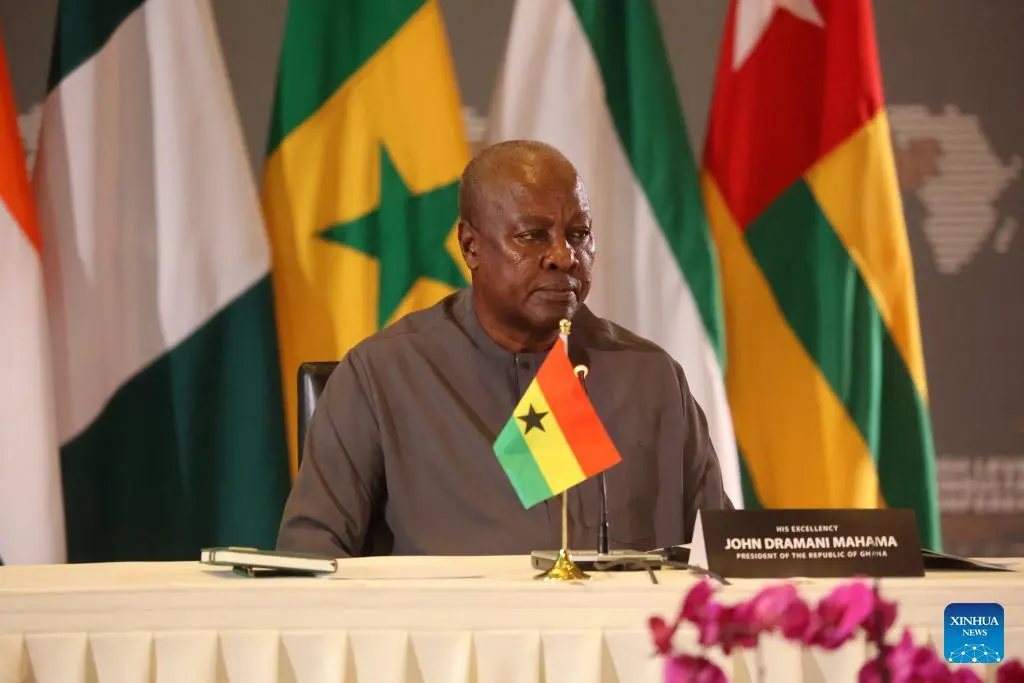
The ECOWAS Authority of Heads of State and Government gave collective support during its 69th ordinary summit in Lungi, Sierra Leone, on July 19. President John Dramani Mahama welcomed the decision and said the matter should reach the next African Union mid-year summit. Public reports describe a collective endorsement. They do not provide a formal country-by-country voting roll, so claims naming every leader as an individual sponsor require caution.
Mahama placed the issue inside Africa’s liberation history. “African liberation was achieved through solidarity across our borders,” he told regional leaders. He warned against allowing intolerance from a small group to weaken Africa’s liberation legacy. Mahama said Ghanaians, Nigerians, and other Africans had lost lives or endured fear, intimidation, and uncertainty in South Africa.
Ghana first wrote to the African Union on 6/05/2026. Foreign Minister Samuel Okudzeto Ablakwa described the recurring violence as an issue of urgent continental interest. Accra requested AU monitoring, a fact-finding mission, dialogue, reconciliation, and formal discussion under African human-rights and integration commitments. Ghana also argued anti-African violence damages the African Continental Free Trade Area, whose secretariat sits in Accra.
The ECOWAS endorsement matters because Ghana no longer speaks as one aggrieved state. West Africa now presents a shared political position. Such backing gives Ghana greater leverage before the AU and places South Africa’s conduct under continental examination. An endorsement does not order an investigation, impose sanctions, or establish legal guilt. The AU still needs to decide which steps follow.
South Africa has rejected any suggestion of state support for xenophobia. President Cyril Ramaphosa condemned vigilante groups and warned citizens against stopping people in streets to demand identity papers. He said only state authorities hold responsibility for immigration enforcement. His government promised action against groups exploiting anger over jobs, crime, poverty, and illegal migration for political or criminal ends.
Pretoria also challenged selected claims surrounding deaths during protests. The Department of International Relations and Cooperation said no credible evidence supported claims linking law-enforcement authorities to reported Ghanaian and Nigerian deaths at one stage of the unrest. South African police later disputed Ghana’s account of a Cape Town killing, saying officers linked the death to extortion rather than an anti-migrant protest. Such disputes strengthen the case for independent fact-finding rather than social-media verdicts.
Ghana has already raised the diplomatic cost. Accra postponed a planned August session of the South Africa-Ghana Bi-National Commission. Government spokesperson Felix Kwakye Ofosu said violence would overshadow talks co-chaired by Mahama and Ramaphosa. Ghana also repatriated hundreds of citizens after threats and anti-immigrant demonstrations increased.
South Africans hold a legitimate right to demand secure borders, lawful residence, fair access to public services, and firm action against crime. Government must enforce immigration law through trained officers, courts, transparent procedures, and respect for human dignity. Private groups have no lawful mandate to raid homes, inspect documents, remove patients from clinics, threaten traders, or punish whole nationalities.
African leaders also need honesty. Foreign governments should not defend document fraud, unlawful entry, or criminal conduct because suspects come from neighbouring states. Equally, Pretoria should not present every assault, forced removal, or looting incident as ordinary immigration enforcement. Citizenship never turns collective punishment into law.
The AU petition should seek practical outcomes. A fact-finding mission should record deaths, injuries, property losses, displacement, arrests, prosecutions, police responses, and government prevention measures. Investigators should separate verified attacks from false videos and unrelated crimes. Such work would protect victims while preventing exaggerated claims from poisoning diplomacy.
The process should also examine economic drivers. South Africa’s unemployment, inequality, housing shortages, weak municipalities, and strained clinics create anger. Migrants did not create those structural failures. Political actors often redirect frustration toward visible outsiders because blaming foreigners costs less than fixing schools, policing, electricity, transport, corruption, and local government.
ECOWAS should avoid retaliation against South African citizens or companies. Punishing innocent people would repeat the same injustice Ghana condemns. Regional leaders should instead demand prosecutions, victim compensation, early-warning systems, safe reporting channels, and regular public data. They should also protect South Africans living and working across West Africa.
You should judge the AU response through action, not another declaration. Did authorities identify attackers? Did courts process cases? Did displaced families recover property? Did governments create working emergency contacts? Did police stop vigilante document checks? Did leaders defend lawful migrants while strengthening border control?
The dispute also tests AfCFTA credibility. Africa cannot promote free trade while traders fear violence based on nationality. Goods do not move freely when drivers, shopkeepers, technicians, students, and investors fear crossing borders. Continental commerce depends on human security, predictable law, and public respect for African citizens.
Mahama’s intervention gives ECOWAS a clear moral position. Yet moral language needs disciplined evidence and equal standards. Ghana should document every verified case. South Africa should publish arrests, prosecutions, deportation procedures, and protection measures. The AU should create an independent record and propose enforceable safeguards.
South Africa owes African states gratitude for support during the anti-apartheid struggle. Gratitude does not remove Pretoria’s right to police borders. Border enforcement does not erase its duty to protect every person under South African jurisdiction.
ECOWAS has placed the issue before the continent. The next move belongs to the African Union and South Africa. Africa must prove integration protects people, not only presidents, corporations, and summit declarations.