
WHO regional emergency director for Africa Marie Roseline Belizaire warned against interpreting falling infections in some areas as nationwide progress.
“The outbreak is not under control and remains spread across a wide geographic area,” Belizaire said.
The current outbreak involves the Bundibugyo virus, a form of Ebola for which no licensed vaccine or specific treatment exists. Congo has fought repeated Ebola emergencies, but the present outbreak has grown faster than previous national outbreaks. WHO data from September 20 recorded 7,733 confirmed cases and 3,732 deaths, before newer government figures pushed both totals higher.
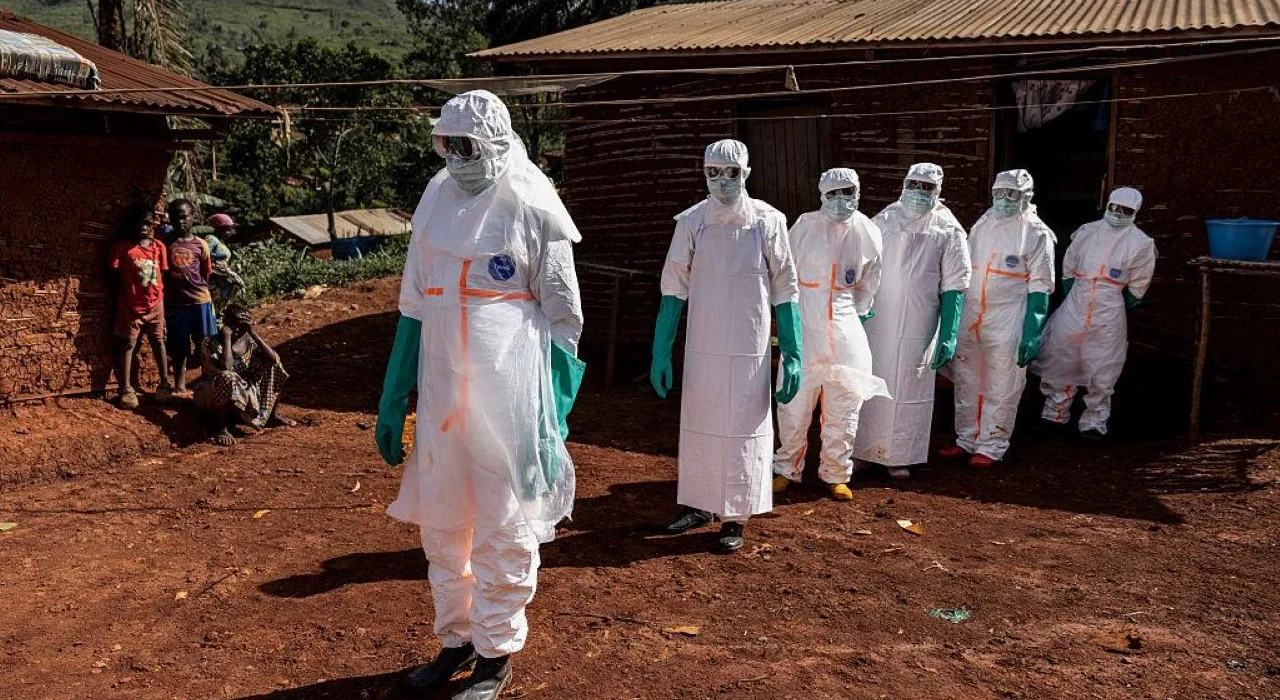
The staffing shortage now threatens the effort to expand treatment capacity. WHO Ebola incident manager Catherine Smallwood said, “The human resources gap is one of the biggest gaps.” WHO representative in Congo Anne Ancia detailed the scale of the problem. One Ebola treatment centre requires about 300 professionals, including nurses, hygienists, doctors and anaesthetists.
“We are building Ebola treatment centres but do not always have the human resources needed to operate them,” Ancia said. “The health workers must be paid.
Payment disputes have already disrupted the response. Frontline workers in Ituri previously stopped work over unpaid wages. Health Minister Samuel Roger Kamba said authorities were checking payroll lists after officials found names belonging to people outside the response. Some workers later reported receiving partial payments, while others received nothing.
Staffing needs extend beyond doctors and nurses. Ebola treatment requires infection-control teams, cleaners, ambulance crews, laboratory workers, burial teams, contact tracers, community workers, logisticians and trained supervisors. Every additional treatment bed increases demand for protective clothing, disinfectant, laboratory capacity and staff able to work under strict infection-control procedures.
Earlier in September, WHO technical officer Luca Fontana said Congo had established nearly 1,400 treatment beds across 59 centres. WHO estimated a further 1,600 beds were needed. The organisation calculated roughly three health workers for each Ebola bed, placing total staffing needs near 9,000 people for 3,000 beds. Around 5,000 additional workers required recruitment and training under those projections.
“Yet, despite this extraordinary effort, we estimate another 1,600 beds will be required,” Fontana said. He also warned about a shortage of international organisations with enough experience and funding to operate Ebola treatment centres.
Funding pressure sits behind part of the staffing crisis. WHO estimates a 50-bed treatment centre costs about US$500,000 to operate. Protective equipment adds another daily expense. Fontana said every entry by a health worker into a patient area while wearing full protective gear costs around US$25. Hundreds of staff members enter high-risk zones each day.
Conflict makes recruitment and deployment harder. Armed violence, displacement and poor roads affect large parts of eastern Congo. WHO says insecurity restricts access to health services, blocks surveillance work and slows contact tracing. Mining communities, informal settlements and displacement sites often face overcrowding, poor sanitation and limited access to medical care.
Health workers themselves face infection. By July 1, WHO had recorded 102 confirmed cases and 25 deaths among health and care workers. Earlier reporting documented rising infections among medical staff during shortages of boots, masks and other protective equipment. The loss of trained personnel places more pressure on surviving teams and weakens confidence among workers entering treatment areas.
Children face an especially severe risk. Belizaire said children younger than five have a case fatality rate above 60 percent, compared with around 40 percent among adults. Smallwood said diagnosing small children creates extra difficulty because young patients often struggle to describe symptoms and early signs overlap with other illnesses.
Congo began vaccinating frontline workers in Bunia on September 19 under an emergency programme involving Ervebo. Regulators license Ervebo against the Zaire Ebola virus, not Bundibugyo. Africa CDC and WHO secured 70,000 doses after Congo requested access from the global stockpile. Authorities assigned 50,000 doses to frontline and health workers and 20,000 doses to a Phase 3 trial assessing protection against Bundibugyo. Researchers do not yet know whether Ervebo protects humans against the Bundibugyo virus.
WHO Director-General Tedros Adhanom Ghebreyesus warned on September 16 against reading falling numbers in parts of Ituri as victory.
“The epidemic continues to grow, and continues to kill,” Tedros said.
Tedros described several simultaneous outbreaks across cities, villages, mining zones and conflict-affected communities. He said North Kivu had recorded rapid growth while progress in Ituri started from a high transmission level.
Africa CDC Director-General Jean Kaseya also rejected premature declarations of control after Congolese officials reported encouraging signs.
“We saw a decrease in some areas, but we say the situation is still serious,” Kaseya said.
Africa CDC wants sustained declines across affected areas before declaring a turning point.
The outbreak has already crossed borders. WHO recorded 20 cases and two deaths in Uganda before Uganda ended its outbreak in August. France recorded one case, while Germany treated two patients diagnosed in Congo. WHO continues screening and surveillance at airports, ports and official land crossings, while informal travel routes complicate cross-border monitoring.
If you follow this crisis from elsewhere in Africa, the central lesson goes beyond Ebola. A treatment centre without trained staff does not deliver treatment. Protective equipment without people trained to use infection-control procedures does not stop transmission. Funding delays quickly become staffing problems, and staffing problems quickly become patient-care problems.
Congo and its partners launched a revised 180-day response plan in September. The plan focuses on stronger surveillance, treatment, infection prevention, community engagement and coordination. Success now depends on whether authorities and partners recruit enough workers, pay them on time, protect them from infection and violence, and keep treatment centres operating where transmission rises fastest.
The numbers already show the urgency. More than 7,700 people have contracted the virus and more than 3,700 have died. North Kivu continues to demand more staff while Ituri, the original epicentre, still reports substantial transmission despite recent declines.
Congo has treatment beds, vaccine trials and experienced responders. The immediate shortage now sits with the people needed to make those systems work.