
The refinery stands on a five-hectare site in Ouaga 2000. The complex includes a foundry, assay laboratory, secure storage area, jewellery unit and administrative facilities. Government information places first-phase refining capacity at 164 tonnes of gold a year, with a planned expansion to 515 tonnes. The plant will turn doré from industrial and artisanal producers into fine-gold bars, with officials reporting purity of 99.9 percent.
Traoré used the inauguration to press a broader industrial policy based on processing minerals inside Burkina Faso. In translated remarks published by the presidency, he said, “We want to refine all our metals locally. We want the entire value chain locally.” He also urged young Burkinabè to gain technical skills across mining, refining and downstream production.
The government says more than 11 billion CFA francs went into the refinery through the state, including the Société nationale des substances précieuses, or SONASP, alongside national private-sector partners. The project therefore carries a larger policy purpose than producing bars. Ouagadougou wants stronger oversight over gold flows, more domestic processing income, improved traceability and a bigger share of mining-related work inside the country.
Energy, Mines and Quarries Minister Yacouba Zabré Gouba described the opening as an assertion of economic sovereignty.
“This is the day we take back the keys to our own house,” Gouba said. “Our gold will no longer create value for others while our people remain in need.”
The government plans to route both industrial and artisanal production through domestic refining and wants RAFFINOR-BF to serve customers elsewhere in West Africa. Authorities have presented the refinery as part of a wider effort to gain greater control over production, marketing and processing.
Gold already carries enormous weight in Burkina Faso’s economy. Gouba said total national production exceeded 94 tonnes in 2025, more than 30 tonnes above the 2024 level. Around 42 tonnes came from artisanal production. The mining sector contributed more than 585 billion CFA francs to state revenue by September 30, 2025, while extractive industries accounted for an estimated 17.1 percent of gross domestic product during 2025.
Those numbers also reveal the main commercial test facing RAFFINOR-BF.
First-phase capacity of 164 tonnes sits far above Burkina Faso’s reported 2025 production of more than 94 tonnes. If national output stayed around such a level and every ounce entered the refinery, feedstock would fill roughly 57 percent of annual capacity. The proposed 515-tonne expansion would require volumes more than five times the 2025 national total unless production rises sharply or RAFFINOR-BF attracts material from neighbouring countries.
The refinery therefore needs more than a ribbon-cutting ceremony.
Management must secure reliable feedstock, competitive refining charges, recognised quality standards, secure transport, strong anti-smuggling controls and credible audit systems. International buyers judge refined gold through purity, provenance, compliance and market accreditation. Burkina Faso’s domestic processing ambition will gain greater commercial weight if RAFFINOR-BF establishes trusted links with major bullion markets.
The project also arrived later than first announced.
Traoré laid the foundation stone on November 23, 2023. Officials then projected completion within 11 months and expected the first refined bars around October 2024. The inauguration took place in September 2026, nearly three years after construction began. Our review of available public reporting found no single confirmed explanation for the extended timetable.
The 2023 ceremony set the political direction early.
“We are a gold-producing country, but we do not control the gold we produce,” Traoré said at the time. He argued Burkina Faso should stop sending gold abroad for refining and called for greater collection of artisanal production through SONASP. He also linked illicit gold flows with financing for armed groups, placing refinery policy inside both economic and security strategy.
Early plans placed annual capacity near 150 tonnes, or roughly 400 kilograms per day. Officials also projected more than 100 direct jobs and about 5,000 indirect jobs from the refinery and related activity. The completed first phase now carries a higher official capacity figure of 164 tonnes.
RAFFINOR-BF enters operation during a broader West African shift toward local mineral processing.
Ghana opened the Royal Ghana Gold Refinery in Accra in 2024 with capacity of 400 kilograms per day. Mali started construction of a 200-tonne annual refinery near Bamako in 2025, with the Malian state holding a controlling stake. Both projects form part of regional policies seeking greater domestic participation in processing, revenue collection and mineral traceability.
For Burkina Faso, local refining offers several potential gains.
Assaying inside the country gives national institutions closer oversight of purity and volumes. Keeping refining charges inside Burkina Faso supports domestic firms and workers. Jewellery production creates another downstream market. Secure storage strengthens institutional control around precious metals. Greater visibility over artisanal gold also supports tax collection and efforts against smuggling.
None of those outcomes follows automatically from installed capacity.
Gold traders respond to price, speed, trust and liquidity. Artisanal miners will prefer official channels when legal buyers offer competitive prices and prompt payment. Industrial producers will weigh commercial contracts, technical standards and export rules. Regional customers will compare Ouagadougou with established refining centres before shifting supply.
The employment promise also deserves measurement against operating results. When construction started in 2023, officials and project partners projected more than 100 direct jobs and about 5,000 indirect jobs. The refinery now gives the government an opportunity to publish employment numbers, local procurement figures, throughput volumes, refining fees and export values on a regular basis.
Such disclosure matters because mineral sovereignty involves more than state ownership or domestic buildings. Citizens need evidence showing how much gold enters the plant, how much refined metal leaves, what revenue reaches the treasury and how communities benefit from mining activity.
Burkina Faso has moved from sending much of its gold abroad for refining toward owning domestic processing infrastructure. The shift carries strategic significance. The first operating phase also places a demanding business question before RAFFINOR-BF. A 164-tonne refinery needs enough gold, strong governance and international market confidence to earn a durable place in the regional value chain.
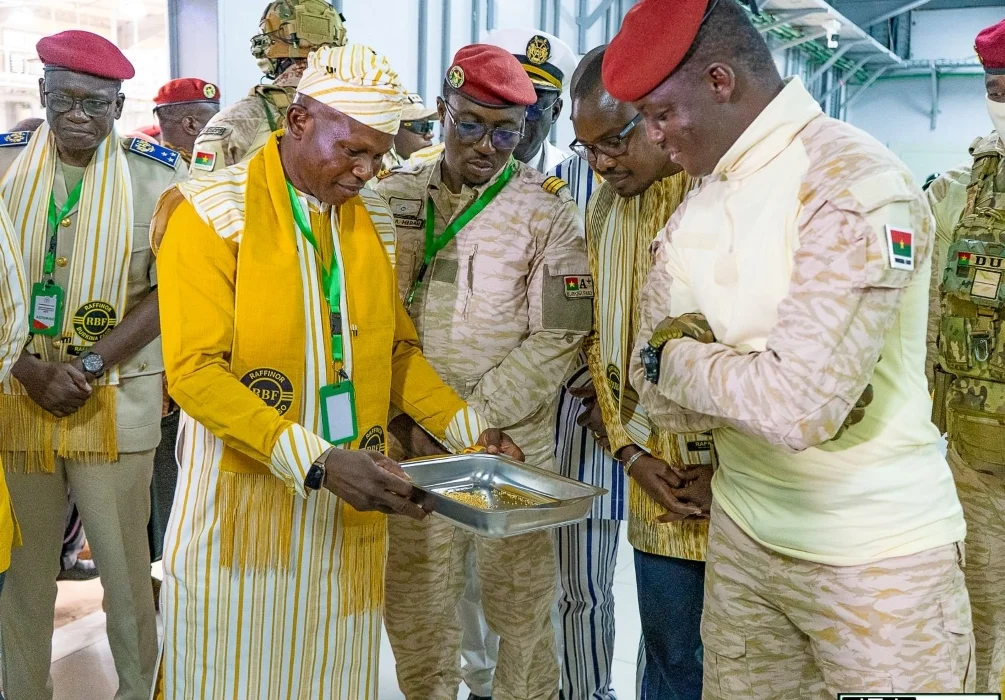
Traoré now holds domestically refined gold as a symbol of his government’s economic programme. The harder stage begins after inauguration.
Burkina Faso must turn installed capacity into sustained throughput, transparent revenue and skilled employment. Success will depend on production volumes, commercial discipline, trusted standards and public accountability.
RAFFINOR-BF gives Burkina Faso control over a stage of the gold business previously handled abroad. The next measure of success will come from how much economic value, technical knowledge, employment and public revenue stay inside Burkina Faso after the refinery gates begin operating at scale.