

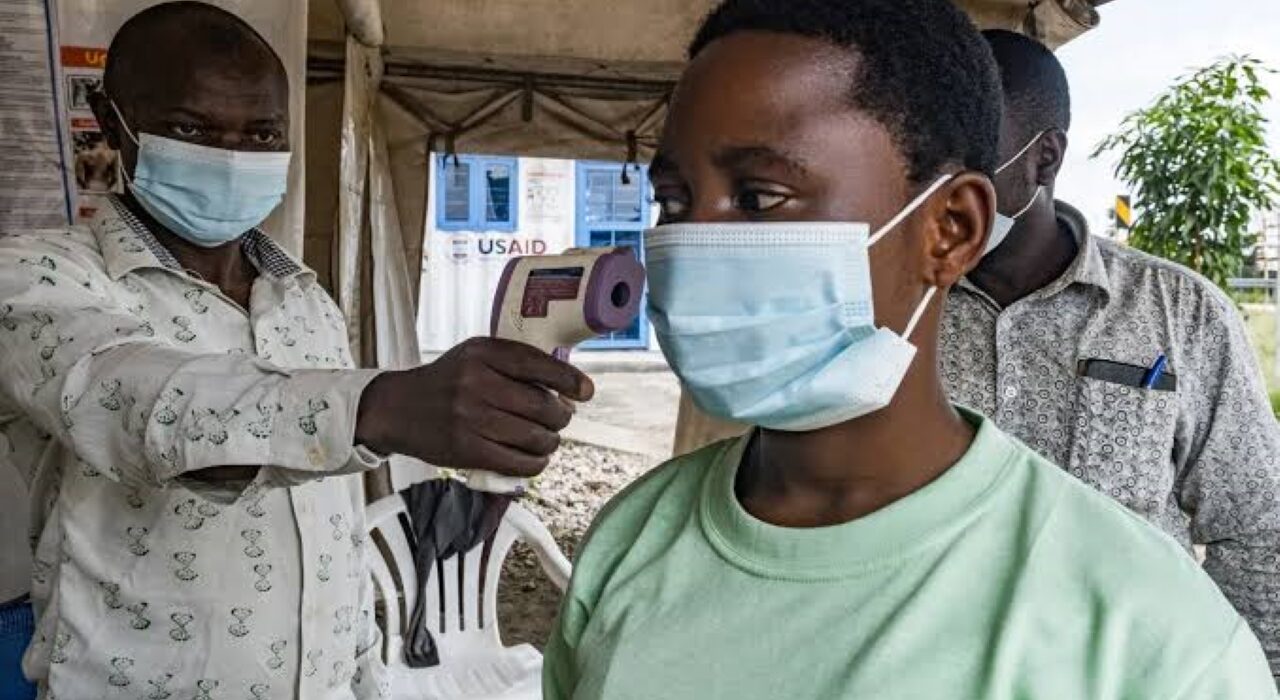
KAMPALA, Uganda – Uganda announced a mandatory 21-day quarantine on Sunday for citizens returning from the Democratic Republic of Congo, tightening border surveillance as the Bundibugyo Ebola outbreak spreads across several African countries.
Health Minister Chris Baryomunsi confirmed the directive on October 25, alongside stronger screening at Entebbe International Airport and land border posts. Authorities also require every incoming traveller, including people arriving by water, to complete a passenger locator form.
The decision follows confirmed Ebola infections in Kenya and Nigeria, alongside continued transmission inside Congo. Uganda maintains no active confirmed cases within its borders. Officials nevertheless face questions about the journeys of patients who passed through Uganda before receiving diagnoses abroad.
“Uganda remains Ebola-free, with no confirmed cases recorded since the country declared the Bundibugyo virus disease outbreak over on July 28, 2026,” Baryomunsi said during a press briefing in Kampala.
The quarantine directive specifically covers returning Ugandan citizens with a history of travel to Congo. Authorities have not publicly detailed every exemption, the designated quarantine facilities or arrangements for travellers who need continuing medical care. Those operational details matter for families, transport businesses and people crossing the border for trade.
The minister said officials had strengthened screening at Entebbe and every land crossing. “All travellers intending to enter Uganda by air, land, or water must complete the passenger locator form,” Baryomunsi said.
A 21-day observation period reflects the maximum recognised incubation period for Ebola disease. The World Health Organization places the interval between infection and first symptoms at two to 21 days. Someone carrying the virus does not transmit Ebola before developing symptoms. Once symptoms start, infected bodily fluids create a serious transmission risk.
For you as a traveller, the practical requirement starts before reaching a border checkpoint. Keep an accurate record of recent destinations, transport connections and contact details. Declare relevant travel honestly. Inform health personnel promptly if fever, headache, muscle pain, vomiting or diarrhoea develops during or after your journey. Seek clinical advice rather than attempting to diagnose yourself.
The regional numbers explain Kampala's urgency. According to a World Health Organization update dated October 23, Congo recorded 9,704 laboratory-confirmed Bundibugyo infections and 4,687 deaths by October 20. The reported case fatality ratio stood at 48.3 percent. The outbreak had reached 66 health zones across eight Congolese provinces.
Ituri accounted for 7,040 cumulative infections, while North Kivu recorded 2,146. Violence, displacement and restricted humanitarian access have complicated disease surveillance and access to treatment. Those pressures also make reliable travel histories and community contact tracing harder to establish.
Kenya confirmed its first imported case on October 6 after a traveller moved from Congo through Uganda. By October 20, Kenyan authorities had recorded nine confirmed infections, including eight people with known links to the first patient. A further death emerged in subsequent reporting. Kenyan officials have continued tracing people exposed during travel, treatment and family contact.
Uganda has now completed one important surveillance exercise. Baryomunsi said all 60 people monitored locally after possible exposure linked to the Kenyan case had finished their 21-day follow-up without developing symptoms. Health teams traced their movements through border facilities, hotels and transport services before clearing the group.
The Nigerian investigation raises a separate question. Nigeria confirmed an imported Ebola infection in Abuja on October 20 involving a woman who had travelled from Uganda. Investigators reviewed passenger movements, exposure histories and viral genome sequences to identify her likely source of infection.
Nigerian officials reported a close genetic relationship between the virus from the Abuja patient and the strain detected in Kenya's first case. Such genomic similarity helps investigators assess related infections. On its own, though, genetic evidence does not establish personal contact or prove where transmission occurred.
African disease-control officials have examined whether the Kenyan and Nigerian patients crossed paths at Entebbe airport on October 3. Accounts of the Nigerian patient's earlier movements also differ. Ugandan authorities previously suggested travel to eastern Congo, while Swiss officials disputed a Congo visit. Investigators have not established the source of her infection.
The distinction carries public-health consequences. Travel through an airport does not automatically establish exposure there. Investigators need reliable passenger manifests, symptom timelines, interviews and, where appropriate, laboratory comparisons. Premature accusations risk undermining public cooperation with contact tracers.
The current outbreak involves Bundibugyo virus, a cause of Ebola disease with no approved vaccine or virus-specific treatment. Clinicians rely on early supportive care, fluid replacement, close monitoring and treatment of complications to improve survival. Healthcare workers need infection-prevention equipment and safe procedures for collecting specimens, handling waste and caring for patients.
Bleeding does not appear in every Ebola infection. Early signs often resemble malaria, typhoid fever and other common illnesses. Laboratory confirmation therefore matters. If you develop compatible symptoms after relevant travel or contact, contact a health facility before arrival and explain your exposure history so staff arrange a safe assessment.
Uganda's policy also creates an implementation test. Border personnel must identify qualifying travellers consistently, explain quarantine conditions clearly and protect medical confidentiality. Families need credible information about where relatives will stay and how authorities will communicate test results. The ministry has yet to publish comprehensive practical guidance covering those questions.
The WHO advises countries against broad restrictions on travel and trade with affected states, while encouraging targeted surveillance, prompt case detection and coordinated responses. Uganda's announced quarantine applies to a defined group of returning citizens rather than every international arrival. The effectiveness of the measure will depend on transparent rules, reliable screening and sustained cooperation with Congo, Kenya and Nigeria.
For communities near crossings, reporting symptoms early and cooperating with trained health workers offers a more useful response than spreading unverified claims. The immediate priorities are identifying exposures, keeping potentially infected people under appropriate observation and ensuring patients receive rapid clinical care.