

MAIDUGURI, Nigeria – Nigeria faces a fresh security shock after separate attacks in Borno and Zamfara left soldiers, militants and civilians dead, exposing simultaneous pressure on military positions in the northeast and mining communities in the northwest.
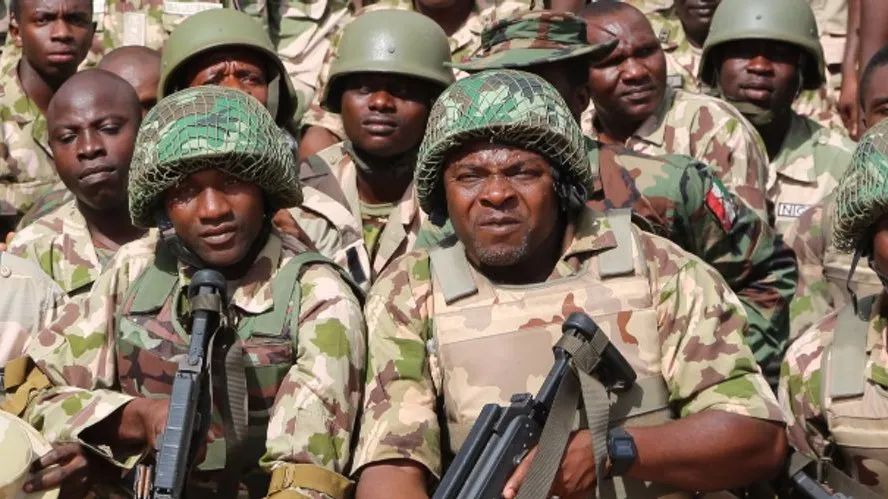
In Borno State, fighters from Islamic State West Africa Province, known by the acronym ISWAP, attacked a military position in Kukawa from four directions on Tuesday night. Troops from the 101 Special Forces Battalion fought back with air support under Operation Hadin Kai. Military reporting says Nigerian forces killed more than 25 militants during the counter-offensive. Troops recovered 14 bodies, six AK-47 rifles and ammunition during battlefield clearance operations.
Captain Mohammed Goni, acting military information officer for Operation Hadin Kai, said preliminary military assessments placed militant losses above 25. The military acknowledged deaths among Nigerian soldiers but released no final figure. A member of the Civilian Joint Task Force also reported more than three deaths among civilian defence personnel supporting military operations.
The Kukawa assault carries operational significance because attackers approached from four flanks. Such a pattern seeks to stretch defensive fire, test perimeter control and create several breach points at once. Air support helped troops hold the position. The outcome also shows ISWAP still possesses enough manpower, mobility and command coordination to mount a multi-directional attack against a special forces unit near Lake Chad.
Nigeria then confronted a second security crisis in Zamfara State. Armed men riding motorcycles attacked a military camp in Bindin, Maru Local Government Area. Fresh reporting carried accounts from witnesses and a military source placing soldier deaths at least 25. The attackers later struck an artisanal mining site where around 1,000 people had gathered for gold extraction. A village head and relatives placed civilian deaths above 100. Independent confirmation of those casualty figures remained unavailable when the latest report appeared.
Other Nigerian reporting carries lower casualty figures for the Bindin violence. Premium Times reported 12 soldiers and five artisanal miners dead, while stressing military authorities had not confirmed final numbers. Zamfara police spokesperson Yazid Abubakar confirmed the incident and said, “The incident happened quite all right.” Lieutenant-Colonel Olaniyi Osoba, speaking for the army formation responsible for the area, said, “We face attacks daily. The area generally is vulnerable.”
Those conflicting totals require caution. Early casualty reporting from remote conflict zones often changes after troops secure ground, families identify victims and authorities reconcile field reports. For readers following the Nigeria attacks, the safest conclusion at this stage is clear. Bindin suffered a major armed assault, soldiers and civilians died, military operations continue, and authorities have yet to publish a verified final toll.
The two attacks involve different armed networks and different theatres. Borno sits at the centre of Nigeria’s long counter-insurgency fight against Boko Haram and ISWAP. Zamfara faces bandit groups, kidnapping networks, rural armed gangs and violence around informal mining. The shared security problem lies in armed groups exploiting large rural spaces, difficult terrain, weak state presence and vulnerable communities.
ISWAP’s Kukawa operation also raises questions about force protection. A four-direction assault requires surveillance, early warning, protected fighting positions, reserve elements and rapid air-ground coordination. Nigerian forces stopped the attackers from overrunning the position, yet military deaths show the cost of defending exposed bases around the Lake Chad theatre.
The weapons recovery matters as well. Six AK-47 rifles represent only part of equipment abandoned during the attackers’ withdrawal. Follow-up exploitation operations now focus on tracking retreat routes, recovering more weapons and preventing surviving fighters from regrouping. Those tasks matter because insurgent formations often disperse after failed assaults before rebuilding small combat units elsewhere.
Zamfara presents a different tactical problem. Motorcycle-borne gunmen move quickly between villages, mining zones and poorly protected roads. Artisanal mining sites also attract large concentrations of workers in remote areas. Such conditions create soft targets with limited perimeter security, limited medical evacuation capacity and weak communications during an attack.
The reported Bindin mining deaths bring the security of Nigeria’s informal gold economy into focus. Small-scale miners often work far from major security formations. Armed groups target mining communities for cash, supplies, protection payments and territorial control. When violence shuts a mining site, families lose income while local authorities lose commercial activity and communities face displacement.
If you follow Nigeria’s security crisis from elsewhere in Africa, watch the verified Zamfara death toll, identification of the attacking faction, military reinforcement around Bindin, and ISWAP movement after the failed Kukawa assault. Your assessment should separate confirmed military statements from witness estimates because casualty numbers remain disputed in Zamfara.
Political pressure will rise as Nigeria approaches national elections next year. Security already sits near the centre of public debate. Voters will judge federal and state authorities on protection of communities, military readiness, intelligence coverage, response time and accountability after attacks. A successful defence in Kukawa gives the military an operational gain. Heavy reported losses in Zamfara place fresh scrutiny on force posture in the northwest.
Nigeria also faces a resource-allocation challenge. Counter-insurgency in Borno demands aircraft, intelligence, special forces and persistent surveillance. Anti-bandit operations in Zamfara require mobile ground units, rural intelligence networks, road control and protection for mining communities. Sustaining both theatres strains personnel, equipment and logistics.
Regional governments should watch events around Lake Chad closely. ISWAP operates across a security environment touching Nigeria, Niger, Chad and Cameroon. Pressure in one sector often shifts militant movement toward another. Cross-border intelligence sharing, aerial surveillance and coordinated patrols remain central to restricting militant mobility.
For Nigeria, the immediate priority is verification and control. Authorities need a final casualty account from Bindin, secure access to the mining area, identification of missing people, medical support for survivors and a clear assessment of weapons lost during the military-base assault. In Kukawa, forces need sustained reconnaissance around retreat corridors rather than a single defensive victory.
Wednesday’s developments show two active fronts demanding different responses at the same time. Nigeria’s armed forces held the Kukawa position, but ISWAP demonstrated offensive reach. In Zamfara, competing casualty reports point to a severe attack whose full human cost is still emerging. The next official military updates will determine the scale of both incidents and shape the national security debate ahead of the election cycle.
