
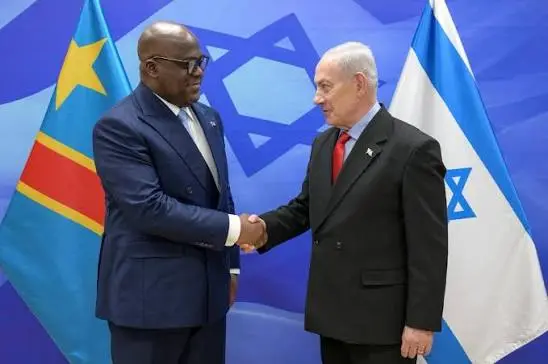
JERUSALEM, Israel – Israeli Prime Minister Benjamin Netanyahu hosted Democratic Republic of Congo President Félix Tshisekedi in Jerusalem on September 1, with both leaders promising to deepen security and economic cooperation between their countries.
The meeting formed part of Tshisekedi’s second official visit to Israel. The Congolese leader also held talks with Israeli President Isaac Herzog and Foreign Minister Gideon Sa’ar. His first visit took place in October 2021, while Herzog travelled to Kinshasa in November 2025.
Netanyahu welcomed Tshisekedi as a close ally and presented the visit as another step in Israel’s renewed engagement with Africa.
“This is a wonderful friendship. We are strengthening it, and this visit will help strengthen it even further,” Netanyahu said.
Behind the language of friendship lies a serious exchange of strategic interests. Congo needs investment, agricultural technology, military training, intelligence systems and diplomatic support as fighting continues in its mineral-rich eastern provinces. Israel needs new commercial markets and dependable African partners at a time when its international relationships face growing pressure.
Tshisekedi said cooperation would cover agriculture, food security, water management, health, technology, innovation, security, training and investment. His delegation included senior officials capable of moving discussions beyond ceremonial diplomacy.
“Our ambition is to build with Israel a modern, pragmatic and mutually beneficial partnership, one that is measured not only by the agreements we sign,” Tshisekedi said.
The unfinished part of his statement matters most. Congo has signed countless agreements with foreign governments and companies, yet millions of Congolese citizens still live without reliable roads, hospitals, electricity, schools or security. New partnerships should therefore be judged by implementation, public accountability and the benefits delivered to ordinary people.
No weapons contract, drone purchase, mining concession or financial package was announced after the Netanyahu meeting. Describing the talks as a completed minerals-for-security agreement would therefore be premature. The leaders agreed on a direction, but the detailed terms remain undisclosed.
The latest meeting builds upon two memoranda signed in Jerusalem in July by Sa’ar and Congolese Foreign Minister Thérèse Kayikwamba Wagner. Those documents covered diplomatic training and regular political consultations between the two foreign ministries.
The July talks also explored wider cooperation in investment, agriculture, healthcare, education, technology and innovation. Sa’ar said the agreements would bring the countries closer and create new areas of cooperation.
A larger diplomatic promise remains incomplete. Tshisekedi announced in 2023 that Congo would move its embassy from Tel Aviv to Jerusalem. Israel promised to open an embassy in Kinshasa in return. Neither government has completed the move.
Congo’s economic attraction is clear. The country produced an estimated 75 percent of global cobalt output and possessed about 55 percent of known reserves, according to the United States Geological Survey.
Cobalt is essential for batteries, aircraft engines, electronics and several defence technologies. Congo also possesses major deposits of copper, lithium, gold, tin and coltan. These resources place the country at the centre of international competition involving China, the United States, Europe, the United Arab Emirates and other foreign powers.
Rubaya in North Kivu produces around 15 percent of global coltan. The mineral supplies tantalum used in mobile phones, computers, vehicles and aerospace equipment.
Rwanda-backed M23 rebels control Rubaya and collect revenue from its mineral trade. A United Nations estimate previously placed the group’s income from taxing mining activities around Rubaya at approximately $300,000 every month.
M23 captured Goma and Bukavu during its major offensive in early 2025. Despite peace agreements involving Congo, Rwanda and international mediators, the rebels continue to control substantial territory. More than seven million people remain displaced across Congo.
Tshisekedi has strong reasons to seek foreign security assistance. Congolese forces need better intelligence, communications, surveillance, training and command systems. Israel possesses extensive experience in drones, radar, cybersecurity, border monitoring and military communications.
Israel also has a financial interest in expanding such cooperation. Its defence exports reached a record $19.2 billion in 2025. African countries accounted for only 2 percent of those agreements, leaving the continent as a potential growth market for Israeli defence companies.
Yet advanced equipment will not repair every weakness inside Congo’s security forces. Drones and surveillance systems cannot replace disciplined leadership, properly paid soldiers, accountable commanders and public trust.
Foreign weapons have entered Congo for decades without ending the violence. The country’s conflict survives because armed groups continue to benefit from illegal mining, weak borders, regional rivalries, corruption and the limited presence of functioning government institutions.
Any security agreement with Israel must therefore receive parliamentary and public scrutiny. Congolese authorities should disclose contract values, suppliers, equipment, training arrangements and human-rights safeguards. Intelligence partnerships also require strict oversight to prevent surveillance technology from being redirected against journalists, activists or political opponents.
Mining agreements need the same transparency. Congo should demand local processing, technology transfer, Congolese employment, environmental protection and fair taxation. Foreign companies should not receive valuable mineral rights through secret negotiations conducted while the country faces war.
Congo’s history with Israeli businessman Dan Gertler provides a serious warning. The United States sanctioned Gertler over alleged corruption involving Congolese mining transactions. Gertler has denied wrongdoing.
Tshisekedi’s government later negotiated an agreement intended to recover mining and oil assets connected to Gertler. Congolese civil society organisations criticised the limited public disclosure surrounding the settlement.
Gertler’s history does not make every Israeli investor dishonest. It does mean Congo cannot afford another era of hidden contracts involving politically connected foreign businessmen.
Israel’s interest in Congo extends beyond mines and security sales. Congo holds a non-permanent seat on the United Nations Security Council until December 2027 and chaired the council in July 2026.
Herzog openly thanked Tshisekedi for supporting Israel in international forums. Congo offers Israel an influential African partner during continuing disputes over Gaza, Israeli settlements, Palestinian statehood and Israel’s relationship with the African Union.
Tshisekedi must ensure closer relations with Israel do not silence Congo on Palestinian rights. The African Union has repeatedly supported Palestinian self-determination and condemned Israeli settlement expansion in occupied territory.
A country seeking international support against occupation and foreign-backed armed groups in eastern Congo should apply the same principles consistently elsewhere. Economic cooperation does not require diplomatic surrender.
Agricultural cooperation offers less controversial and potentially valuable opportunities. Israeli irrigation, water-management and farming systems could support Congolese food production. Congo possesses enormous agricultural potential, yet poor roads, inadequate storage, limited mechanisation and rural insecurity continue to weaken production.
Successful projects should train Congolese specialists, create local maintenance capacity and support farmers instead of leaving the country permanently dependent on imported equipment and foreign technicians.
The Jerusalem meeting was politically significant, but friendly speeches will not secure Goma, return displaced families or create Congolese factories for processing cobalt and coltan.
Congo should negotiate from strength as the owner of minerals essential to the global economy. Israel should enter as a transparent partner prepared to invest, transfer knowledge and accept public accountability.
Until both governments publish concrete agreements, the strengthened friendship remains a promising declaration rather than a completed economic or security breakthrough.