

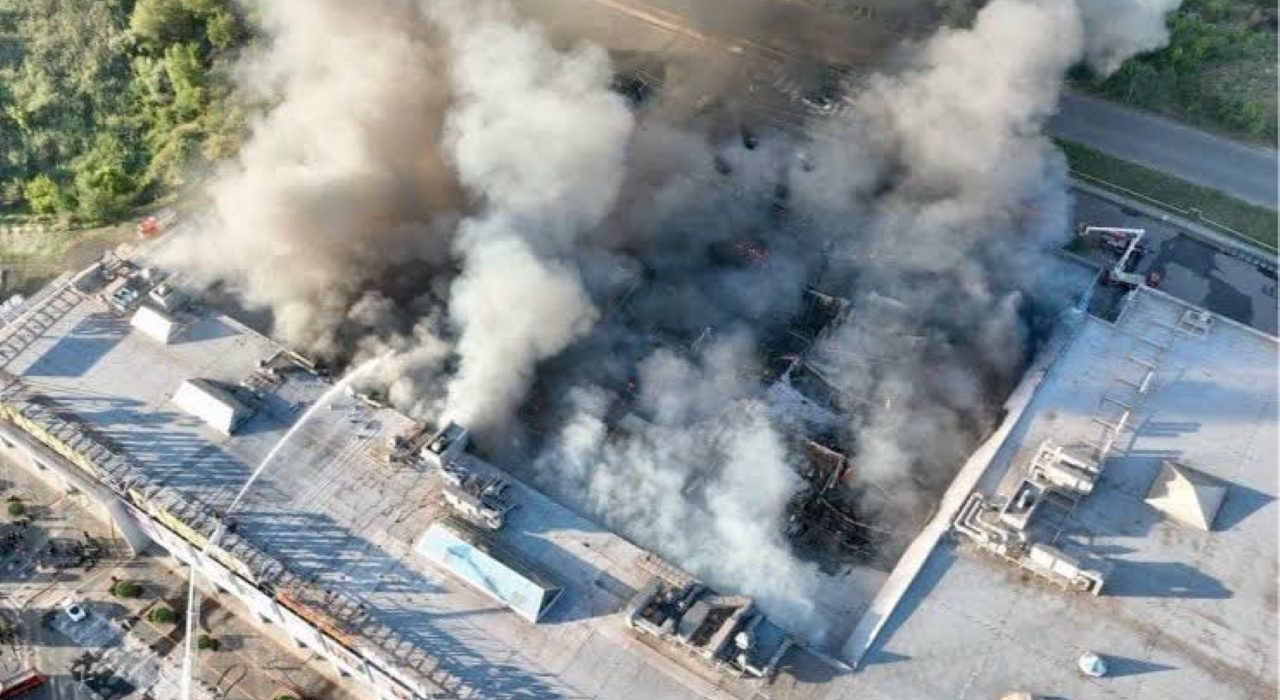
KYIV, Ukraine – Ukraine’s widening drone campaign against Russian economic infrastructure is producing real pressure inside Russia, but the latest attacks also expose Kyiv to a dangerous escalation cycle at a moment when Ukrainian air defences already face heavy strain.
First, one factual correction matters. Ozon is not an oil refining company. Ozon is Russia’s second-largest online retailer. The facilities linked to the latest attacks in Orenburg and near St. Petersburg are logistics and warehouse sites, not refineries.
In Orenburg, Governor Yevgeny Solntsev said Russian forces intercepted six drones over the region on August 23. Debris struck two industrial facilities, including an Ozon logistics centre. Ozon evacuated more than 300 workers and suspended operations. Officials reported no injuries. Reuters confirmed the company statement and the regional governor’s account.
The Kolpino case needs even greater caution. A huge fire hit a Logistera warehouse at the Izhora industrial site near St. Petersburg. The blaze covered about 82,000 square metres. The site sits roughly 350 metres from an Ozon facility. Local authorities did not announce a drone or missile threat during the fire, and public evidence has not established a Ukrainian strike as the cause. Kyiv Post reported the fire alongside the Orenburg attack, but the available reporting does not support describing the Kolpino blaze as a confirmed Ukrainian hit.
Ukraine’s broader campaign is clear. Kyiv has expanded long-range attacks against Russian refineries, ports, military sites and commercial logistics networks. On August 22, Ukrainian drones hit an Ozon warehouse in Russia’s Samara region and the Novokuibyshevsk oil refinery. Russian officials also reported civilian deaths across several regions during the wider wave of attacks.
President Volodymyr Zelenskyy has described refinery attacks as “long-range sanctions.” After strikes earlier in August, he said the attacks proved effective in “limiting Russia’s oil profits” used to finance the war. Kyiv’s strategic logic is direct. Damage fuel production, transport networks and commercial supply chains, then raise the economic cost of Moscow’s invasion.
The strategy has produced measurable damage. Reuters reported fuel shortages across Russia, including sales limits at stations in Moscow. Ukrainian attacks have damaged refining capacity while seasonal demand has added pressure. Russian authorities responded with export restrictions, looser fuel standards and higher imports of petroleum products.
The deeper question is whether economic damage gives Ukraine greater leverage or draws heavier Russian attacks against Ukrainian cities, ports and energy systems.
President Vladimir Putin has already threatened retaliation. On August 22, he accused Kyiv of opening “Pandora’s box” by striking Russian economic targets. He said Russia would attack Ukraine’s “most sensitive economic sectors.” Reuters reported Moscow had already struck Ukrainian economic infrastructure, including grain export routes through the Black Sea.
Such language makes escalation risk impossible to dismiss.
Ukraine also enters this phase with serious defensive weaknesses. Russian missile and drone attacks continue against Ukrainian energy infrastructure. Naftogaz reported 13 attacks on company facilities within one week and close to 300 attacks during 2026. AP reported growing pressure on Ukraine’s energy system while Kyiv faced shortages of U.S.-made air defence systems.
Russia struck a shopping centre in Kryvyi Rih on August 21, killing at least 16 people and wounding more than 130, according to Reuters and other international reporting. The attack came before the Orenburg incident. This sequence matters. Moscow was already carrying out deadly large-scale attacks before the latest Ozon strike. A simple claim saying Ukrainian attacks alone cause Russian escalation ignores the existing Russian campaign.
Yet retaliation still changes calculations. Russia possesses a larger missile inventory, a larger drone production base and a deeper capacity for sustained strikes. Ukraine faces a thinner air-defence shield and relies heavily on imported interceptors. Every expansion of the target list inside Russia therefore carries a cost-benefit question for Kyiv.
Military planners will ask whether destroying a warehouse produces enough strategic value to justify the response risk. A refinery directly affects fuel production, military logistics and export revenue. A military airfield directly supports combat operations. A civilian retail warehouse presents a more complicated case, especially when workers, drivers and nearby residents face danger.
Ukraine argues some logistics networks support Russia’s military economy. Kyiv has also targeted Wildberries facilities under the same reasoning. AP reported Ukrainian drone units seek economic and psychological pressure deep inside Russia, hoping disruption will push Moscow toward negotiations.
Russia rejects the distinction and presents attacks on economic facilities as attacks on civilians and national life. Putin has used the latest strikes to justify broader retaliation. Both governments now frame economic infrastructure as part of the battlefield.
This creates a dangerous feedback loop. Russia attacks Ukrainian energy or civilian infrastructure. Ukraine strikes Russian refineries, warehouses or ports. Moscow answers with larger barrages. Kyiv then launches deeper attacks. Each side describes the next round as retaliation for the previous one.
The military value of Ukraine’s refinery campaign is easier to defend than the political value of attacks on major retail distribution centres. Russia’s fuel shortages show real pressure from refinery damage. Warehouse attacks risk shifting international attention toward civilian harm while giving Moscow material for its retaliation argument.
Kyiv therefore faces a strategic choice. Deep strikes against military plants, refineries, airfields and war logistics impose costs on Russia. Expansion toward civilian commercial networks raises legal, political and escalation questions even where Kyiv sees indirect military value.
The strongest Ukrainian argument says Russia started the full-scale invasion and already attacks Ukrainian economic infrastructure. The strongest warning against Kyiv’s wider campaign says Ukraine lacks Russia’s depth in missiles, drones and air defence, so an uncontrolled escalation cycle hurts the weaker side more.
Both points deserve attention.
The latest Ozon incidents do not prove Ukraine has made a strategic mistake. They do show a campaign moving beyond traditional military and energy targets into a broader economic war. Putin’s retaliation threat means Kyiv must now judge every target against the response Russia is likely to choose.